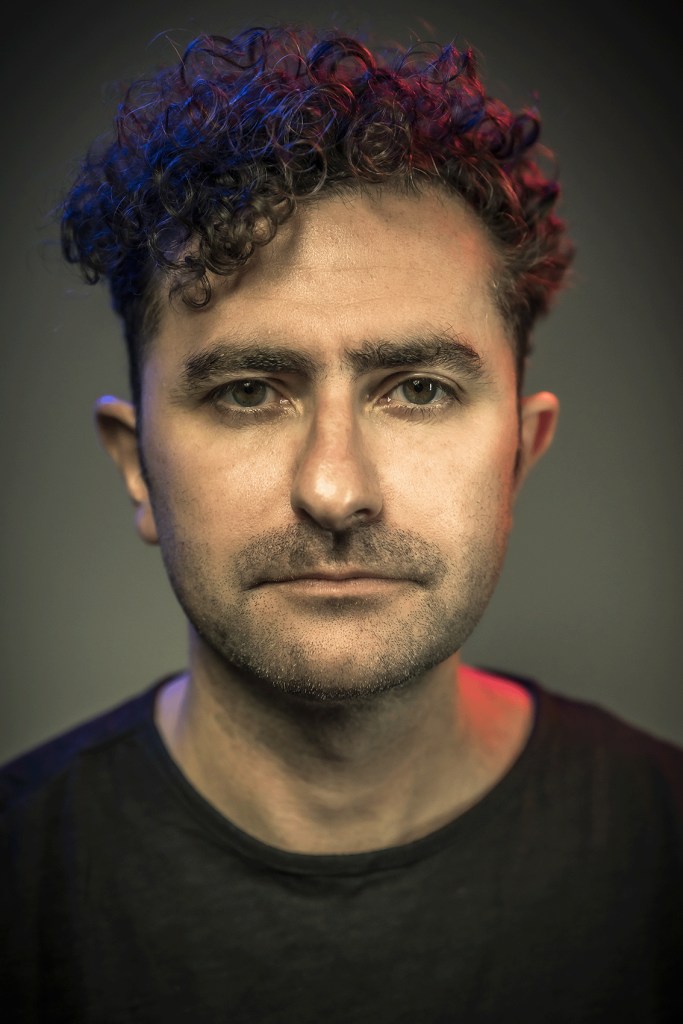
Dean Francis.
Australian filmmaker Dean Francis has never been interested in playing it safe.
His latest feature, Body Blow, is a bold and unapologetic neo-noir thriller that draws inspiration from the provocative erotic thrillers of the 1990s while carving out a distinctive identity of its own.
Set against the neon-lit backdrop of Sydney’s gay nightlife scene, the film follows disgraced police officer Aiden (Tim Pocock), who is pulled into a dangerous world of crime, desire and betrayal after an encounter with a charismatic bartender and sex worker.
For Francis, Body Blow was born from a desire to push back against the increasingly formulaic nature of modern filmmaking. Inspired by the independent films that shaped him as a young cinephile, he set out to create something personal, provocative and entertaining, a film willing to take risks and challenge audiences.
Francis is no stranger to Australian cinema. A twice AACTA-nominated filmmaker, his career has spanned directing, producing, writing, cinematography and editing. His previous credits include Road Train, the award-winning Drown, and producing the acclaimed feature Lonesome.
In this interview, Francis discusses the inspirations behind Body Blow, working with Tim Pocock, creating the film independently, and why he believes Australian filmmakers should never be afraid to push boundaries.
Following a successful screening at the Sydney Film Festival, Body Blow will screen at the Revelation Perth International Film Festival on Thursday, 9 July. Details here.
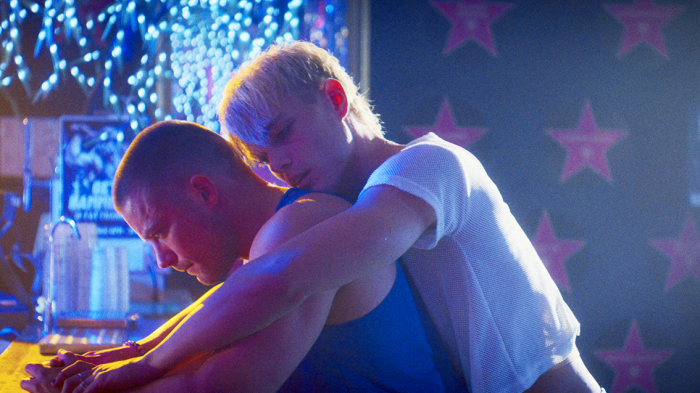
Tim Pocock as Aiden and Tom Rodgers as Cody in Body Blow.
“We became very, very close creatively, and I am so proud of the performance Tim [Pocock] gives. I think it’s absolutely earth-shattering.”
Interview by Matthew Eeles
I love that you’re a fan of ’90s erotic thrillers like Body Heat and Basic Instinct. Are these the kind of films that you grew up on?
Definitely. I was really inspired by the ’90s erotic thriller, and I probably watched most of them hiding behind my parents’ couch when I was 11 or so, which probably added to the appeal. Of course, what I really love about those films is that there’s such a sense of danger, and that sexuality is criminal and forbidden. I think that was a particularly resonant idea growing up as a gay man, so maybe that’s part of it. But I also think cinema has become shockingly asexual over the last few decades. You can speculate as to why that is. Maybe people find their arousal in other places these days, but I think there’s something really beautiful about eroticism done well in a high-stakes cinematic story. And that’s where I wanted to go with this film, but through more of a queer lens, of course.
How much of an influence did those films have on you becoming an actual filmmaker?
I would say a pretty big influence. To be honest with you, there were probably those films, but it was also the sense of feeling invisible as a gay child in those films. I think cinema does so much to create identity and aspirational identities. I was one of those kids who really based who I was on movie characters. In the ’90s, we had such iconic, heroic masculine role models in cinema, but again, they were never gay. So I think I probably got into filmmaking to try and be a part of that, but also to find my gay place in those stories.
Was there a particular character that you would base yourself on?
Oh God, there were many. Even Dirty Harry, because when you’re being bullied in the schoolyard, you just want to be able to pull out that magnum and say, “Feelin’ lucky, punk?” There was also young Leonardo DiCaprio when he was in that beautiful teen era. He was such an icon. But there was something particular about Body Heat and the noir concept that you go through life fielding temptation, trying to make decisions that work for you, but ultimately the thing inside you that you can’t replace is the thing that inevitably brings you down, and there’s no escape from that. I think there’s something really human in that. Of course, there’s a lot of myth around that idea too.
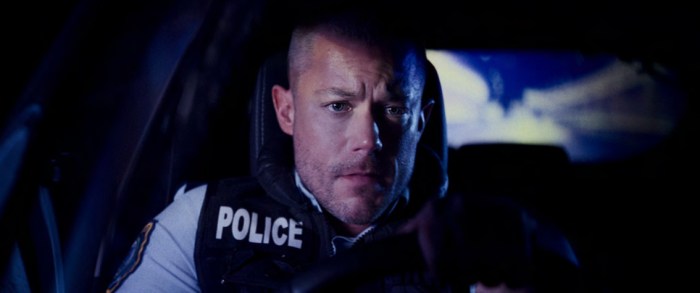
Tim Pocock as Aiden in Body Blow.
More often than not, queer films made in Australia are softer coming-of-age dramas told from a protagonist’s internal perspective, while Body Blow is a highly entertaining, bloody thriller that explores a darker side of queer culture through a much broader lens. What draws you to this more intense approach to storytelling?
I definitely agree with you. I think something I’ve noticed in the time that I’ve been making films is that, yes, there’s more representation of LGBT characters on screen, but they are generally sanitised. It’s almost like gays are creating this image of themselves as clean, normal, and heterocentric, as if we have to convince the haters that we should be accepted. I think that’s really boring. I think it flies in the face of human nature. I think queer people want the choice to be evil, to see themselves represented as evil characters, because we want to see the full human experience reflected on screen. When I was a much younger filmmaker, there was a real fear about giving gay characters anything other than a happy ending and making gay characters immoral. You just couldn’t do it because there was a sense that you were letting the gay side down or something. I think we’ve moved on from that, and I think people are really sick of seeing these boring, bland gay characters on screen exclusively.
I recently interviewed a young emerging filmmaker from Perth named Carl King, who told me that it was important to him that his crew was predominantly made up of people from the LGBTQIA+ community and that no straight actors would play queer characters in his film. I’m wondering if this is something that’s important to you as a filmmaker too. Did you take a similar approach with Body Blow?
Fundamentally, actors are actors. They can play things that are not themselves. So, for me, that’s a very limiting and not particularly useful way to look at the craft. That said, I think that when you have queer actors playing queer characters, inevitably they bring their lived experience to the project. Actors are dealing with their own lived reality in their craft, so there can certainly be advantages to it. Body Blow was the first time our lead actor, Tim Pocock, played a gay character. He’d actually only come out publicly as gay a few months before we cast him. Tom Rogers, a young, openly queer actor, brought so much invention and a wonderful lived experience to his own role. But then you have Sacha Horler who is, of course, an Australian legend and a genius actress. She’s not a lesbian, but she inhabits her really tough, dykey character of Steele perfectly. Again, she might not bring her own specific lived experience of being a lesbian, but she’s got lesbian friends. She’s been in that world. And most importantly, she’s an actor with an enormous amount of craft. Then you’ve got Paul Capsis, who comes from the world of cabaret and has certainly lived in that drag world very much, but of course he himself is not a drag queen. He’s an actor playing a drag queen. As far as crew goes, I was really interested in making sure that we looked at everyone who was LGBT and wanted to be on the crew. There’s a great energy about that. I love having gay crews, but I’m not going to hire someone on the basis of their sexuality. That’s ridiculous, to be honest.
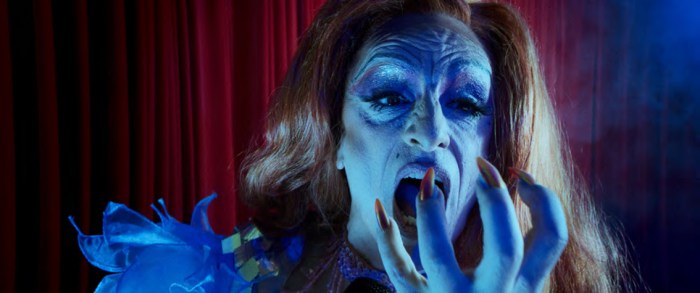
Paul Capsis as Fat Frankie in Body Blow.
I enjoy hearing both your opinion and Carl’s. I think that’s really important, and I’m looking forward to talking about the cast soon. But first, I adore the fact that the idea for Body Blow came to you from cops asking for CCTV footage from cameras outside your production office. That must have been a gold mine for inspiration. Can you elaborate on that and how the rest of the narrative came to you?
There was a time when I found myself spending an enormous amount of time in this tiny utility room under the stairs in our building, getting this CCTV footage from an archaic video system we had. I’d talk to these cops, and it was amazing. They’d come in wearing board shorts or something similar. Often they’d be young, and I’d notice they were concealing a Glock underneath their baggy T-shirt, and I was like, “God, you’re a cop.” And some of them were gay, which was fabulous. But around the same time, and unfortunately this is not something that has ended, every year at Mardi Gras there’s some situation where the cops are beating a teenager half to death or attacking elderly people who are marching. Every year at Mardi Gras, this happens. The cops cannot help themselves but lay their hands on the LGBT community. So it was that dilemma that made me think, what if you’re a gay cop and you’re going into Mardi Gras while your colleagues are bashing people? And not just Mardi Gras. As you know, it’s a terrible thing that we have a homophobic police force that attacks gays. But what does that do to someone as a gay cop and their internal conflict? Then you ask, “Okay, well then who’s the best antagonist in this story?” And of course it would have to be an evil twink. So the film started in my mind as a twink versus a cop, and hilarity ensues.
What is a twink for those who don’t know, or haven’t seen the film?
A twink is a slang term for a gay boy who tends to be on the younger side of the spectrum, often blond and cute. Much like Cody in Body Blow. Whether people see it as a main focus of the film, or a subtle subtext in the film, there is a commentary on the heinous gay hate crimes committed by police in the ’80s and ’90s.
How much did you have to restrain yourself here and not lean too heavily into that territory?
That’s a really good question. It is really more of a backdrop and setting for the drama in Body Blow. And of course, the past can’t help but influence the future. There’s a pivotal event that we talk about in the film that’s based on something that actually happened, which has set off this chain reaction that has defined the very antagonistic relationship between the cops and the gay community in our film. It kicks off a chain reaction of drama that leads our protagonists into hell. I think something else that’s interesting about this film is that all the cops in our film, except for one, are gay. They’re all totally corrupt, and they’re all in bed with the nightclub owners and the gangsters. So while that’s maybe not one particular true story, as we know, there’s a real history of that in the gay community. And that’s something that our cast, in particular Paul Capsis and Sacha Horler, who grew up in Darlinghurst during that time, had firsthand experience with. We shared a lot of stories together that were relevant. It actually surprised me how close to the truth some of the fictional elements in my script were.
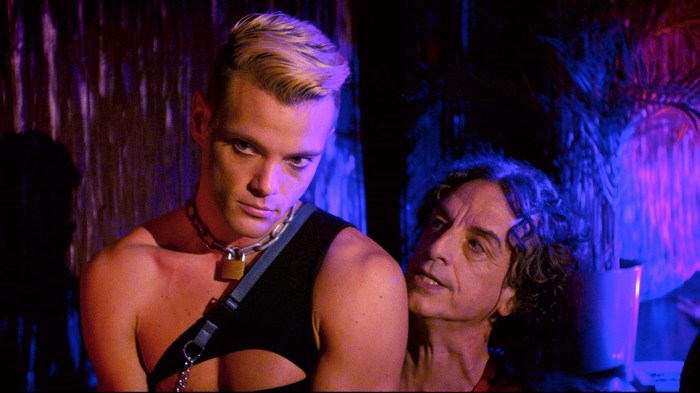
Tom Rodgers as Cody and Paul Capsis as Fat Frankie in Body Blow.
I’m asking this question because I genuinely have no idea, but are there any laws in Australia regarding how police are portrayed on screen?
Only the normal laws around defamation and slander. They obviously apply. I was reading that there’s a case in America involving a very big production that’s being sued by one of the state police departments for this reason. I think one really important thing that we were very clear on from the start is that Body Blow is a work of fiction. Of course, it might be inspired by things that we have experienced, but we’ve interpreted those things creatively. Sydney is an identifiable visual element in the film, but our police force is not called the New South Wales Police. They’re not called the Surry Hills Police. They’re called the Inner East Police, which is an organisation that does not exist. So I should be clear that we are not talking about New South Wales Police in the story, as much as we might be discussing them in this interview.
How concerned are you about potential backlash?
I don’t think we are saying anything particularly controversial. As we were shooting pickups around Stonewall, Oxford Street was descended upon by hundreds and hundreds of anti-police protesters, and our camera crew was caught in the middle at the intersection of Taylor Square. We were crushed as police moved in on this group from either side. I’ve got footage of it that I’m actually putting into our little making-of documentary. So this is not something that just happened in the ’80s. This is happening now. It was happening as we were making our film. We’re not saying anything that people can’t read in the newspaper. It is a fact that police violence against the LGBT community is ongoing. It’s appalling, it’s well reported, but it’s not the purpose of our film. We’re not making an activist film to address that. We are simply using it as the backdrop for a really interesting, high-stakes classic police thriller.
Guiding parts of Body Blow‘s narrative is this self-help recording that Tim Pocock’s Aiden is listening to. Did you write this recording, and if so, did you write it in full from the beginning, or did you build on it as you wrote the rest of the script?
Good question. There were lots of versions of it. I ended up writing a beginning-to-end piece, but believe it or not, a lot of what’s actually in the final film was improvised by the actor, Dominic McDonald. As you can tell, he’s got the gift of the gab. [Laughs]. He went down some YouTube rabbit holes, and we talked through it as we recorded. It was only a couple of hours in the studio, and basically I’d just wind him up and let him go. He really did create a lot of it. So that was pretty cool.
It sounds like you weren’t too worried about him sticking to what you had written.
Not at all. My approach to directing in general is that actors are the experts. Once you hand over the characters to them, they’re the ones who inhabit them, and you are very wise to listen to them and encourage them to come up with ideas because, oftentimes, as a director, you’re not the smartest person in the room when it comes to the characters.
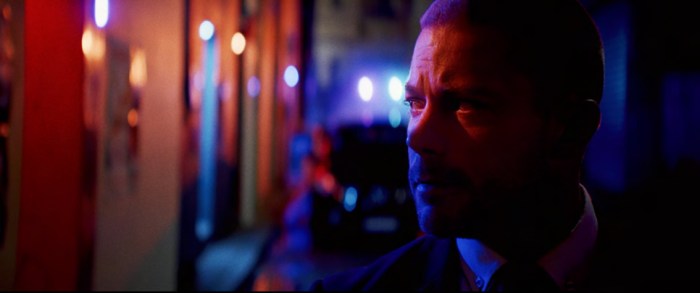
Tim Pocock as Aiden in Body Blow.
Well, that’s a great segue into my next question. I’m in awe of the genuine intensity that Tim Pocock can bring to a role when it’s required. His talent as an actor is actually quite frightful in that regard. Talk us through Tim’s casting here and what made him right for this role. And by the way, I’ve never met anyone with a bad word to say about Tim.
Tim is an incredible actor and a genuinely extraordinary person. I’d known Tim’s work for many years. I think he’d actually auditioned for almost every other feature that I’d made. So we were really in the same orbit, and he was on my mind while writing Body Blow. But it wasn’t until I sat down and spoke to him about his personal journey that it was affirmed he was perfect. As I mentioned, he had just come out publicly as gay for the first time on Four Corners, and he had been talking about his incredible struggle growing up in the Opus Dei religious cult community. So while the film’s not about that, it is very much about inner struggle, and he had a really incredible insight into what that is. Incidentally, after the shoot, he published an incredible book called The Truth Will Set You Free, which I highly recommend. It’s wonderful, very honest, confronting, and amazing. So he had that insight into it. Tim is an incredible performer. There’s no question. People meet him and can’t believe that he’s so different as a human being compared to Aiden. He’s so thoughtful and analytical, and he had this really difficult job because the character doesn’t really say much. The character is really internal, and so much of the story is carried by the audience’s understanding of what that character is going through. Part of the reason for the YouTube commentator is to fill in the gaps in the story, but a lot of it came down to the really specific detail Tim had to bring to those performance choices. We had the most incredible collaboration. We became very, very close creatively, and I am so proud of the performance he gives. I think it’s absolutely earth-shattering.
What made Tim the wrong choice for those previous roles he auditioned for?
Well, interestingly, one of them was a gay character. And I think at the time, years and years ago, Tim wasn’t comfortable playing a gay character because he was closeted. I think that’s a really sad reflection of the industry. I mean, we’re talking only 10 years ago. But Tim really stuck in my mind, and we were on the margins of each other’s social circles. We’d see one another at parties. I always wondered what Tim was doing as I was writing the film.
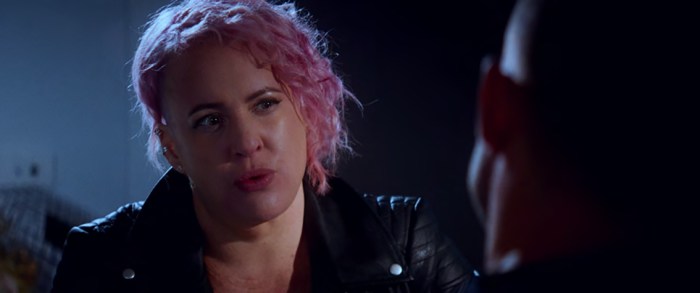
Sacha Horler as Steele in Body Blow.
What was it like for you to watch Tim and Tom Rogers bounce off each other here, not only as a director, but as a general observer too?
It was extraordinary. We brought Tom and Tim together for a chemistry test, and it was so electric. You could tell there was such easy intimacy and such comfort there. Tom Rogers is, I think, the most spectacular new actor at the moment, full stop. He is so smart and he was so proactive. Whenever you’re starting a scene, he’d always come in with different ideas. “Oh, what if we take it in this direction? What if I say this?” It was absolutely fantastic. As a director, I could choose the good ideas. He’s one of those actors where every take is a surprise. He’s technically strong, so you’ll always get so many great takes. One of the moments that really sticks in my mind was the very final shot of the entire film, which I won’t give away for those who haven’t seen it, but let’s just say it’s a very emotional scene and it’s the culmination of these two characters going through a lot. We were in the studio, and honestly, I cried. I was like, “Holy crap.” I mean, it could have been because it was our sixth week of shooting and I hadn’t slept, but I suspect it was because you were actually doing a great job. [Laughs]. And to this day, people have a similar reaction when they see this scene in the film.
What exactly is Neon Suite that Tim Pocock is credited for here?
Tim created four of the tracks for the score because we didn’t realise when we cast him that he’s an acclaimed concert pianist. In all his spare time, he just gets on stage at the Opera House. [Laughs]. He would be writing music from the perspective of the only person in the world who really understands Aiden from the inside out. So I invited him to write some music, and he went away and wrote this incredible piece, which we then developed into a theme in collaboration with our score composer, Andreas Dominguez. They developed it into this incredible thing called Neon Suite, which is one of the most beautiful pieces of music in the film.
Do you plan to release that separately from the film?
Yes, we do. We expect to have a soundtrack album out around September on vinyl and digital.
We could talk all day about how great your veteran cast members like Sacha Horler, Chris Haywood and Paul Capsis are here, but I want to know about Sacha’s character and costume design. Lesser filmmakers wouldn’t have put this much effort into a supporting character’s aesthetic. It’s pure perfection. Was this written into the script?
Going back to your earlier question about casting a straight actor in a gay role, I think straight actors can play gay characters, but they have to be convincing. This needs to be the kind of character that you look at immediately and go, “I know who that is. I know a person like that.” As well as that, there are these identity tropes that we rely on in the film for clarity of storytelling, for audiences to connect with it and understand the characters. So coming up with a dyke cop look was a really crucial part of the process. Sacha was way braver than I thought. I think she said, “Oh, I want to have an undercut and pink hair.” I was like, “Great. Fantastic.” She was also very proactive in terms of the outfit. She’d come in and try stuff on, and she would go through things until she found what was comfortable and worked for her sense of the character. I think she did a great job.
I’d love to see Sacha in more roles. She’s fantastic in every film she makes. How familiar were you with her previous films?
Oh, definitely. I remember seeing Praise when it first came out, when I was a much younger man. I was just blown away by the bravery of that performance and the intensity of it. Sacha has had an extraordinary career. We met at some awards night at a film festival. We were presenting an award or something, and we had some crazy improvised high-jinks double act on stage after some champagne. I was just really drawn to her energy. She’s so fun and so smart, and there’s really no bullshit with her.
Whose idea was it to make her vape the same colour as her hair? Or was that purely coincidental?
No, no, no. That was definitely a choice. Steele has so many little habits. You might notice that whenever she’s around cocaine, she’s constantly vaping on the side. We just wanted to give her these imperfections to make her human and show that she’s not quite right. She’s a bit busted on the inside.
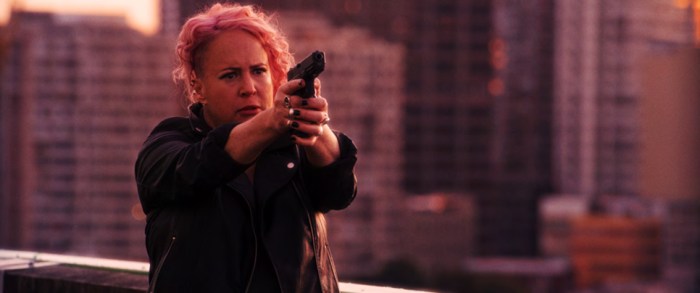
Sacha Horler as Steele in Body Blow.
I want to ask you about the contrasting aesthetics between the scenes shot in the inner city compared to the scenes shot in suburbia. You’ve obviously gone to a lot of work to create a specific tone that, to me, is thrown a little when the film moves to more modern housing. Is this how you intended them to be?
Definitely. I wanted to create Aiden’s suburban life as bland and monochromatic. It’s almost like his cocoon away from too much stimulus because, of course, he’s in that mindset of wanting to shut himself down and resist temptation. Then, when he goes into the urban world, while it’s dark and high-contrast and shadowy, it’s eye-popping and colourful. It’s almost too saturated. It’s bombastic in a way. So that was a really important contrast. The other thing we wanted to get across with the suburban scenes was that we were on the very far edges of suburbia. We went miles and miles away to where suburbia had literally stopped. From there, it was just bush. I don’t know if we ended up capturing as much of that in the film, but he’s on the edge of the wilderness. He’s always just on the edge of these very opposite things: the wilderness, the suburbs, and the city. In terms of the device that he uses to try and stop masturbating, that’s also a device used in a different context in fetish culture, and he’s kind of on the margins of that as well as being on the margins of NoFap masculine self-restraint culture. So yes, the suburban scenes were important. We ended up shooting them in an Airbnb miles and miles and miles away from the city. And of course, we had to live with the chickens, which will make sense when people see the film. [Laughs]. It’s not easy living with chickens. I can see why they’re illegal in suburbia, actually.
Can you break down some of the film’s magic here and talk us through the drill-to-the-head scene, maybe without mentioning who exactly is featured in it?
[Laughs]. Well, the short answer is that it was done in one take.
Unreal!
Well, you see how much mess the thing makes. [Laughs]. There really was no way to go again. Look, we brought in some very good practical effects people. It was done via a tube through the outfit. The only problem was that we obviously needed a very large quantity of blood, and we weren’t completely certain which direction it would shoot or the timing of it. So shooting it was pretty chaotic, and obviously the outfit that the character is wearing brings its own complexity because it’s not a simple outfit. We set up the scene, threw two cameras at it, and hoped for the best. [Laughs]. But what sold it most was the performance of the actor receiving the drill. That actor actually put so much into it and squealed at the top of their lungs to the point that they passed out and lost consciousness. They collapsed over the other actor, which is quite hilarious to think about now, but at the time it was a bit of a worry, as you might imagine.
How did you react as a director watching someone pass out because they gave their all to a scene?
Oh, it was crazy. It was not good, but you have to be prepared for anything. Thankfully, it didn’t take them long to wake up and go, “Where the fuck am I? What just happened?” [Laughs].
I appreciate that performance so much more now.
Yeah, one take. Absolutely no VFX or anything. And I should say, all the stunts in the film are in-camera. There were no special effects done in post.
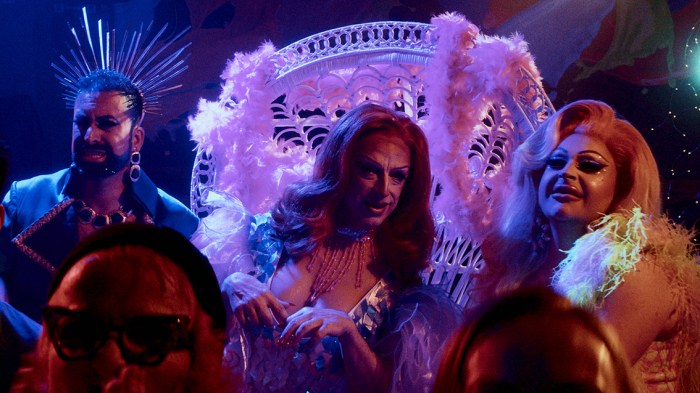
Paul Capsis as Fat Frankie in Body Blow.
You’ve said that Body Blow had to be made totally independently, without pressure to tone it down. Is that completely what you experienced here? Was anyone telling you to “tone it down”?
We certainly had reactions to the script that were along the lines of, “You need to tone it down.” And there were things that even my friends, who are not conservative people, were saying, “I think it’s great, but that little bit there, Dean, you’ve just crossed the line. I’m sorry, you’ve got to take that out.” And I’m like, “No, no, no, no, no, no. I’m not taking out Frankie’s anal ball. Are you kidding me?” [Laughs]. At the time we were making the film, we did have a distributor attached. We no longer have that distributor attached, let me just say, and they certainly had some viewpoints on it. But that was one of the reasons we no longer have them attached, because I was really determined to make the film that I wanted to watch. And you know what? I’ve got to say, this is one of the greatest things about being an Australian filmmaker in the present day. With the Producer Offset, you can make the dirtiest film, the weirdest thing in the world, and every single Australian taxpayer will pay for at least 40 per cent of it. So why wouldn’t you take advantage of that? If you can possibly avoid going through the permission-based approval system of filmmaking that you have to deal with almost everywhere else, why wouldn’t you make the craziest thing you can that you believe in and that you believe will connect with an audience?
Fuck, that pisses me off to hear that a distributor pulled out. What cowards.
Yes, that’s what I thought.
Personally, what was that like for you to hear from a distributor?
It was devastating because, of course, as a Producer Offset film, you rely on that crucial arrangement to pay back all the debt you’ve accumulated making the film, so it’s devastating. I think there’s a real culture of distributors treating filmmakers pretty badly. In this particular case, we were very lucky in that we didn’t have any shortage of other distributors. By the time we were back on the market, we were deep into post-production, so we had something really strong to show and we had no problems at all making other arrangements. I think we’ve actually ended up in a great place in terms of our distribution.
Yes, but I want to know about you personally. Forget the Offset point of view and the film’s point of view. I want to know how you felt. Believe it or not, this is such a common occurrence in this country, and it’s really starting to piss me off. What personal toll did being told by a distributor that you’d gone too far have on you?
It’s a great question. It’s not great from a personal point of view, especially when you have gone so far down the line making the film, but there’s still so much needed in terms of resources to climb out the other side of it. I think many filmmakers find themselves carrying a lot of personal debt towards the end of the cycle. And of course, one of the downsides of the Producer Offset is that, while it’s not competitively assessed, it takes some time for that to cash flow. So independent filmmakers who are self-financing have to carry a lot of debt and therefore a lot of stress, oftentimes for quite some time before it all comes out in the wash. Now, I’m not new to this. I’ve produced other films. I think I’m as resilient as you can be. But I tell you, there definitely are some bad days. When you get that sort of news from a distributor, or any of the other things that can go wrong, it can be hard. But most of a producer’s job is problem-solving. Most of filmmaking is solving problems.
Who has been your biggest supporter throughout your career?
Oh, that’s a beautiful question. It would have to be my partner, Ross. We’ve been together for more than 20 years, and he’s been there through every film. My dog, Dino, is always good for a cuddle. [Laughs]. My whole family has been really supportive, and they’ve always offered a shoulder. And of course, there’s my lawyer. [Laughs]. You can’t do anything without a lawyer, and to have a good one in your corner is incredible. And it’s the same with a good accountant. You always feel like you’re in safe hands.
Body Blow will screen at the Revelation Perth International Film Festival on Thursday, 9 July. Details here.

ADVERTISEMENT Click for details


 Cinema Australia