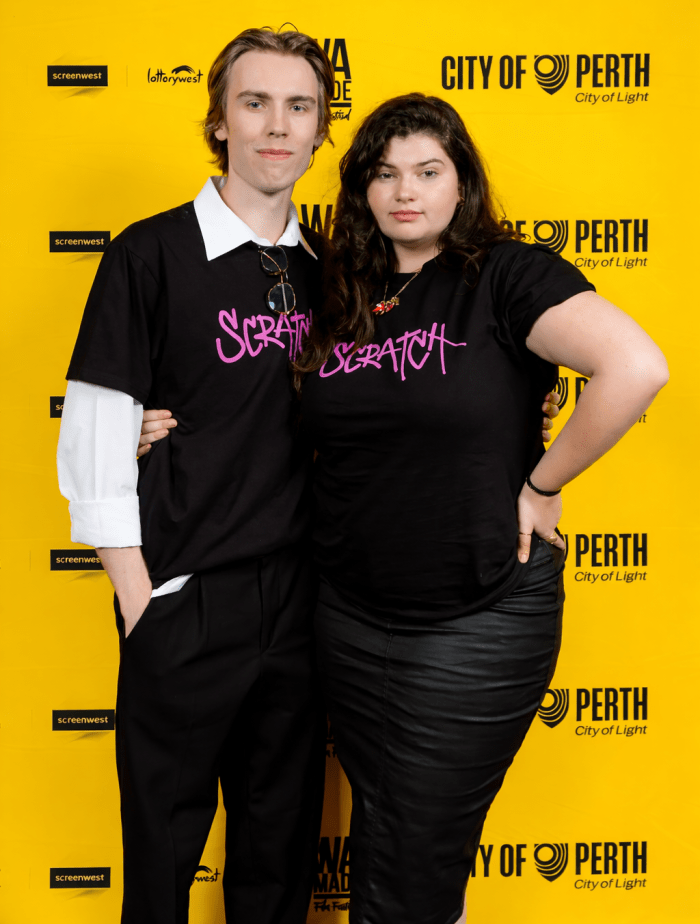
Carl King and Sophie Coleshill at the 2026 WA Made Film Festival screening of Scratch.
Perth filmmaker Carl King and Melbourne-based actress and producer Sophie Coleshill are bringing their hilarious and unapologetically honest new web series Scratch to audiences, with special screenings set to take place in both Perth and Melbourne this May.
Created as an independently produced web series, Scratch dives headfirst into the messy realities of modern relationships, telling a story that is as raw as it is relatable.
Scratch follows Luke (Glenn Walllis), a young man grappling with loneliness, whose life shifts when he meets the charismatic James (Zachary Drieberg). But as Luke becomes increasingly invested, the warning signs begin to mount, clear to everyone but him, as he risks everything for a connection that may ultimately leave him worse off.
For King, whose work consistently centres on underrepresented queer experiences, Scratch continues a deeply personal creative journey. As a writer and director, he is driven by a desire to tell stories that reflect the lived realities of queer people. His past work has explored themes of love, identity, and the quiet heartbreak of feeling left behind, all of which are woven into the DNA of this latest project.
Coleshill, a graduate of WAAPA with a background spanning screen acting, music theatre and opera, brings both performance and producing experience to the series. Her work is grounded in authentic storytelling and a commitment to exploring complex, often uncomfortable human experiences, something that aligns seamlessly with the tone and themes of Scratch.
Shot with an entirely queer cast and crew, the series doesn’t shy away from its subject matter. Instead, it embraces it. Scratch has been described by its creators as a story about “guys being gross, horny and in love with each other,” but beneath that surface lies something more poignant, a reflection on longing, rejection, and the emotional toll of chasing someone who may never feel the same way.
Ahead of the upcoming screenings, King and Coleshill joined Cinema Australia to discuss the making of Scratch, the importance of telling queer stories with honesty, and what they hope audiences take away from this excellent new series.
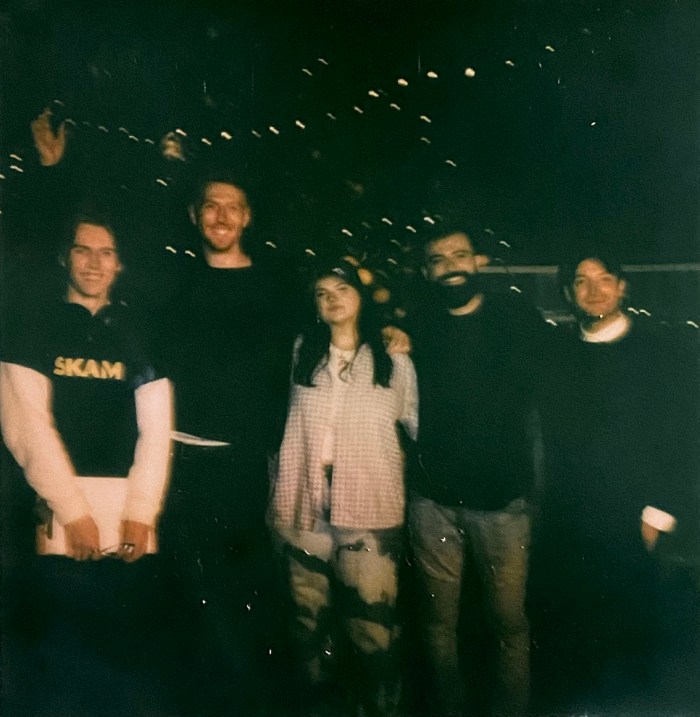
Carl King, Glenn Wallis, Sophie Coleshill, Zachary Drieberg and Jordan Gallagher on the set of Scratch.
“I still think there’s a very small area of representation within the queer community. I would love to see that expanded to include a wider range of representation.”
by Matthew Eeles
I guess we should start with the obvious question: how did you two meet?
Carl King We met at a really awkward party. We had friends who knew us both, and that’s how we met again later on. But that first party is something that we joke about all the time.
Sophie Coleshill It was very awkward because we were both plus-ones of other guests, and we just clicked.
Was there an immediate connection to filmmaking?
CK Well, before Scratch, we were friends who were not thinking about filmmaking at all. Sophie did Classical Voice training at uni, and I did screen production. So working together as filmmakers wasn’t something we really thought about at that time. Because Scratch is so autobiographical, and because Sophie and I had become such good friends, I was sharing the early scripts with her. I don’t want to speak for Sophie, but she really liked them. And because I was writing a version of Sophie as a character in Scratch, I just felt I had to cast her in the role. She had done some acting with me and my film friends before as well. And then it just grew from there. It was a very natural thing to happen, and not only is she an actor in Scratch, but she’s also the associate producer.
Sophie, what was it about those scripts that resonated with you at that time?
SC As Gen Z, a lot of the time I see scripts and think, “Gosh, is this what people think life is like for us?” It’s not. They’re not authentic at all. And when I was reading early drafts of Scratch, and little scenes he would show me, I remember thinking that this is exactly what it’s like to be in this culture and in this time period at our ages. And I think that really drew me towards it.
And as someone who doesn’t write scripts yourself, were you confident enough to inject your own input into Carl’s scripts?
SC Yes, maybe sometimes too much. [Laughs]. I can be brutal with my notes sometimes. My red pen is out, and I’m straight in there with my feedback.
Did that sit comfortably with you, Carl?
CK I really trust all of Sophie’s notes. I’d take on most of them. Sometimes I choose to ignore them. [Laughs]. But a majority of the time, I think they really do make the work better.
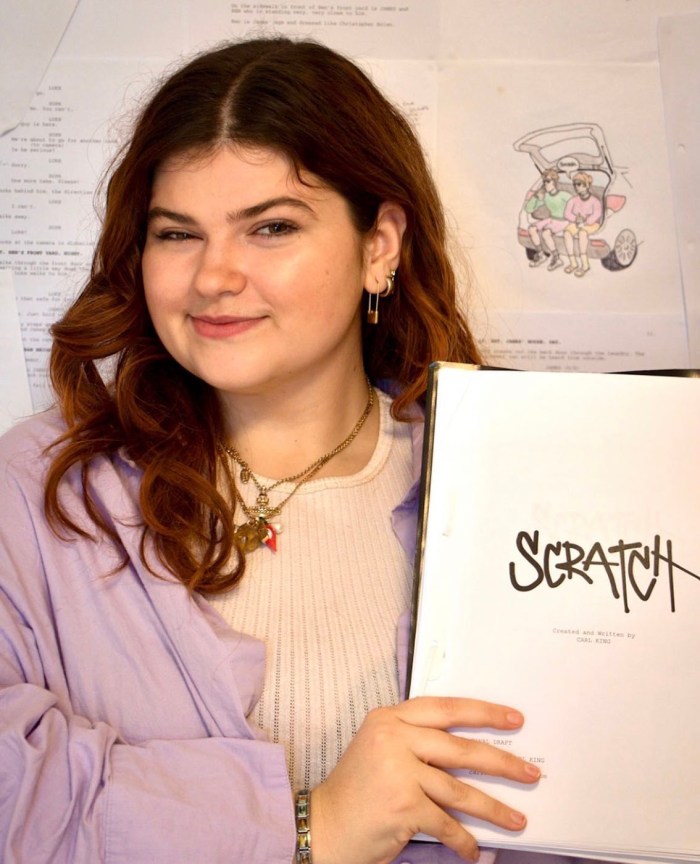
Sophie Coleshill with the Scratch script.
Sophie, you’re currently Melbourne-based. Where are you from originally?
SC Currently, I am in Melbourne. I am not from Perth. I’m from all over. I was actually born in Brisbane, but I’ve lived in every major city, and Melbourne is where I call home. My family lives here, but I moved to Perth specifically to study at WAAPA. So I was there for about five years, and that’s where I met Carl.
How did you find the Perth filmmaking scene compared to other states?
SC It’s fantastic. It’s much more intimate. Everyone knows everybody.
You trained in screen acting, music theatre, and opera. Will you settle on one profession over the other, or are you keen to continue to explore all of your talents?
SC That’s the million-dollar question that everyone around me is asking. [Laughs]. I’ve not settled on one, and I don’t think I ever will. To me, there’s nothing more wonderful than being able to try everything and give everything a go. And that’s what I want out of my creative life and career, to be able to jump in and be like, “Oh, actually I know a little bit about this. Oh, I’ve actually done this.” Everything is nice work if you can get it, so if I can do it all, I’ll be very happy getting as much work as I can.
I have a question for you as someone who has worked in opera. Timothée Chalamet recently labelled opera as being redundant. How do you respond to those comments?
SC I feel very passionately about this one. Basically, my understanding is that everything can be boiled down to misogyny, to me, anyway. And I think Timothée’s comments came across to me not as an ignorance of the art form, but as a viewing of that art form being lesser because it’s more predominantly made by females. More young girls do ballet and music theatre than boys do because boys may see it as being “gay”, which is not true, but it is what happens. At university, there were only three boys in my year level, and the rest were female. And it gets that stigma about it. I think of it similarly to professional chefs. People say a woman’s job is in the kitchen, but most Michelin-star chefs are men. So it’s a chore or a hobby when a woman cooks, and it’s fine art when a man cooks. So to me, whether he knows it or not, Timothée’s comment came across as internalised misogyny in a way.
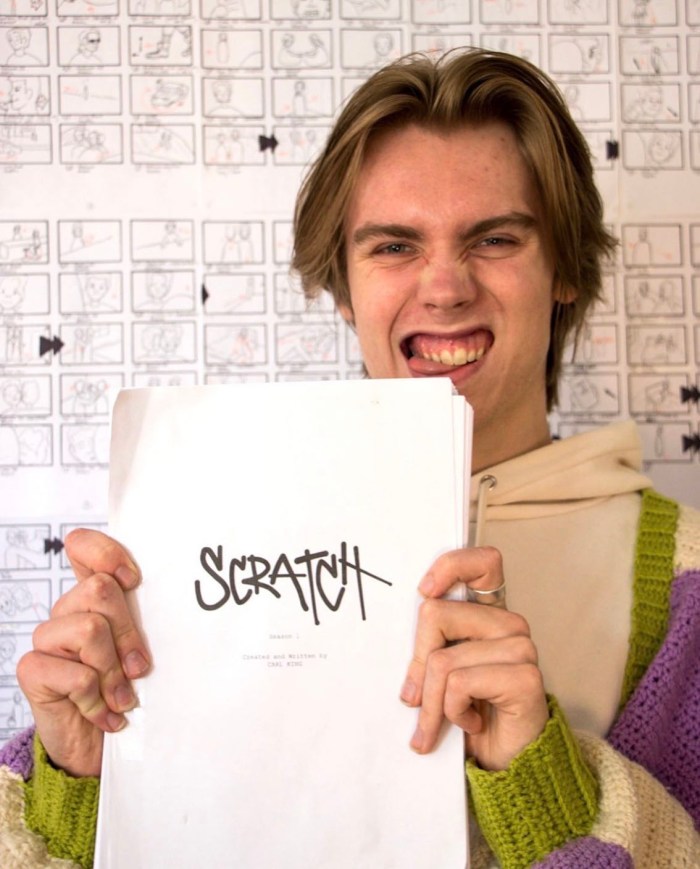
Carl King with the Scratch script.
That’s such a great response. Carl, you’ve said that you’re dedicated to ensuring diversity both on and off screen. Can you talk to us a bit about that passion, and why this is important to you?
CK It’s really important to feel seen in general. And when you can see yourself on the screen, you feel represented, and I think that’s really important. But equally, it’s really important that the people who are being represented are given the chance to tell their own stories. I think it creates a much more authentic story, and I think it just makes the work better than if someone from outside the group that’s being represented tries to make that same story.
As a heterosexual male myself who is so open and accepting of all cultures and parts of our community being represented fairly on screen, from my point of view over the past decade or so, the Australian screen industry has progressed in leaps and bounds in this area, but is it enough in your opinion?
CK That’s a good question. I think there definitely has been growth, but I always think it’s far from where I personally would love to see it. I still think there’s a very small area of representation within the queer community. I would love to see that expanded to include a wider range of representation. I can’t remember the exact numbers, but I did do some research a couple of months ago about queer representation in Australian media and TV, and it has grown, but it’s only grown by a single-digit percentage since the early 2000s. So I think there’s definitely still a lot more room to grow in that area.
What would you do to increase that percentage?
CK That’s another really good question. I would just like to see a lot more voices in higher creative positions because, again, when you get more diversity behind the camera, you get more ideas, and that’s not a bad thing. It’s not a negative judgement on anyone else who’s not from a particular group, but it brings in different life experiences. And I think when you open up your team to different parts of society and have a wider range of voices, you get something a bit more unique and honest. So I’d love to see more creative teams become a lot more diverse.
Is this how you both approached Scratch, by including more diverse voices on your team?
CK I think unconsciously, yes. It’s something that we’ve really looked into a whole lot more since filming, but myself and [co-producer] Bailey Hamilton, who was helping out in the developmental stages, talked a lot about how we didn’t want any straight people playing any of the main roles because we felt this story was so specific to the experiences that we’ve been through. We just wanted to make sure it was done properly and authentically. And so, in that way, we only wanted queer actors ideally playing these roles because these characters are very vulnerable too, and we didn’t want to open up the worst-case scenario of a queer actor being subjected to any sort of harassment from a straight actor.
SC Also, with the creation of Scratch, we were so limited in what we were able to do in terms of budget, so we tried our best with what we had in the Perth scene. But I think I have to agree with Carl, it was almost unconscious that it came about in the way that it did in terms of the cast and crew being who we are and identifying as we do. And now, going forward, that’s something I think we should try to actively implement every time we make something.
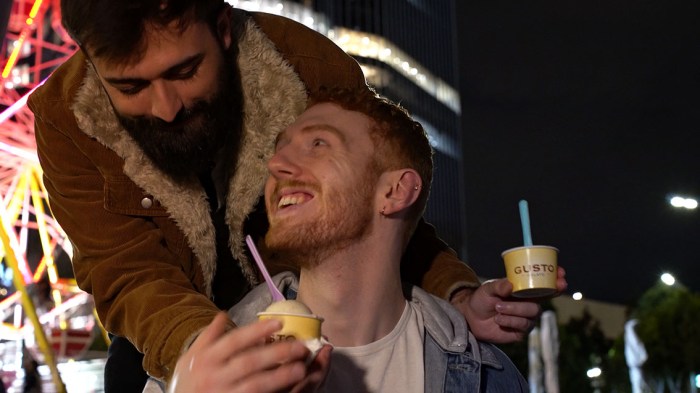
Zachary Drieberg as James and Glenn Wallis as Luke in Scratch.
How did the central narrative of Scratch come about?
CK Well, I like to describe Scratch as being a Frankenstein of true experiences that myself and some close friends had gone through during uni. There are so many moments in Scratch that are based on real things that have happened, and I’ve just found a way to stitch them all together. I always write from something that’s true to me, and I felt like I had such a collection of stories at this point that, when I was thinking about what to do with Scratch, I just felt that I had to get them all out. It was sort of like a release in that way.
Elaborate on that. How does it feel to reveal so much about yourself through Scratch?
CK When I first put it onto paper as a script, I felt it was a weight off my shoulders. Now I have a record of all these experiences that were just floating around, clashing in my mind. I also felt that seeing it all acted out on set, I think it’s kind of cliché, but the only word to describe it is “magical”, even in rehearsals. I’ve had so many people telling me and Sophie how they also felt the same way throughout so many scenes in Scratch. It made me really happy that something that had affected me so much is also resonating with other people. Someone at the recent WA Made Film Festival screening mentioned to Sophie that they had had crabs recently as well from an ex. [Laughs]. And then someone on the train ride home who had been at the screening told me that they also got crabs from an ex. And I was like, “Guys, where are we all getting these crabs from? Each other?” [Laughs].
Sophie, how early did you officially come on board Scratch as an associate producer?
SC I’d say that I’ve officially been on board since Carl came to me with his first draft. Some of my dialogue is actually things that I have said to Carl through text or in person. We would be hanging out talking, and he’d write down things that I was saying in his Notes app. And I’m like, “What are you doing?” And he was like, “I’ve got this idea. Can I use this as a talking point or a line of dialogue?” And of course, I said yes. Scratch is obviously Carl’s baby, but as associate producer, my role has transformed over the years. It started with me helping Carl with the script, and then my role developed into the actual casting and production of Scratch as well. I would watch people’s chemistry tests and auditions and give my recommendations to Carl. And then when it came to production, because we were so bare-bones, Carl and I both sourced the set and the costumes ourselves. We went in before the actors and put the set design together and figured out locations. I think my role as an associate producer maybe is not the traditional one that you would see in a production company, but it’s what I enjoy doing. It’s all very hands-on. Anything Carl needs, I’m there.
It must mean so much to you, Carl, to have such a supportive collaborator like Sophie.
CK It really does.
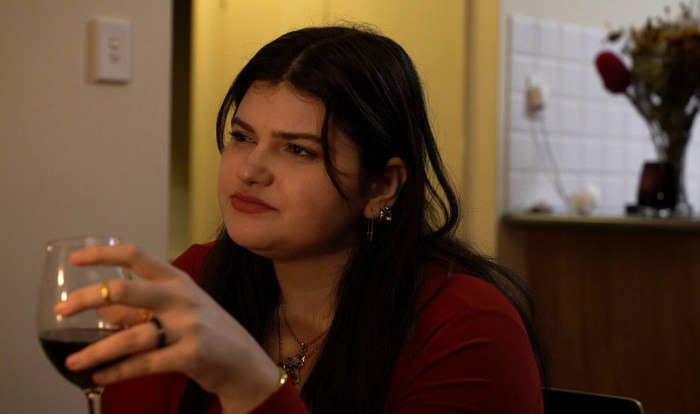
Sophie Coleshill as Soph in Scratch.
What made you decide on the web series format over a feature film?
CK Bailey and I had talked a lot back at uni about wanting to make a TV show because we’d done a little bit of work with assignments about creating show bibles. We were really interested in making a series ourselves. Scratch was originally meant to be a 20-minute short film, but it was Bailey who suggested that I rewrite it as a web series. We didn’t have the means to go and make a proper traditional TV show for either a network or a streamer, so we felt a web series was something that was really accessible for us at our level to make what we wanted to.
Do you watch web series yourselves, or do you prefer traditional film and television?
CK In terms of viewing, I love both film and television equally. But I tend to find myself thinking a lot more about film specifically. That’s nothing against the web series format, obviously. I love how Scratch has turned out. I think it’s perfect for the series format, but creatively, I lean towards film more.
SC I love, love, love watching films. I have a really hard time sitting down and watching a TV series. I get bored towards the end, which is terrible. [Laughs]. I get summit fever, but the opposite way. But I love making a TV show more. Something about the episodic structure just meshes well with how my brain works.
How did you find the editing process for a web series compared to a short film?
CK It was daunting at first because Scratch is the biggest thing I’ve ever made to this point. But I think I was really lucky because I could treat each episode like its own short film during the editing process. I was editing while we were also shooting scenes here and there, just to make sure it was all working. But yeah, it was a lot. I did take quite a while to edit. I felt bad towards the end because it had been six or seven months since wrapping and the actors hadn’t seen anything yet.
SC I didn’t have much of a hand in the editing process for Scratch. I did get to see little snippets here and there. Carl would ask me to come over to show me scenes and ask me what I thought. I’d give my input on pacing and rhythm and stuff like that. I was mostly just in awe of watching Carl edit.
This is more of a personal question for me as someone who works in the film festival space. I’ve heard from other web series creators that they’ve found the festival circuit difficult to crack because web series are hard to program. Is that something you found with festivals?
CK Definitely. Following post-production, I was looking at where to put the series, and I found that very, very few festivals have an option to submit a web series. Your festival [WA Made Film Festival] is one of the few that actually does. And then we had Diversity in Cannes as well last year, but they only play one episode of a series because of how many submissions they get. But then there were a few other festivals I would email just to say, “Hey, can you at least play us as a feature?” but we wouldn’t hear back from a lot of them. So I think re-editing it into a feature has been something we’ve talked about a lot as well, just to get it seen.
SC Film festivals are just that — film festivals — so they don’t always include a web series category. We’ve definitely considered cutting it into a feature just so we can get it into more of those queer-forward spaces.
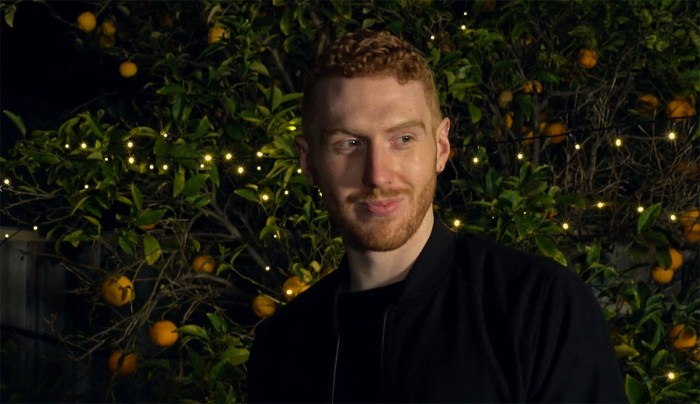
Glenn Wallis as Luke in Scratch.
Through my work with the WA Made Film Festival, I’ve been treated to quite a few films starring Glenn Wallis, who’s your lead here. What made Glenn the right fit to play Luke?
CK We love Glenn as a person first and foremost. Because I hadn’t met him before, I was really impressed with his self-tape. He projected this joy and optimism that was essential to the character. He also wasn’t afraid to lean into the more silly scenes, such as when Luke is quite itchy. So he was able to do both of those things, but even in those really weird scenes, he was able to bring that hope, even in the character’s lowest points. He made us feel like there was still hope for Luke in those moments, which I was really impressed by.
Glenn has such a charm about him and an incredibly likeable screen presence. Sophie, you act opposite Glenn in Scratch. Talk to us about working with him to develop your characters’ relationship and dynamics.
SC He was wonderful. He was instantly receptive from day one. The first time I met him was through a coordination call just to touch base with everyone. And even from that call, I was like, “Yeah, you’re fabulous. This is the open energy that we need.” Especially considering this was a project where we had to play best friends who are super close. One of the first scenes that we actually filmed was for episode five, which was one of the most emotional moments in the series. We had to cuddle in bed together and resolve an entire narrative that we hadn’t even shot yet. Glenn was such a lovely, warm and open person. He was fabulous.
I know for most actors that once the job is complete, they lose contact with their cast and crew quite quickly. But is Glenn someone you can see yourself working with again?
SC We would both love to keep working with Glenn. It was such a fabulous experience for both Carl and me. We all still have a group chat that we use to talk about both related and non-related Scratch stuff. We all got pretty close.
CK I’ve said to Glenn and the other actors that I would love to work with them in any way I can. I’ve made a short film since Scratch, which we’re hopefully going to be teasing later this year. Glenn worked on that short as a camera assistant because I didn’t have a role for him, but I really wanted to work with him. I do have other scripts with roles for him in mind. I also have one where he’ll potentially play the villain.
Carl, how involved were you in the direction of these two characters played by Glenn and Sophie? Would you describe yourself as being an actor’s director?
CK I really prefer a collaborative process. These two came into this with a lot of their own ideas for us to try out. A lot of the time, I think it just deepens the material. I always like rehearsal time, where I ask the actors for their opinions and ideas first. If it’s really off course from what I had imagined, then I would let them know that. But a majority of the time, I feel like they really pick up on the core ideas of what I’m trying to get across in the script. And then from there, I really trust their instincts with any character moments. I just love collaboration. I don’t like being too strict when it comes to the script.
SC In my mind, there’s my best friend Carl, and then there’s my director Carl. When we were on set, he was in charge. He was the main guy. It’s his time to shine. It was one big collaboration. There was never a moment on set where I felt like I was being judged for the choices I was making or that I wasn’t quite getting the joke in the way that it was written. Carl never told us once that what we were doing was wrong or questioned our creative choices. I’ve worked with some directors before where a lot of the actors are shaking in their boots. I never once had that feeling with Carl. It was a very calming filming experience.
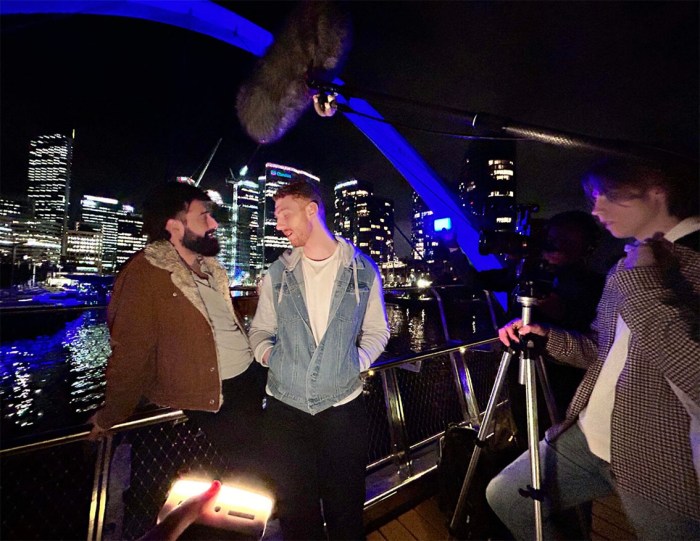
Zachary Drieberg and Glenn Wallis shoot a scene from Scratch at Elizabeth Quay.
One of the characters in Scratch is an actor, and there’s a film crew featured throughout the series. Was this your own crew?
CK That whole sequence was the most stressful part of shooting. Party scenes for me are always hard, and I always regret writing them. The lights in the background of that scene were lighting our shots, and our sound recordist, Blade, stood in frame recording all the audio that we heard in that scene. The extras were some of my oldest friends. I was like, “Can you please just rock up? Can you just please wear black?” And then we reused those same extras for the party scene at the end of the series. I just put different coloured jackets on them. [Laughs].
SC I just remember being very cold that night, and I did have to hold the camera at one point. And as an actor first, I was like, “Oh God, don’t drop it, don’t drop it! This is probably worth thousands of dollars.” [Laughs]. But I had to be confident because my character is in charge of that. I remember thinking, “Yes, this isn’t freaking me out at all.” [Laughs].
How big was your actual Scratch crew?
CK It was tiny. I was obviously directing, writing and producing. I was also the cinematographer and the editor. Then we had Blade Schoen, who was the sound recordist, but he did help with a lot more than just sound. He helped with some lighting ideas and camera assisting as well. And then Grace Stevenson, who was our intimacy coordinator, so she would only be on set on the days we had intimate shoots.
How confident were you taking on those additional roles that I’m assuming you aren’t trained for?
SC The first few days, I was shaking in my boots. I had to slate for a few scenes that I wasn’t in, and then sometimes even scenes I was in. We set up all the set ourselves, and I was there before my call time. I was called in early to help out Carl with some things, and I would stay after hours if I could. But after the first couple of days, I felt confident. It was similar to doing a community theatre show in that this is my family, and I’m going to help them out any way I can. So I’m going to learn, and I’m going to learn quickly.
CK I’m very used to working with a limited crew through uni. In our main production classes, we had someone for each role, but I also did a few independent study courses where I didn’t have access to all of these people. So it really gave me a good taste of what it was going to be like after uni, where I didn’t have a full crew from the get-go. I learned really quickly how to juggle all roles at once. There were even a couple of days on set after Sophie and Blade wrapped where I did some sound recording while filming and directing as well. But I’m really comfortable juggling everything.
I was happy to learn that you employed an intimacy coordinator for Scratch, which I think is so important, especially after seeing Kate Blackmore’s documentary Make It Look Real. How important was that for you, and how accessible is an intimacy coordinator on such a limited budget?
CK Well, we thought it was crucial for Scratch just because of how intimate it is. But believe it or not, intimacy coordinators aren’t super accessible. I feel like there are so few around, especially in Perth. The ones who are available have quite a high rate, and rightfully so. So we got really, really lucky that I knew Grace from an after-school filmmaking class that we had both been to. She told us that Scratch was the most intimate work she’d done. She was really fantastic. I don’t think we would’ve made as good a project without her there guiding those scenes.
SC I agree with all of that. It’s probably the most crucial crew member to have, especially from an actor’s point of view. I’ve done a few projects where an intimacy coordinator wasn’t available, and the energy in the room was awful. No one was doing their best work because everyone was dancing around things they weren’t completely comfortable with. Since working on Scratch, I really want to get accredited to be an intimacy coordinator. So if I’m not working as an actor or a producer, I can come in and do that work. But it’s hard. It costs a lot of money to get that qualification. They’re not making it easy, but it’s so essential, especially on a shoot like Scratch, where there is so much intimacy.
Was the intimacy coordination taken as seriously by everyone on set as it should be?
CK It was. We had our first rehearsal day with general scenes, and then a follow-up rehearsal focused on intimacy, where Grace really took over and explained the whole process and what was going to happen. Everyone was really on board with it. Everyone took it seriously and wanted to do it properly. By the end of it, Glenn and Zach [Drieberg] developed a shorthand with each other, so it became really comfortable for the actors.
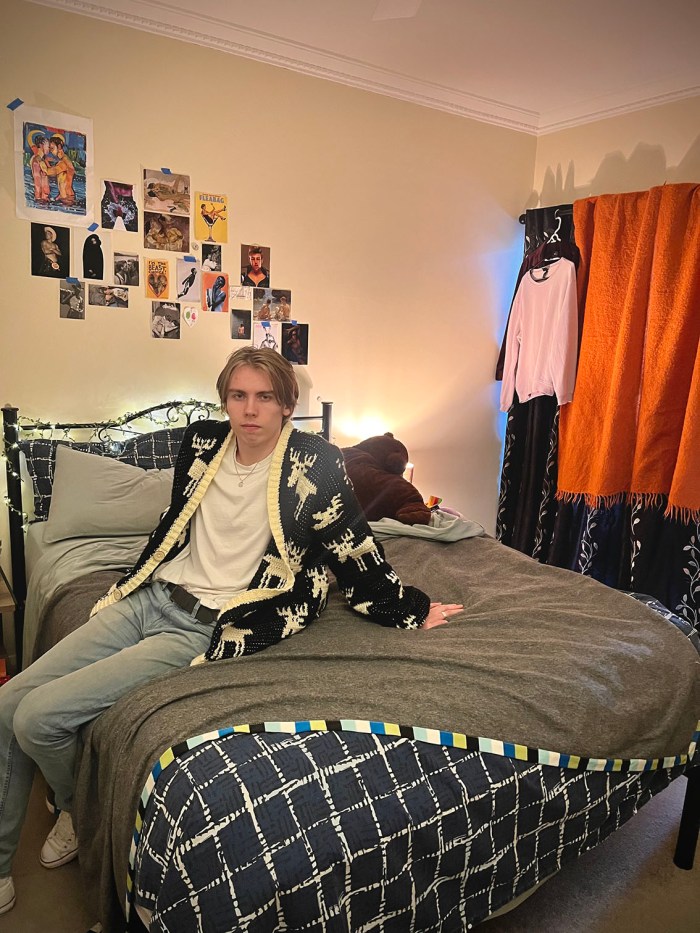
Carl King on the set of Scratch.
You experiment with breaking the fourth wall in the series. How easy is that to direct, and how did you find the editing process for those moments? Because they’re mostly looks without any dialogue.
CK Well, directing it was quite easy because I spent so much time on the script. I knew exactly when and why I wanted each look and each piece of dialogue to the camera. With the editing, there were a few scenes where I was kicking myself, going, “I really wish I got a few different angles to play with.”
I reckon I know exactly where those scenes are.
CK [Laughs]. For the most part, I was quite happy with how they turned out. It’s always a worry when you break the fourth wall. You never know if it’s going to come across as cheesy or if it’s going to take people out of the moment. But when I was directing and filming it, it wasn’t something I ever thought about. And I think having that mentality really helped, because if you go in worried, you’re more likely to end up with a bad result.
Sophie, as an actor, how did you feel about breaking the fourth wall? Had you ever done that before?
SC Not on camera, no. Of course, it’s different on stage with that line between the audience and the performers. But on camera, no. And especially in my training, you’re taught to never look at the camera. But I was very keen to do it here. It was very exciting.
As a viewer sitting in a cinema with an audience, did it work as well as you expected it to?
SC Yes and no. There were one or two moments where I thought it didn’t work out as I had intended in terms of my glance to the camera. But then there were other moments where I was like, “Wow, this is really lending itself to the format,” because it makes some of the little jokes land and looks quite comedic. When Luke is saying something that Soph just does not believe, and she gets the opportunity to be like, “Come on, guys,” and looks to the camera, that translated really well. And hearing the audience laugh during those moments was great.
The series features a stunning scene set at Elizabeth Quay in Perth, which we don’t see enough of on screen. It’s such a beautiful space. Even though it’s a central Perth location, it’s also very quiet at times. Was it easy enough to film there without being interrupted?
CK It was quite easy to film there because of how quiet it unfortunately is. The only trouble we had was the train line. We had to pause a few times for trains coming in. Other than that, I think the only other concern we had was the scene where the character James was talking a lot about his sexual preferences and the positions he likes with his boyfriend, and there were families walking past. So we would just pause and let them pass by. But we chose Elizabeth Quay because the lights there are so pretty, and there’s nothing better in a film than lights at night — especially streetlights. I love an orange glow on the street. But more than that, it was where I had experienced the real-life moments that influenced Scratch. This was one scene that is about 90% true to what happened to me there. So I knew I had to film it at that location.
What are some of the other real-life locations that made their way into the film?
CK The car park at Event Cinemas Innaloo, and the scene immediately following it in the first episode where James drives Luke home. It wasn’t the same street, obviously, but the idea that it’s the street outside his home was real. And in that scene, the dialogue was word-for-word exactly the same as it happened to me in real life. There were also a few scenes in episode five that are quite identical to real life too. While those scenes are slightly altered, the core of them is exactly how I experienced them.
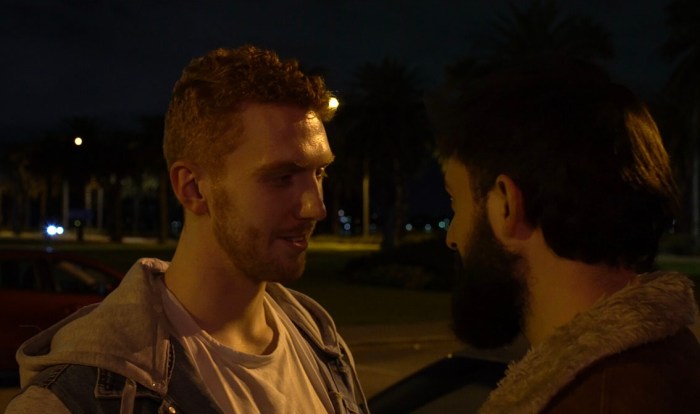
Glenn Wallis as Luke and Zachary Drieberg as James in Scratch.
I’ve enjoyed your honest look at the filmmaking process on your social media. Has that been a successful approach for you in terms of audience engagement?
CK Definitely. We’ve been getting a few comments lately asking where they can watch Scratch, which is really exciting for us. It tells us that there is an audience out there who want to see it. A few posts in particular have really blown up and connected with people online, which is exciting to see.
SC My job outside of film and acting is social media content creation for companies and brands, so I was really happy to employ those skills for something I’m actually passionate about, which is Scratch. We’ve had a really great reception, especially with content that’s honest. You’re obviously not going to come straight out of uni, have a million dollars, get picked up by Netflix, and make a six-season show that’s beloved by all. On TikTok, the small community we’ve built is full of people relating to what we’re saying, whether that’s the production side or aspects of queer culture. We had a TikTok go viral of Carl and his partner. It was a simple video, but how beautiful is it to make art within a queer relationship? It was really lovely to see that support and sense of community.
How vital is this process to filmmaking nowadays?
CK It’s quite important, I feel, especially for us, working with very limited resources. Building a platform is important to create an audience who will show up for you when you release your work. That’s something we discussed last year when we really started focusing on our socials. We knew back then that we wanted to host our own screenings of Scratch, which we’re doing in May, but at that point, we only had maybe 90 followers on Instagram and no TikTok. So we knew we had to build a platform to create some kind of audience who would want to show up.
As emerging filmmakers, how are you finding the Australian industry in terms of support?
CK We’ve found that most support has come through festivals such as the WA Made Film Festival. That community is really nice to be part of. But trying to make projects before they reach a festival stage, that’s a bit harder, especially in Perth. It’s growing, but right now, it isn’t as accessible for everyone.
SC I’d definitely say it’s the opposite for Melbourne, which is unfortunate but true. Maybe it’s just the circle I run in, but in Melbourne, when I tell people about Scratch, everyone knows someone who has worked in something. And every time I mention that Carl and I want to have an independent production house, people are like, “Oh, I’ll come and do camera work for free,” or “You can shoot at my house if you need.” The community here is really willing to pitch in and help each other, whereas I feel Perth hasn’t quite built that culture yet. It can be quite cliquey in Perth.
Scratch is a web series, which means it will eventually be available online. When can audiences expect to see it?
CK We want to finish up our cinema screenings first before putting it online. After that, we’re still figuring things out and discussing exactly which platform we want to use, whether that’s YouTube or Vimeo. That will all be announced on our socials once we make a decision.
Scratch will screen at The Backlot Perth on May 8, and the Thornbury Picture House on May 16.
If you enjoy Cinema Australia as much as I loved publishing it, please consider supporting Cinema Australia’s commitment to the Australian screen industry via a donation below.
I strive to shine a light on Australian movies, giving voice to emerging talent and established artists.
This important work is made possible through the support of Cinema Australia readers.
Without corporate interests or paywalls, Cinema Australia is committed to remaining free to read, watch and listen to, always.
If you can, please consider making a contribution. It takes less than a minute, and your support will make a significant impact in sustaining Cinema Australia as the much-loved publication that it is.
Thank you.
Matthew Eeles
Founder and Editor.Make a donation here.


 Cinema Australia