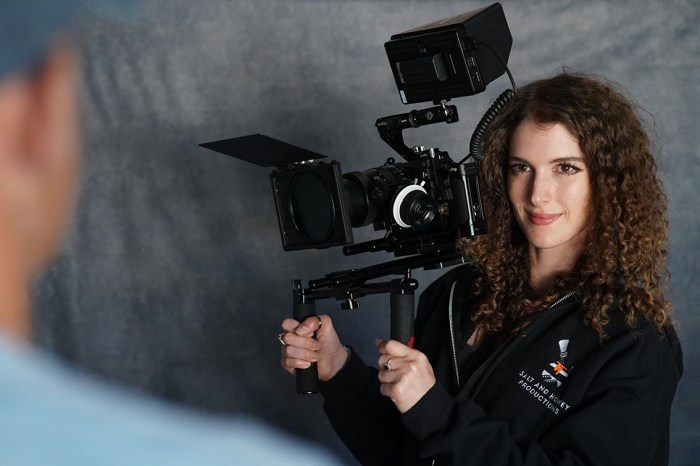
Emilie Lowe.
“What started as a kid messing around with a camcorder in the backyard has become my way of sharing meaningful stories on screen.”
by Emilie Lowe
I have been making films since I was seven years old. Now, at that young age they might not have been particularly good films, but I was still very passionate about creating them nonetheless. I would grab my parents old 2000’s camcorder, set up in my backyard and somehow convince my family to be my fellow actors and crew.
I have always loved making movies and telling stories. And now I do it every day.
As I grew older and became more involved with media at school, I upgraded the video camcorder for cine equipment and eventually found my way into the film industry. Being dyslexic, I was never very academically inclined, and the arts became my true passion. Film and media were not only things that I loved, but provided a space where I could actually use my strengths to tell powerful, impactful stories.
And so, I dove straight in.
What began for me as a career in acting and modelling quickly revealed that what I was really inspired by was telling the stories from behind the camera. Screenwriting, directing and cinematography became my focus. I combined this with my experience on set, and in front of the camera, and now I am lucky enough to have a career doing all three.
I founded my production company, Salt and Honey Productions, while still studying screenwriting at university, and taught myself cinematography, editing, production design and a whole load of on-set roles. I found inspiration in my everyday life; I have always watched a lot of films and try to find a few new titles each week. I go to the movies, study films, read scripts and discuss (maybe a little too much) movies with anyone who will listen. I always knew film and media would be in my future, and I enjoyed the opportunity to collaborate on stories that were impactful and resonated with audiences.
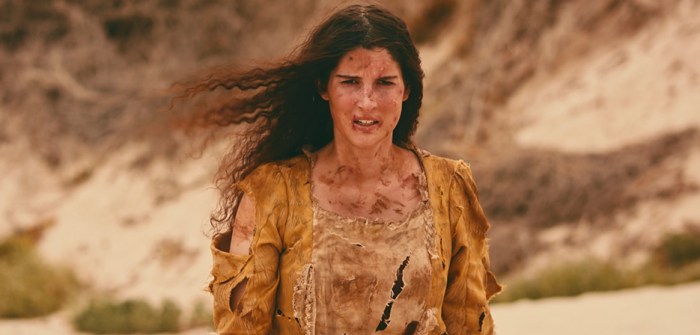
Emilie Lowe in The Canary.
In all honesty, I’ve always struggled to feel like I truly belong in social settings. It might surprise some people given the appearance of my outgoing personality, but forming genuine connections has never come easily to me, and I’ve often felt like an outsider. But films were where I could harness my visual creativity and really connect to others on a personal and intimate level through earnest and raw storytelling. It has become my way of expressing myself, and how I can convey emotions and themes through visuals and characters. When people connect with what I create… it means so much to me.
Shortly after founding my production company at 21 years old, I debuted my first feature film, The Canary. As I didn’t have too many connections to filmmakers at that time, I took on the roles of actor, director, editor, production designer, writer and a whole heap of other positions. The Canary is an 1800’s survival drama, over two hours in length and was filmed in the raw Western Australian outback and on the open ocean… I never give myself an easy task!
Made with only $10,000 and four team members, creating this was my film school, having had no formal film training. It was a turning point for me. I was hesitant to release it because, as I am sure we can all relate to, we are our own biggest critics. But with encouragement from my close network, I set it loose. Upon the features release it went on to win numerous international awards, including in London, LA, Paris, Amsterdam and Tokyo. I had multiple press articles discussing the value of independent filmmaking in Australia and defying the odds in a film career, and this made a few things evident to me: that storytelling would always be a part of my life, that you need to take the reins of your own future and that I would continue to make films – no matter how difficult it was.
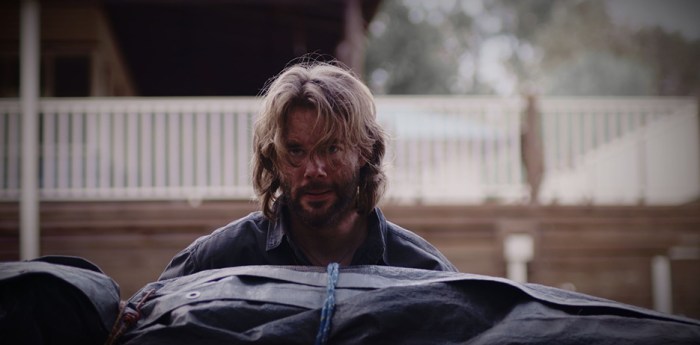
Zach Clifford in Where Dead Things Grow.
Since then, I have gone on to direct and shoot a number of award-winning creative works, with my most recent featurette, the 35-minute drama Where Dead Things Grow being recognised at the Vancouver Women’s Film Festival and International Photography and Cinematography Awards in London. I have also been fortunate enough to recently be awarded by the ACS (Australian Cinematographers Society) with an award, being presented at the National Cinematography Awards in May.
Recently, I set myself a new challenge. I wanted to create a documentary on something very personal to me: my family. Haemophilia is a rare genetic bleeding disorder that affects about 0.01% of the world’s population. Sufferers have the inability for their blood to clot, often resulting in prolonged and excessive internal and external bleeding. Many people have never heard of the disorder or understand how it impacts people’s lives.
For many sufferers it is a debilitating condition. My dad was diagnosed as a ‘bleeder’ at a young age, when a surfing accident led to him having a major bleeding episode that almost took his life. We have always been a very active family, and seeing my dad run marathons, exercise and surf daily, even now at 65, I never realised the full extent of how the disorder impacted his life. Everyone tends to see their father as invincible when they are growing up, but now looking back, I can see some of the atypical situations I saw him in. One example is when he was rushed to hospital in an ambulance after cutting his foot on a jagged brick wall. What would be an inconvenience to many of us becomes a life-threatening situation for someone with Haemophilia.
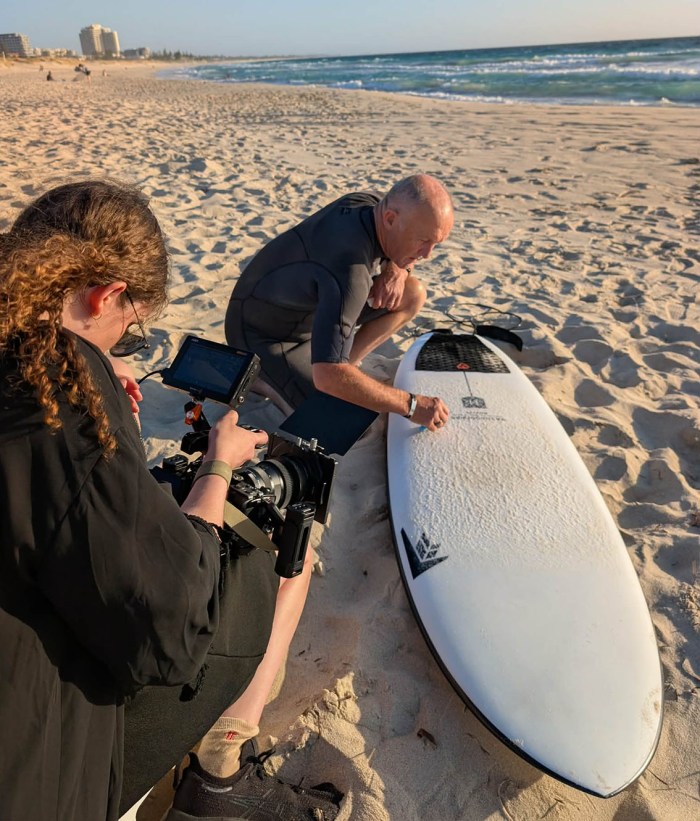
Emilie Lowe and Steve Lowe filming Factor Zero: Defying a Bleeding Disorder
Factor Zero: Defying a Bleeding Disorder shares the story of my dad, his discovery of his diagnosis, his acceptance and his resilience to not letting his genetics define him or stop him from pursuing his passion for fitness and surfing. But the documentary also goes a layer deeper. For the longest time, Haemophilia was thought to only be a male-affecting disorder. For decades women Haemophiliacs were mis-or-undiagnosed and invalidated in their experiences with the genetic bleeding condition. But things are changing. New research and better understanding has revealed that women actually can be Haemophiliacs as well as men and my sister is one of these rare cases. In the documentary, both my dad and sister express their differing-yet-similar experiences and share hope for the future of the disorder (with a possible cure on the horizon). My main aim for the documentary is that it encourages others living with any kind of genetic disorder and illustrates that we do not have to be defined by our diagnosis.
As a carrier of the Haemophilia A gene myself, my whole family was deeply involved in the making of this documentary. Coming from a background of scripted/narrative filmmaking, this project felt entirely different. I learned a lot about my family and really enjoyed the process of discovery as the cameras rolled. For my dad and sister, it was a far cry from being filmed in the home movies I made when I was seven. My dad stated that to begin with he “felt a little uncomfortable talking about my condition as even though I have problems I know that there are people who suffer from it a whole lot worse than I do. But I believe that this documentary is really important to educate people on Haemophilia and spread awareness about how it affects people’s lives.”
Factor Zero: Defying a Bleeding Disorder has just completed post-production and is entered the international festival circuit with plans to screen in the coming months.
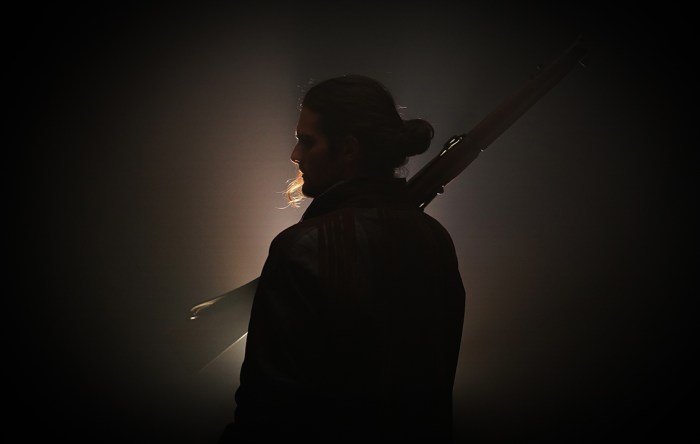
Gabriel Sheehan in a promotional shot for Emilie Lowe’s new feature film, Dead Centre.
So, what’s on the horizon for the next adventure?
I am very excited to announce that we are in pre-production for my next feature film. Emphasising local talent, cast and crew, the upcoming quasi-western monster thriller Dead Centre will be shooting across the raw and diverse WA outback. Ian Hale, a dedicated long-time supporter of independent cinema, is our executive producer. Gabriel Sheehan, a WA WAAPA and NIDA alumni, stars as our lead actor and I am delighted to be directing and shooting the cinematography for the feature film. We are now opening casting calls for the remaining roles and crew positions and are looking for altruistic support from the community and local businesses. Western Australia has so many talented creatives and incredible voices, so I am really looking forward to making another feature in our state.
I’m beyond excited to keep developing and showcasing my passion for film and the Western Australian creative community. What started as a kid messing around with a camcorder in the backyard has become my way of sharing meaningful stories on screen. So, if you feel that strong connection to the arts and storytelling, I thoroughly encourage you: write that story… start that project… pick up that camera and just start shooting. Who knows where it might end up taking you.
You can find out more about Emilie’s work at http://www.saltandhoneyproductions.com.au
To support Dead Centre, please visit: https://gofund.me/8a8121656
If you enjoy Cinema Australia as much as I loved publishing it, please consider supporting Cinema Australia’s commitment to the Australian screen industry via a donation below.
I strive to shine a light on Australian movies, giving voice to emerging talent and established artists.
This important work is made possible through the support of Cinema Australia readers.
Without corporate interests or paywalls, Cinema Australia is committed to remaining free to read, watch and listen to, always.
If you can, please consider making a contribution. It takes less than a minute, and your support will make a significant impact in sustaining Cinema Australia as the much-loved publication that it is.
Thank you.
Matthew Eeles
Founder and Editor.Make a donation here.


 Cinema Australia