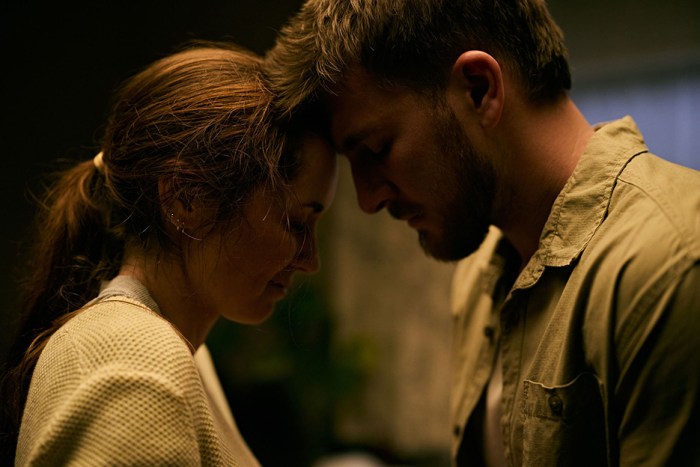
Genna Chanelle Hayes and Joshua Long in Olivia. Photo by Narelle Portainer.
Production has commenced in country Victoria on Australian filmmaker Genna Chanelle Hayes’ highly anticipated second feature film, Olivia.
Set against the vast landscapes of rural Australian life, Olivia follows a young mother navigating domestic violence while raising her child. With raw intimacy and stark beauty, the film examines relational dynamics that lead to abuse, offering a personal yet universal perspective on the female experience.
Hayes said there was no better time to tell this story.
“I believe men are open and listening, and really want to hear what women have to share,” Hayes said. “For so long we’ve been censored and gaslit into silence, and still are in many cases due to pre-existing programming we were all born into. But it is up to us as women to unchain ourselves and each other. And part of that is being willing speak on difficult things.”
Following the success of her debut feature Akoni—which earned multiple nominations across ARIA, AACTA, ADG, ASIN and ACS Awards—Hayes admits she wasn’t certain she would make another film.
“Very few female filmmakers in Australia get the chance to make a second feature,” she said. “And our industry is not built for the autonomy of independent storytellers, which makes career longevity near impossible in this country. It is immensely sacrificial, and requires a generous village. But I believe Olivia is important. It’s a story I’ve carried for a long time, and coming home to tell it in the country, from our perspective, feels right.”

ADVERTISEMENT
Partnering with Panavision, the Southern Grampians and Campaspe Shires, and a growing number of local and interstate businesses, Hayes is building a community-driven “Be Good To Her” campaign to create safe and secure communities for women and girls.
The initiative aims to unite men and women in open conversation, fostering a deeper comprehension of the cultural factors that contribute to violence in our communities. By encouraging informed understanding and collaborative dialogue, it seeks to enable authentic action and drive real, lasting cultural change across Victoria and beyond, reshaping how Australian women and girls are perceived (and therefore treated) in all parts of society.
“We need to move beyond raising awareness and PR campaigns, and focus on action to create meaningful change for generations to come, so men and women, boys and girls can relate in healthy and peaceful ways,” Hayes said.
The urgency is clear: new Victorian Women’s Health statistics reveal at least one in five Victorian women experience family violence over their lifetime, and one woman is killed every fortnight due to family violence. Nationwide, police are called to a domestic violence incident every two minutes.
Casting is still underway, with Hayes starring alongside newcomers Percie Burge and Joshua Long.
Olivia is scheduled for release in early 2026 and will be the first in Hayes’ The Herstory Slate, a series of films championing women’s rights through cinema.
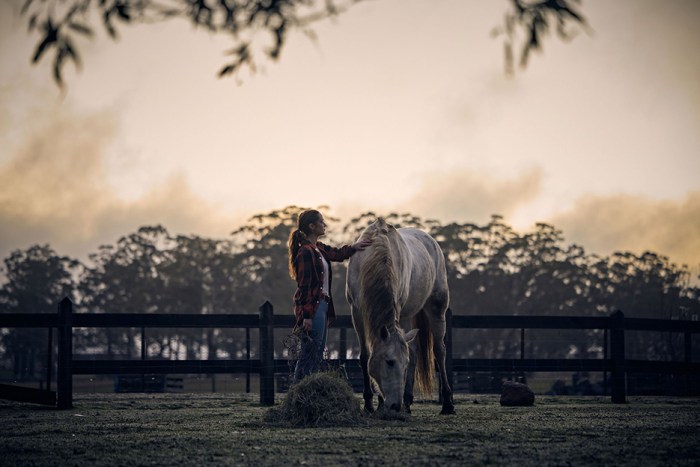
On location in the Southern Grampians. Photo by Narelle Portainer.
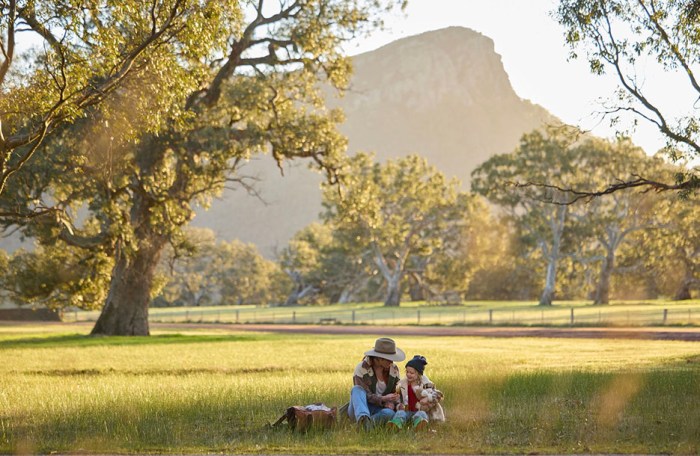
Country Victoria’s iconic Western District landmark, Mount Sturgeon, provides a dramatic backdrop to Olivia. Photo by Narelle Portainer.
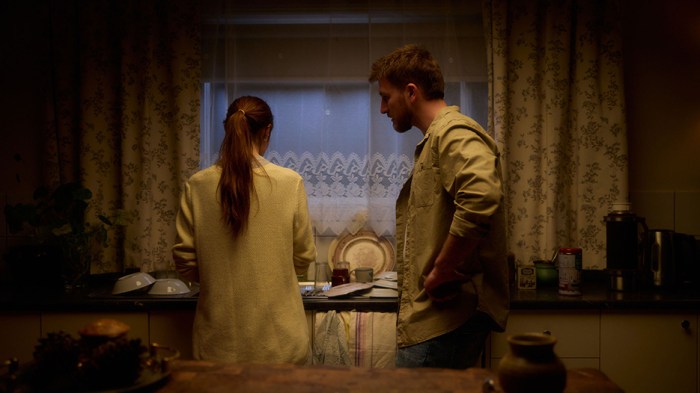
Genna Chanelle Hayes and Joshua Long in Olivia. Photo by Narelle Portainer.
If you enjoy Cinema Australia as much as I love publishing it, please consider supporting Cinema Australia’s commitment to the Australian screen industry via a donation below.
I strive to shine a light on Australian movies, giving voice to emerging talent and established artists.
This important work is made possible through the support of Cinema Australia readers.
Without corporate interests or paywalls, Cinema Australia is committed to remaining free to read, watch and listen to, always.
If you can, please consider making a contribution. It takes less than a minute, and your support will make a significant impact in sustaining Cinema Australia as the much-loved publication that it is.
Thank you.
Matthew Eeles
Founder and Editor.Make a donation here.


 Cinema Australia