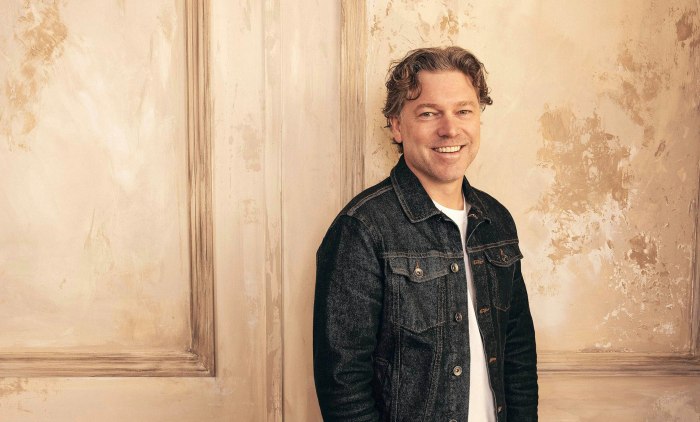
Nicholas Clifford. Photo by Robby Klein.
Filmmakers have been using the time-loop genre as a narrative device for decades, but none have come close to matching the nostalgic adoration of Harold Ramis’ Groundhog Day, starring Bill Murray as a depressed and cynical weatherman forced to relive a bad day.
In Australia, we’ve had our own share of time-related films, from the Spierig brothers’ Predestination to Josh Lawson’s Long Story Short, and the criminally under-appreciated The Infinite Man, directed by Hugh Sullivan.
With One More Shot, director Nicholas Clifford and writers Alice Foulcher and Gregory Erdstein put their own spin on the genre, adding a touch of magical realism in the form of a tequila bottle and a glowing worm.
Starring some of Australia’s most adored acting talent, including Emily Browning, Sean Keenan, and Ashley Zukerman, One More Shot is set on New Year’s Eve in 1999. The film follows Minnie (Browning), who reluctantly attends a party for a chance to reconnect with her old friend-with-benefits, Joe (Keenan). Minnie soon discovers the bottle of tequila she brought along is more than just bravery gravy… it’s magic. One swig sends her back to the beginning of the night, giving her multiple attempts to get back together with Joe.
One More Shot was originally conceived by WA writer Heather Wilson, who helped Clifford and his team develop the story. Foulcher and Erdstein were later brought in, thanks to their clear understanding of comedy, having previously made their own comedic gem, That’s Not Me.
“It’s been a really long road of development, sitting in the writers’ room and talking about ideas, which we all loved,” Clifford tells Cinema Australia ahead of the film’s world premiere at the Melbourne International Film Festival.
“That process of developing material is just as important as writing it yourself. It was a real team effort, and Alice and Greg obviously did such a wonderful job. We had a great time laughing about all the different elements as we worked on it. It went through a long development process, so I hope it feels like it’s been really worked on when people watch it.”
Following its Australia premiere at MIFF, One More Shot will then head to CinefestOZ in Western Australia, where it will screen in competition for the $100,000 CinefestOZ Film Prize, alongside contenders We Bury the Dead, Birthright, and Songs Inside.
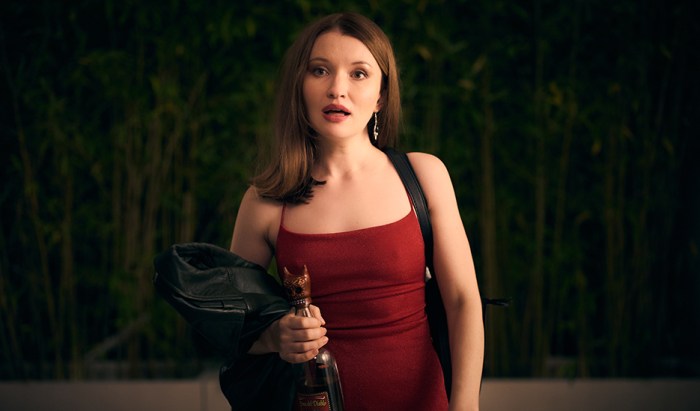
Emily Browning in One More Shot. Photo by Ben King.
“I can absolutely watch straight comedies. But there’s something I really enjoy about working with actors and having that dramatic conversation. It’s great to work with someone like Emily Browning who can do both.”
Interview by Matthew Eeles
I know it’s only early days, but One More Shot is officially a Stan. Original. How exciting is that for you as a filmmaker?
Stan. were a really important piece of the pie. We’re pumped about what they’re doing with it, and they seem really excited by it. The people there are lovely. It’s been a really collaborative process, and I hope that means more people get to see it, honestly. I hope they get right behind it.
What are your thoughts on streaming versus a cinema release?
It’s interesting, isn’t it? I think I’ve entered the market, or the industry, just as release models are starting to settle and find their feet. When streaming first came in, obviously it was disruptive to cinemas, but it feels like over the next maybe five to ten years, what it looks like will settle. I love going to the cinema. I don’t think you can replicate that experience at home. There’s nothing like going out and seeing a film in IMAX, for example. You’re not going to do that in your living room. So I think there’s a place for both. And I feel like the industry will sort itself out through pure economics. But I, for one, cherish the cinema experience and don’t see it going anywhere. I think it’ll just naturally find its rhythm.
I know you’re coming into this industry from a commercial background, but what’s been your filmmaking experience so far?
It’s been a long road. I was an AFTRS graduate, so I lived in Sydney and did film school there. When I came out of that, I moved straight into music videos, short films, and TV commercials. I set up a production company, worked in advertising, and did whatever I could that kept me shooting. So I guess I’ve been shooting the whole time. I’ve also made some short films along the way, which were a really great way to learn. I wrote this little short when I was in Canada and was actually going to shoot it over there, but I brought it back here. It played around the European festival circuit and sold to CANAL+. After I’d done that, I knew it was time to graduate. I’d always been writing and developing stuff, so we had a slate of projects, and One More Shot took the lead. Before we knew it, we were casting it, and now here we are today.
What was the name of the short film you mentioned?
It’s called The Handyman. It was a little two-hander—a dramedy. I really like it, and I actually think it would make a good feature. But it was just an exercise in tone and writing, really. I think that’s what short films are really good for. You can sort of pick three things you want to work on and just go for it—whether that be an expression of theme, or maybe there’s a visual style you want to practice, or writing. And most importantly, it puts you out into the world. That’s always daunting, but that’s how you grow as an artist. You need a stage to play on.
Was working in short films and in the commercial space enough to satisfy your creative itch?
I would definitely say that I’ve always loved just two actors in a room. That’s my favourite thing in the world, and that’s a little less relevant in most commercial work. Commercial work is usually about a brand. There’s storytelling, but it’s just a different sort of storytelling. I probably should have been a theatre director, because I quite like that stuff. That’s why filmmaking is so fun for me, because that’s the style I really enjoy. Commercial work does allow you to be on set. You learn the cut and thrust of a shooting day, managing crew, time, expectations, all that stuff. It’s the kind of experience that really helps. So when you do get on a film set on a bigger scale, you’re not going to be too rattled because you’ve done it enough.

Sean Keenan, Ashley Zukerman, Pallavi Sharda, Aisha Dee in One More Shot. Photo by Ben King.
I know this film has its share of drama, but comedy is a genre that seems to drop in and out of favour—unlike horror, for example. Where does comedy fit in terms of general filmgoing for you?
Well, I love pure comedy, but I also love drama. I’m unfortunately one of those people in the middle who quite likes both in a piece of work. And I think the tone of One More Shot is something I really like. There’s lots of fun in it, and it can be quite absurd at times, but it’s also really grounded. Hopefully the audience will take away ideas and themes and recognise that there’s as much drama as there is comedy in this film. I like that tone and style. Don’t get me wrong—I can absolutely watch straight comedies. But there’s something I really enjoy about working with actors and having that dramatic conversation. It’s great to work with someone like Emily Browning who can do both. It’s so cool to watch someone be in these great little dramatic two-handers, but also bring really funny scenes to life. I quite like working in both spaces.
The best comedies are the ones steeped in drama. Look at Muriel’s Wedding. That film is remembered mostly as a comedy, but it’s incredibly dramatic at the same time. Comedy and drama go hand in hand.
Exactly. And that’s the same with one of the all-time greats, like Bridesmaids, right? There’s a really big beating heart in that film.
And there’s also Melissa McCarthy shitting into a sink.
Right? [Laughs]. It can go anywhere. And I think that just keeps it alive. As much as I love pure dramas and pure comedies, I’m quite happy living between both worlds too.
What are your memories of Y2K?
I remember the panic, especially coming off the back of COVID. I’m from Melbourne, and no one did COVID like we did, so it’s all still very fresh. I think there’s a crossover there. What I liked was the relevance of the whole world having a similar experience through COVID, so we wanted to tap into that big unknown. I think it’s thematically relevant for our character Minnie [Emily Browning]. She’s essentially about to arrive at a big unknown in her life. All the classics are in there—planes falling out of the sky, the internet going down, losing all your money. It’s sort of the greatest hits of Y2K fears.
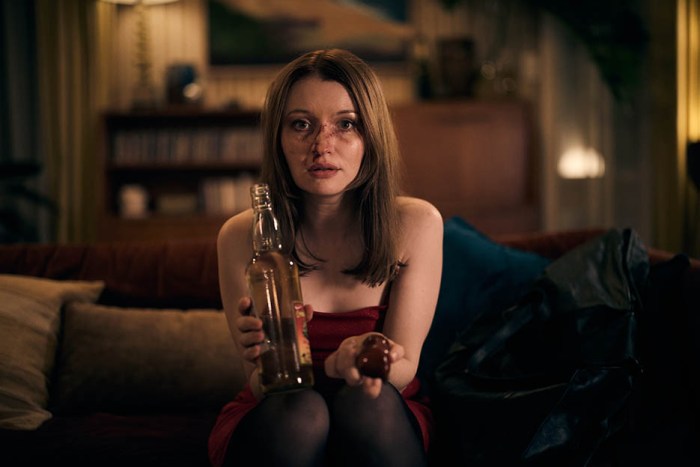
Emily Browning in One More Shot. Photo by Ben King.
During the development stages, was it ever going to be set during COVID?
No, definitely not. It was more about drawing a parallel around those ideas. Our Y2K essentially represents this great big fear. The film isn’t really about that, but it gives the characters a larger question to grapple with. For me, the film really explores ideas of contentment. And I think in life, not many people can say they’re truly content with where they’re at. We’re always kind of looking for the next thing, and each of our characters is exploring that in a different way. Then Minnie bumps into them all, which forces her to question her own position in life. It’s a big question that’s always hanging over you: Who am I? What am I going to do next? And I don’t think you ever outgrow that.
One of my favourite things about watching a film from an intelligent filmmaker like yourself is picking up on themes and subtext. One More Shot explores many aspects—from relationships to contentment—but one theme that really stuck out for me was alcoholism and addiction, and how much most of us can rely on alcohol in certain situations or as a coping mechanism. How important was that theme for you to get across to the audience?
Very much so, and now I’m wondering if that’s a subconscious COVID thing as well. I think with characters like Joe [Sean Keenan], there was a real discovery during the development process. I really love that scene with Joe and Minnie in the bathroom, where he confesses something to her. We clearly understand his position at that moment, so the audacity of her to nudge him in the face really makes her question, What am I doing? So I guess the theme of his addiction is more about him trying to turn a page. It’s like, How do I try and not be who I am today, tomorrow? Again, it all ties back to that theme of contentment in life. And I think that scene is a really good example of how drama and comedy can coexist. I thought Sean played it so well, and Emily as well. I love that scene.
Was it always going to be a bottle of tequila?
Well, the original concept was beer, and then through development, Alice and Greg were like, “What if it was tequila?” And I loved that. It was a bit of fun. The art department and production design, and the general development of the bottle, was actually really fun. I love that little prop. I’ve got one on my desk at the office. I think it’s got a really cool mystery to it. We looked at old tequila labels, so we really had fun with that concept and trying to make it feel mysterious and magical.
And everyone’s had a bad night on tequila at least once.
It’s crazy. If there’s one thing that’s kept popping up throughout this whole process, it’s confessions from people who drank tequila once and never again. [Laughs].
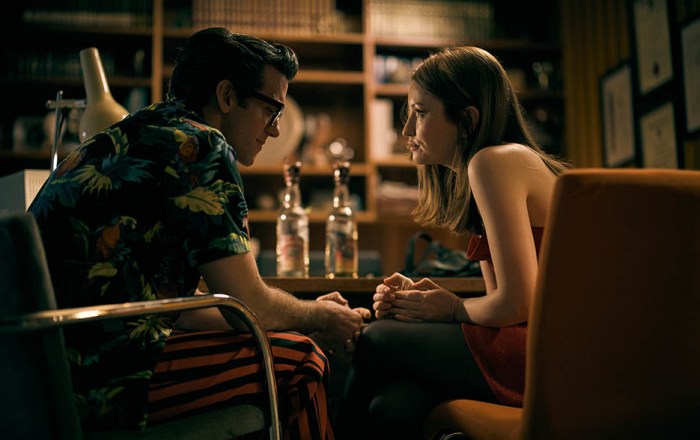
Ashley Zukerman and Emily Browning in One More Shot. Photo by Ben King.
I can’t ask you about every one of the incredible cast members you’re working with here, but they’re all among my favourites working today. Do you have a story you can share with us about working with this incredible ensemble?
I’m really stoked with the cast, and I agree with you—they’re all so fantastic. I met with them individually. We locked in Emily first, off the back of a couple of really great chats I had with her when we caught up for lunch in LA. From there, it was all about surrounding her with other really great actors. I’m a huge fan of Ashley and Sean. I’m a massive fan of all of them. I’m really stoked with that ensemble. But to give you a fun little tidbit—with a film like this, it’s a single location for the most part, and it’s a relatively small cast. You assume that’s going to be really friendly to your schedule, but when you actually break it down, everyone’s there all the time in those busy scenes. So all the actors needed to be on set all the time together. We had the full ensemble down on the beach, in the lounge room, out on the balcony—they were all there, all the time. [Laughs]. There was a really great bond and a strong sense of camaraderie between the cast. That was actually really nice. I’m sure they weren’t as in love with the situation as I was, but it was cool to have everyone there all the time. [Laughs].
How was the energy on set? Was it a supportive and collaborative one, considering they were all together all the time?
I’d say so. Everyone was so lovely and professional and kind to each other, and the shoot went really well. I think we all had fun. Emily’s such a trooper. I said to her really early on, “This is all you. There’s nowhere to hide.” And she’s in every shot. So she just turned up every day and did it. And everyone around her was really great. They were all fun and funny, and we just went about it in a really rewarding way. They were awesome.
Have you seen Ashley Zukerman in In Vitro?
I went to the MIFF screening of that film last year.
I still can’t shake his character and his performance in that film.
Oh, he’s so good in it. And when I saw he was in it, I was like, “Oh, I’ve got to go see that.” So I went to one of the MIFF screenings. He’s such a great actor. I really, really like him.
One observation I have about One More Shot is how much the film pivots from comedy to drama when it’s Ashley’s turn to shine in the film. I won’t give anything away, but he has perhaps the most dramatic turn of all the characters.
That’s true. And I think the day when that plot point happens was such a fun day to shoot—watching Emily, Ash, Sean, and Aisha all go for it. It was a really cool day. And you’re right, the first half of the film is different to the second half. I hope that’s a rewarding experience for the audience. Most of the feedback we’ve had has been about that sort of thing. It was fun. It was a fun little twist. Ashley did so well. There are so many great scenes with just Emily and Ashley. Thinking back on shooting those scenes now, it was a lot of fun.
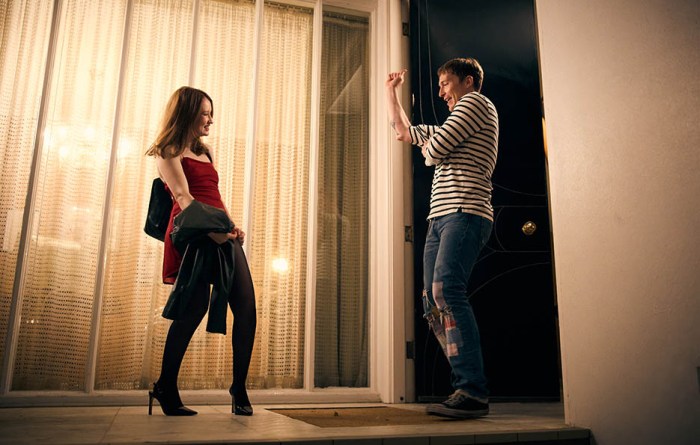
Emily Browning and Sean Keenan in One More Shot. Photo by Ben King.
This film truly does have a banging soundtrack. Did you have a hand in selecting the songs?
My poor editor, Julie-Anne De Ruvo. [Laughs]. What a legend. I love the music, and it was a big part of the film, super important. So we really wanted to stretch ourselves and make sure we honoured that in a really rewarding way. All the tracks were essentially handpicked, and even Jemma Burns, our music supervisor, was a huge part of it. Then there was the challenge of trying to negotiate a price. We had a great team that also included Justin Stanley, the composer. All of us worked together to make it as good as we could. I think two of the songs had to be locked in before we actually shot, because I had to do a dance sequence to one, and then there was the scene where Minnie opens the front door—so we had to commit to at least one before filming, which was scary, because you get into the edit and want to play around. But luckily, that worked well. For the rest of the scenes, I had a general idea, but then you watch it and you’re like, “Eh, let’s try something else.” [Laughs]. So it was a real discovery process, but a rewarding one as well. It wasn’t punishing to sit there and listen to all that great music from that time. [Laughs].
Was there a particular song that you just had to have no matter what?
There were a couple that Alice and Greg had written into the script, which was cool. We wanted to honour that. I went way beyond my scope with the music. I remember showing the edit to the producers for the first time, and there was all this music in there because it had gone through a bit of an evolution. Then it was like, “All right, we’re going to need to find a bit of money and do a bit of negotiating.” [Laughs]. But everyone jumped in on it, and we actually got everything we wanted in the end. Some of our stakeholders were kind enough to come to the table, which is so important. There was music of the time present in the film, and we tried to get a balance. I love that there’s The Cranberries, and then there’s Spiderbait. Hopefully the audience feels that.
Other than being 90s aligned, was there any significance to the dress-up characters in the film like Ace Ventura, Kurt Cobain, and Mia Wallace and Vincent Vega?
It was mostly about recognisable icons of the time. The wardrobe was an interesting one. I was just talking about this the other day, actually. When you read the script, it’s easy to forget that they’re in those costumes for the whole film. It was important for us to make sure they never looked cheap or tacky. That was my biggest fear. We worked hard on that. I spoke really early on about how important the level of detail and quality needed to be, especially from the characters’ point of view. The thing I really love about the way costumes function, as a director, is that you’re trying to make sense of everything all the time. We meet Minnie, she arrives at this party at night, and everyone’s got their facade up. Everyone’s literally wearing a costume. But as she picks through the night, those costumes begin to unravel. I like that the next day, after they’ve been through this experience, everyone’s costume has peeled away and they’re all their true selves again. So coming at it from that angle was really fun for me as a filmmaker. We really used those costumes to help tell the story.
If you had a magic bottle of tequila, what point in your life would you like to have multiple attempts at?
Maybe just one more shoot day to get everything right. [Laughs]. No, I don’t know. What would I do? I’m one of those tragics that thinks life is a big learning journey, and the scars are what make you who you are. So I don’t know where I’d go back to, off the top of my head. I’d pick something fun, that’s for sure.
One More Shot will screen at the Melbourne International Film Festival from Saturday, 9 August. Details here. The film will then screen at CinefestOZ where it is one of four film prize finalist. Details here.
 ADVERTISEMENT
If you enjoy Cinema Australia as much as I love publishing it, please consider supporting Cinema Australia’s commitment to the Australian screen industry via a donation below.
I strive to shine a light on Australian movies, giving voice to emerging talent and established artists.
This important work is made possible through the support of Cinema Australia readers.
Without corporate interests or paywalls, Cinema Australia is committed to remaining free to read, watch and listen to, always.
If you can, please consider making a contribution. It takes less than a minute, and your support will make a significant impact in sustaining Cinema Australia as the much-loved publication that it is.
Thank you.
Matthew Eeles
Founder and Editor.Make a donation here.


 Cinema Australia