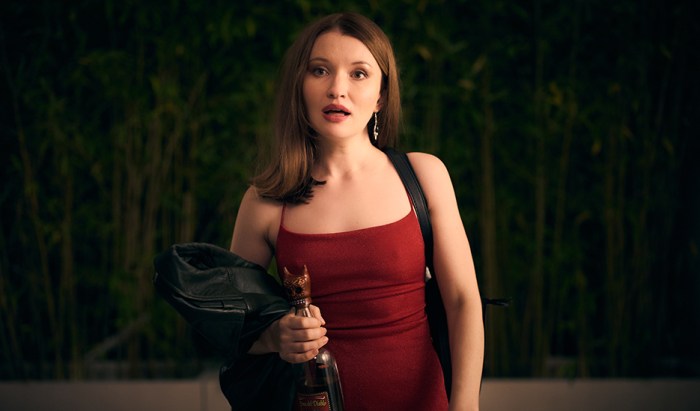
One More Shot
Tonight, the 73rd Melbourne International Film Festival (MIFF) unveiled an outstanding program of over 275 screen works and announced the 10 Bright Horizons films screening in competition and vying for MIFF’s flagship prize. From 7-24 August, cinephiles across Melbourne, regional Victoria, and through out the country online can explore a diverse program overflowing with features, shorts and XR experiences.
On and off the screen, MIFF 2025 connects deeper with festival-goers from showcasing the best new Australian filmmaking, beloved auteurs, alongside live-score cinema events. This year’s program boasts a curated schedule of talks, panels, special events and no shortage of blockbusters – including the World Premiere of Jimmy Barnes: Working Class Man.
Of tonight’s 2025 Program Launch event, Artistic Director, Al Cossar, said: “MIFF returns to illuminate the dark depths of Melbourne winter with a globe-trotting array of exceptional cinema, incredible experiences, and the biggest festival celebration of Australian filmmaking on the planet. With over 275 films across 18 days in cinema, weekend regional expansions across Victoria, and a further week online available at your place, all around Australia, MIFF is an invitation to discover a world of film, and the world on film; to up-res your cinephile credentials, and to binge your way through an epic program brimming with imagination and ideas.”
Across the MIFF Awards presented by Penfolds, and accompanying MIFF Shorts Awards, the festival continues to celebrate cinematic excellence and talent with an awards suite of over $300,000 – one of the world’s most significant filmmaking prize pools. As chosen from the Bright Horizons Competition and supported by the Victorian Government through VicScreen, the festival’s top accolade – prestigious Bright Horizons Award – recognises first and second-time filmmakers with $140,000 making it the richest feature film prize in the Southern Hemisphere. Nominees of this year’s various other award categories will be announced later this month.
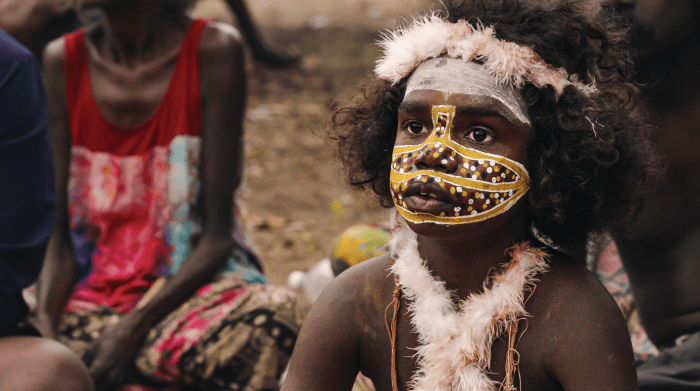
Journey Home, David Gulpilil
Alongside many of the Bright Horizons directors and MIFF Jury attending this year’s event, festival-goers can expect a bevy of visiting creatives and stars in town as MIFF rolls out the red carpet for 18 days of world-class cinema events. Guests set to attend this year’s festival include Dacre Montgomery, Emily Browning, Sean Keenan, Mary Bronstein and Marlon Williams – with more names to be shared closer to opening.
Writer-director and producer, Charlotte Wells, will serve as this year’s jury president, some three years after her celebrated debut feature, Aftersun (MIFF 2022), was selected for MIFF’s inaugural Bright Horizons Competition. Wells will oversee a distinguished panel of industry experts including Australian actress, writer and performer, Tamala; American filmmaker and actor Alex Ross Perry (Pavements; Videoheaven, MIFF 2025); Greek filmmaker, writer and producer, Athina Rachel Tsangari (Harvest, MIFF 2025); IMDb founder and Executive Chairman, Col Needham; Vietnamese- Australian author and screenwriter, Nam Le; and Australian composer and musician Caitlin Yeo.
The MIFF Regional showcase will tour across the festival weekends of 15–17 and 22–24 August with venues in Bendigo, Ballarat, Castlemaine, Morwell, Geelong, Rosebud, Sale and Shepparton ready to screen some of this year’s much-loved titles, supported by VicScreen and Screen Australia. For cinema-lovers further afield, MIFF Online also returns from 15–31 August – one week after the festival wraps up – featuring a limited suite of festival films and free short films available on demand via ACMI’s dedicated online streaming platform, Cinema 3.
Previously announced, this year’s MIFF Premiere Fund presents seven new Australian features, including Kasimir Burgess’ Iron Winter, which follows two young horse herders through the backdrop of East Asia’s breathtaking and forbidding Mongolian steppes; Lorin Clarke’s intimate portrait of her father, the late-great funny man John Clarke, in But Also John Clarke; Kalu Oji’s quintessential suburban Melbourne tale of life in a migrant community, Pasa Faho, starring Tyson Palmer and Okey Bakassi; Nicholas Clifford’s Y2K tequila-fueled comedy, One More Shot, with Emily Browning, Sean Keenan, Ashley Zukerman, and Aisha Dee; Kristina Kraskov’s observational documentary, Spreadsheet Champions, charting six young people in the world of competitive Excel; Sue Thomson’s humorous and playful Careless, exploring Australia’s aged care crisis; and James J. Robinson’s feature debut, First Light, a slow-burn crime drama exploring faith and corruption – which also screens as part of this year’s Bright Horizons Competition.
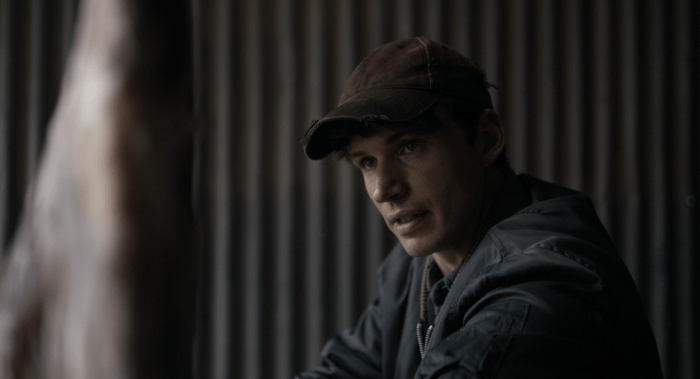
Alphabet Lane
Presented by The Saturday Paper, The Golden Spurtle stirs up Scotland’s competitive spirit with Constantine Costi’s delightful dive into the world championship of porridge making. Kitchen amateurs and aficionados from across the globe gather to vie for the title of World Porridge Making Champion, armed with only water, salt and oats. The contenders – including a Sydney taco chef, a wellness CEO, a young hopeful with grandma’s recipe and two ex-champs – build on a legacy that has grown since the prize’s founding in 1994.
Presented by Rydges Melbourne, the World Premiering Signorinella: Little Miss follows the unsung contributions of Italian migrant women who take centre stage in this new documentary from Shannon Swan, one of the directors of Lygon Street – Si Parla Italiano (MIFF 2013). Twelve years after delighting MIFF audiences with his and Angelo Pricolo’s previous celebration of Italian migrant culture, Swan has returned with this charming film that focuses on the tenacity and spirit of Italian-Australian women through its wonderful cast of pioneering politicians, designers, chefs and farmers and sublime archival footage of 20th-century Melbourne.
YouTube culture hits the big screen in Never Get Busted!, David Anthony Ngo’s wild ride through the career of an ex-cop turned cannabis advocate. This Australian Premiere follows Barry Cooper’s transformation from drug warrior to YouTube sensation teaching viewers how to outsmart the police he once served alongside.
Presented by The Monthly, Yurlu | Country is a vivid ode to Country and an intimate, inspiring portrait of a Banjima Elder Maitland Parker’s fight to reclaim his asbestos-tainted homeland. Directed by two-time UN Media Peace Award and five-time Walkley Award winner Yaara Bou Melhem, who worked closely with Parker and his family, this powerful documentary bears witness to Australia’s very own – albeit largely unknown – Chernobyl-style disaster.
Queer comedy reaches cosmic heights in Lesbian Space Princess, Emma Hough Hobbs and Leela Varghese’s intergalactic romp. When an alien princess crash-lands in suburban Melbourne, she discovers Earth’s lesbians are even more confusing than her home planet’s three-gendered mating rituals. Featuring an all-star cast voiced by Shabana Azeez, Gemma Chua-Tran, Richard Roxburgh and Aunty Donna, this crowd-pleaser proves love truly is universal.
Birthright, Zoe Pepper’s razor-sharp debut is a pitch-black comedy exposing dark secrets in the Perth Hills, presented by Time Out. Delving into themes of generational wealth and millennial desperation, the story unfolds as Cory, suddenly unemployed and newly evicted, must move back into his childhood home with his retiree parents and heavily pregnant wife. What starts as a temporary stay quickly escalates into psychological warfare, with Travis Jeffery and Maria Angelico clashing against Michael Hurst and Linda Cropper.
Grief takes otherworldly forms in Went Up The Hill, Samuel Van Grinsven’s haunting sophomore feature starring Dacre Montgomery (Stranger Things) and Vicky Krieps (Phantom Thread). Delivering mesmerising performances as strangers drawn together by loss in the Aotearoa wilderness, the line between healing and haunting blurs with each passing night.
For Zak Hilditch’s latest exercise in dread, found footage horror is localised in We Bury the Dead starring Daisy Ridley and Mark Coles Smith. When a film crew documents a remote community’s bizarre burial rituals, they uncover secrets that should have stayed underground, rapidly confirming Hilditch as one of Australia’s masters of atmospheric terror.
In Alphabet Lane, an isolated couple reinvigorate their relationship with parallel imaginary correspondences in James Litchfield’s first-time directorial feature starring Tilda Cobham-Hervey (Lone Wolf, MIFF 2021) and Nicholas Denton (Dangerous Liaisons). With much of the film shot on a family cattle farm in the Monaro region of New South Wales, Litchfield draws on his strong affinity for the landscape and a pointed sense of place for this exploration of the private universes lovers create for themselves.
In Westgate, award-winning writer/director Adrian Ortega turns his gaze to the unsung multicultural communities who have shaped this city for generations. Over the course of a single day, an Italian Australian single mother in Melbourne’s working-class west must draw on all her resources as she confronts the ghosts of her past. Following his MIFF-selected debut, Cerulean Blue (2019), Ortega’s sophomore feature is anchored by rich period detail as well as a tightly framed aspect ratio that imbues the story with greater intimacy. Stay tuned for Cinema Australia’s interview with Adrian Ortega coming soon.
Adam Kamien has followed up his AACTA-nominated debut, The Speedway Murders, with another excoriating true-crime feature in Surviving Malka Leifer – this time, documenting the struggle undertaken by three sisters and their supporters to bring Leifer back to Australia and help carve out a path for fellow survivors. Filmed over five years and featuring firsthand testimony from Dassi Erlich, NicoleMeyer and Elly Sapper alongside interviews with politicians and journalists who worked on the case, the World Premiering film is a compelling portrait of courage in the face of unimaginable adversity.
Beast of War, directed by Kiah Roache-Turner, is a World-Premiering gripping blend of wartime drama and monster horror. After their ship is sunk during WWII, a group of young Australian soldiers — including Indigenous soldier Leo (Mark Coles Smith) and 17-year-old Will (Joel Nankervis) — must survive adrift at sea while being hunted by a monstrous great white shark. Featuring impressive practical effects and striking cinematography by Mark Wareham (Boy Swallows Universe), the film delivers both visceral thrills and a heartfelt tribute to fallen soldiers.
Behind the Scenes Exclusive! Kiah Roache-Turner and Blake Northfield gear up to unleash Beast of War
Fermentation meets the undead in Zombucha!, the hilarious and big-hearted horror-comedy starring Jackie Van Beek (Audrey, MIFF 2024) and directed by Claudia Dzienny. The zom-com putting the culture in kombucha culture begins at a trendy café where the signature brew turns customers into the walking dead. Minimum-wage baristas become humanity’s last hope in this caffeinated tale of survival that’s part Shaun of the Dead, part Sorry to Bother You.
Australian rock royalty heads to MIFF in Jimmy Barnes: Working Class Man, Andrew Farrell’s comprehensive portrait of the Cold Chisel frontman. Picking up where 2018’s Working Class Boy left off, the World Premiering doc follows the iconic musician from Glasgow tenements to Aussie stadiums, tracing his journey from troubled youth to national treasure. The intimate portrait features unprecedented access and interviews that reveal the man behind the voice that defined a generation.
A generation-defining Australian coming-of-age story is restored in lively 4K for the first time as Looking for Alibrandi (4K Restoration) makes its World Premiere return to screens. Kate Woods’ beloved adaptation of Melina Marchetta’s novel arrives 25 years after it first captured hearts, with Pia Miranda, Kick Gurry and Anthony LaPaglia looking better than ever in this crystalline restoration that re-confirms its status as a modern Aussie classic.
Presented by NFSA, Jane Campion’s audacious debut Sweetie is given a 4K restoration that highlights every frame of Sally Bongers’ candy-coloured cinematography. Karen Colston and Geneviève Lemon deliver fearless performances as sisters locked in psychological warfare, with Campion’s singular vision looking more radical than ever 35 years later.
Local provocateur Philip Brophy returns to MIFF with restorations of two essential works. Salt, Saliva, Sperm and Sweat remains a visceral assault on bodily taboos, while No Dance deconstructs movement and music with typical Brophy perversity. The films arrive as testament to an artist who refused to play nice with Australian cinema’s polite conventions.
MIFF and the AFL, with support from VicScreen, proudly present the Footy Shorts Gala on Tuesday 12 August – a celebration of five compelling new short documentaries exploring Australian rules football through a fresh lens. The initiative showcases powerful storytelling from emerging voices, celebrating the culture, diversity and community impact of footy. The documentaries will have their world premieres at MIFF, with additional screenings across regional Victoria and via MIFF Online. The selected titles are, Breaking the Line: The Peta Searle Story (Paige Cardona, Grace Anna Cardona), Bush Boots (Kynan Clarke, Isabel Dilena), Eye of the Game: The Deaf Ruckman (Adam Bigum, Ramas McRae), House Divided (Lachlan Baynes, Danielle Baynes) and No Prior Opportunity (Theo McMahon, Fraser Pemberton, Alexandra Walton). Each selected project received $20,000 in production funding along with mentorship from industry leaders across MIFF, VicScreen and the AFL.
MIFF 2025 runs 7–24 August in metro Naarm/Melbourne cinemas. Tickets are on sale to the General Public from 9am on Tuesday 15 July. Visit miff.com.au to explore the full program.
If you enjoyed this Cinema Australia feature article as much as I loved publishing it, please consider supporting Cinema Australia’s commitment to the Australian screen industry via a donation below.
I strive to shine a light on Australian movies, giving voice to emerging talent and established artists.
This important work is made possible through the support of Cinema Australia readers. Without corporate interests or paywalls, Cinema Australia is committed to remaining free to read, watch and listen to, always.
If you can, please consider making a contribution. It takes less than a minute, and your support will make a significant impact in sustaining Cinema Australia as the much-loved publication that it is.
Thank you.
Matthew Eeles
Founder and Editor.Make a donation here.


 Cinema Australia