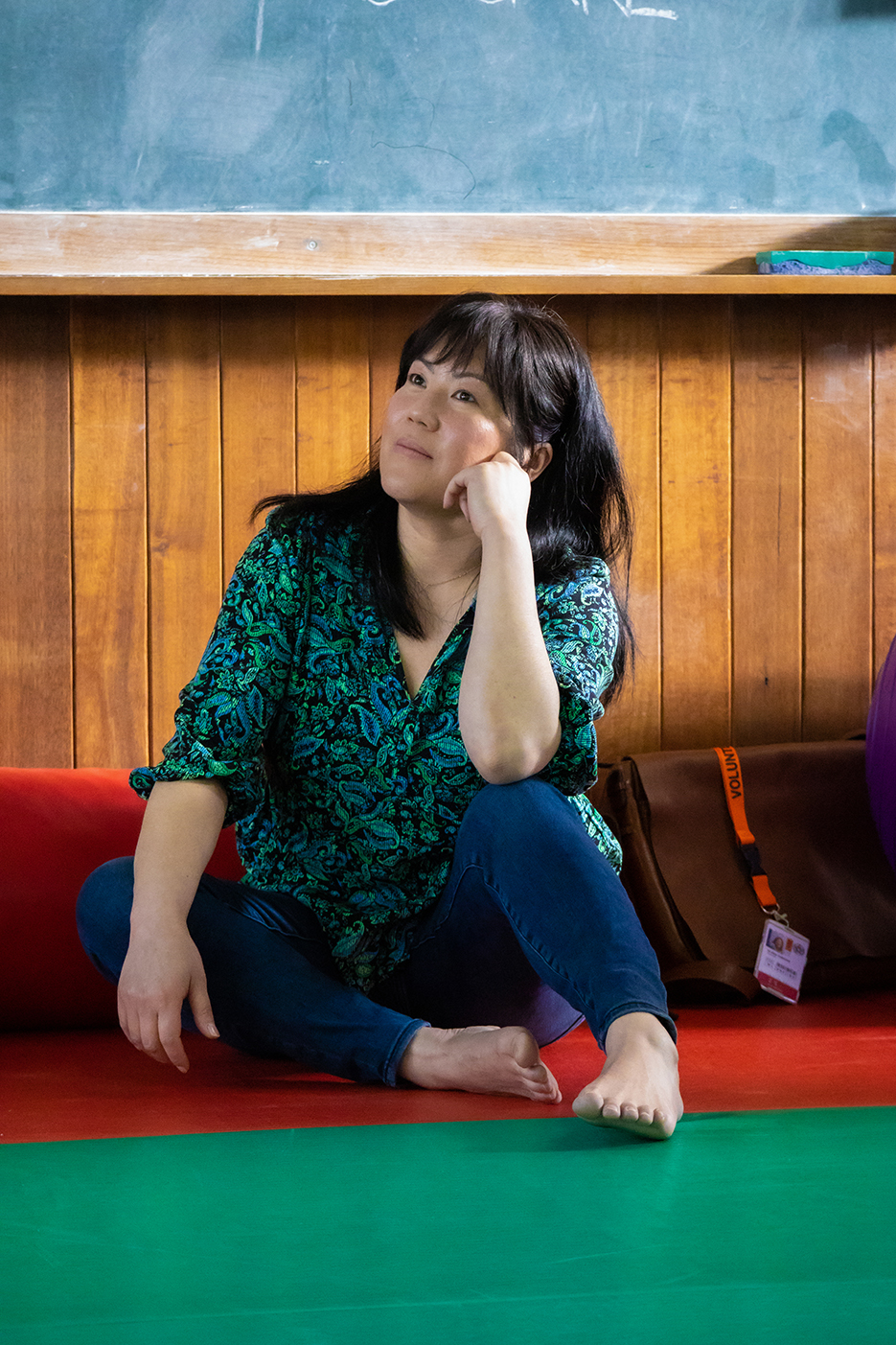
Tsu Shan Chambers.
Tsu Shan Chambers is a storyteller who wears many hats including actor, writer, producer, and optometrist. She’s also someone who uses her voice to shine a light on important social issues through film. Her latest project, My Eyes, is a heartfelt family drama inspired by true events that explores love, resilience, and living with visual impairment.
Tsu Shan’s journey to film has been anything but ordinary. From being a state tennis player and working as an optometrist, to landing roles in series like Deadly Women and feature films like Sequin in a Blue Room, her path has been driven by purpose. In 2023, she was recognised in the prestigious AA122 list celebrating Asian Australians making a strong impact in the community.

ADVERTISEMENT
In My Eyes, Tsu Shan plays Alana, an optometrist and mother who uncovers a life-changing truth about her daughter’s eyesight. Featuring Adam Garcia, Eduardo Ávila Sánchez, Nia Rush and Kieu Chinh, the film tackles themes of inclusion, accessibility, and unconditional love.
Tsu Shan co-wrote and produced My Eyes, and despite her producer instincts telling her to cast a big name in the lead, she followed her heart and took on the role herself. The result is a deeply personal story that draws on her own life and her family.
Cinema Australia recently caught up with Tsu Shan Chambers to talk about her journey into film, what it was like adapting her own story into a screenplay, and the challenges and rewards of wearing so many creative hats on one project.
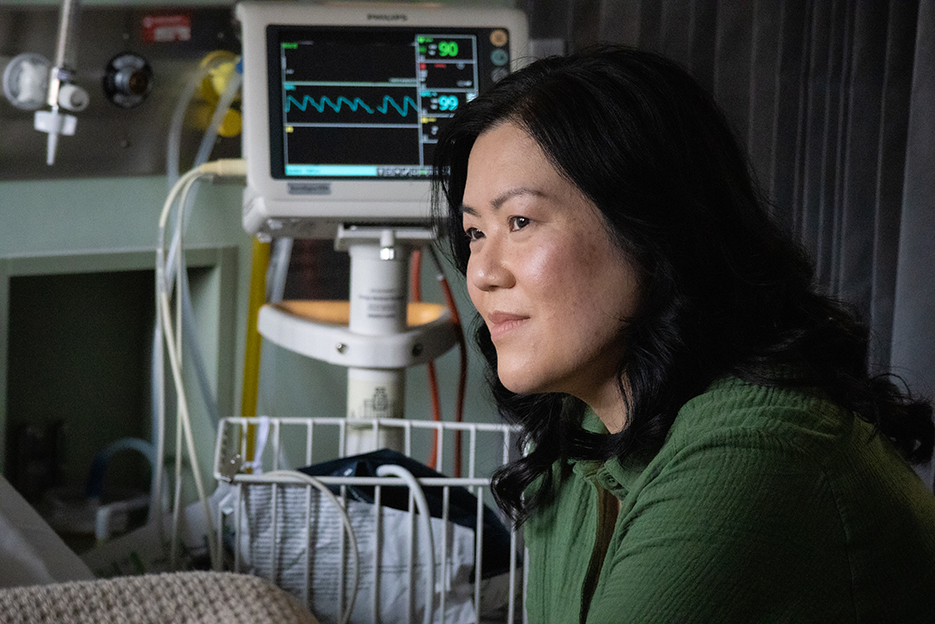
Tsu Shan Chambers as Alana in My Eyes.
“I fell in love with a judo athlete, and it was so profound that I needed to write about it. It’s something that I carried with me for a very long time.”
Interview by Matthew Eeles
You’ve had success in your life as a state representative tennis player and as an optometrist. What made you settle on film?
Oh gosh, I really was that cliché. [Laughs]. After Year 12, I got into medicine and I got into full-time musical theatre. So, I’ve always wanted to get into film. Everything happens for a reason, and I did all of those things because they’ve enhanced my skills and experience in the film industry—skills that are required to produce, to write, and to act. It’s that life experience that you need. Sometimes I think there is generally a low bar to entry in this industry. If you think about it, anyone can come in and go, “Hey, I’m a producer, I’m a director,” and they rarely have the experience behind them to do those jobs properly. But it wasn’t until I was looking for something to do with my one-year-old during the school holidays that I took my kids to a drama school—and that’s where I saw a brochure calling for NIDA auditions. So, I auditioned for NIDA and got into one of their studio programs, and it changed my life. I loved it. I loved it so much. I went, “I’m going to follow my heart and just do what I want to do.” Which is challenging when you’re older. You’ve got financial commitments, children, family, you’ve got a professional job, and you’re doing quite well. So, it’s a challenge to transition. It’s taken a long time, and it is quite challenging.
And everyone knows that filmmaking isn’t a lucrative business in Australia. Are you still working to subsidise your film work?
My day job now is actually as a production accountant. In my previous life in the business world, I was highly skilled with financing and budgets. Those are skills that we’re probably lacking a lot in our industry. Now that I’m working more within the industry, people recognise my skill set more. I worked in production accounting for a TV show and then a feature film. I haven’t done optometry for a little while now. However, there is such a need for it. They still get in contact with me nearly every day. I still get a text saying, “Are you free? Can you work?” So, I am still on the books to work in optometry.
You’ve said that your parents never allowed you to study drama. Do you remember those conversations with your parents, and why they disapproved of that?
Oh, yeah. I know they came from a place of care. Of course parents do. But like you said, they think there’s no stable finance in acting. Because I did quite well at school, I wanted to do drama on top of my normal subjects. I wanted to do drama as an extra subject. I even got approval from my teachers to tell my parents, “I can do this as an extra subject on top of everything.” And my parents told me no, and that I had to focus on my core subjects to get into whatever. Blah, blah, blah. [Laughs]. They thought that having another subject such as drama would be a distraction, and that I wouldn’t do as well. And you know what? I actually think having that creative outlet probably would’ve been much better because I would have felt more balanced. It’s so funny because it’s only now that they’ve seen some commercial and financial success with previous projects that they’re seeing this career as a proper job. I’m the complete opposite with my kids. I’m fully supportive of a creative career.
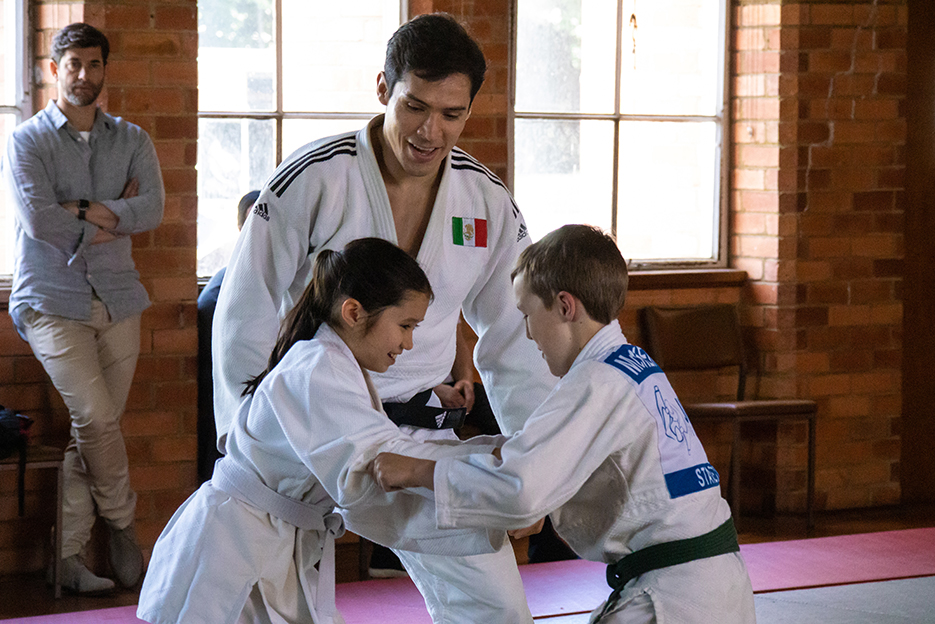
Eduardo Avila Sanchez and Nia Rush in My Eyes.
When did you decide that you wanted to share this particular story through film?
It had been on my mind for a long time. I volunteered at the Paralympic Games. That actually happened. While I was there, I fell in love with a judo athlete, and it was so profound that I needed to write about it. It’s something that I carried with me for a very long time. I even kept the judo guy’s official Paralympic tracksuit, which he gave me as a parting gift. I actually gave it to the My Eyes costume designer and said, “Here, this is the real deal. This is actually what they used to wear when they were competing.” I started to write My Eyes during COVID because I had the time. It was a cathartic process. Obviously, the story has changed a lot since the first draft. I did the first number of drafts, and then we got support from VicScreen. So, it did change a lot from the actual romance I experienced, and it was altered further to include a more family dynamic.
How do you prepare yourself mentally to reveal so much about yourself?
Sometimes you’ve just got to go for it. That’s probably the benefit of me coming into the industry a bit older, because I am comfortable in what I stand for and what my values are. Resilience is important. I consider this to be a love letter to the eye care industry and to my family. There are nuances in there with table tennis, and my uncle who passed away is actually featured as my dead father in the film. If I could tell the best story I could with the resources I had, then it didn’t bother me that it was out there in the world. I’m not the biggest extrovert, so I guess it’s a way for people to know a little bit more about me. But look, I’m a realist who fully understands that My Eyes isn’t going to be everyone’s cup of tea. But you know what? As long as it’s something that I feel can make some difference in the world, then that’s all that matters.
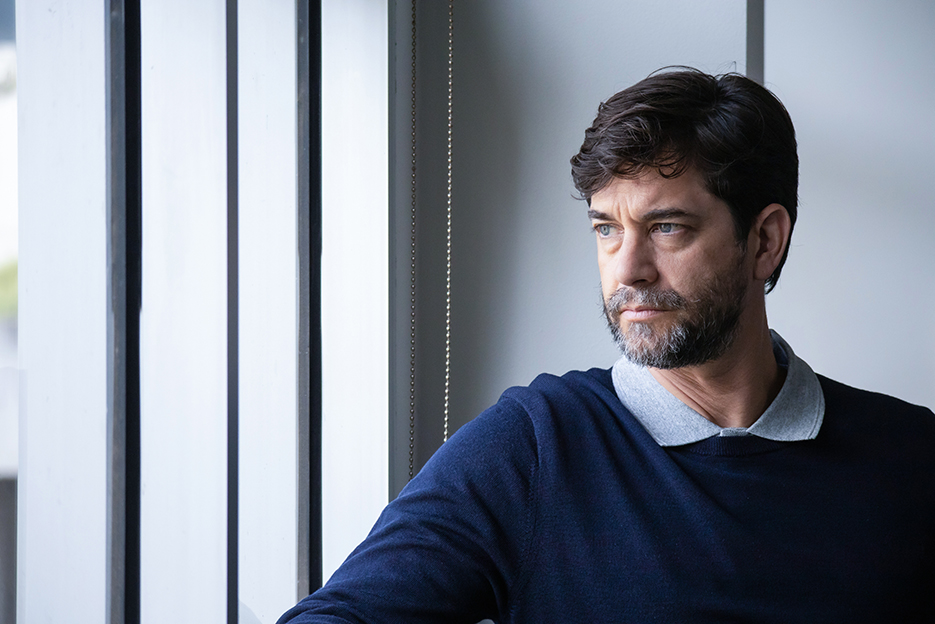
Adam Garcia as Sam in My Eyes.
It’s expected that films based on true events are going to be exaggerated for entertainment purposes. Can you describe the differences between your own story compared to how it’s presented in My Eyes?
I’m always asked about my children. Is my child’s father the real father? He is. That was dramatised for My Eyes. The judo story is all real, but only to make the clinical aspects of the story work. We needed it to link everything together.
What about the scientific aspect of the optical procedure featured in the film?
My best friend was one of my consultants on the script. We had to change the procedure slightly to involve stem cell therapy, which, technically, from a genetic point of view, is not one hundred percent accurate. But again, we couldn’t work out a way to make the procedure one hundred percent accurate without affecting the whole story from a genetic testing point of view. Some of my colleagues assured me that our intentions to raise awareness in eye care health justified the inaccuracies in the procedure. They told me that if I wanted to make a difference, then I had to dramatise the procedure so that the film wasn’t as boring as hell. [Laughs].
You were the lead writer on My Eyes along with two other co-writers. Can you share your process of writing with two other writers? There must have been a level of compromise for everyone.
Oh, there was! They changed a lot of the script. So I wrote the first three major drafts, and then I picked Angela How, who I wanted to direct the film. I ended up giving her a co-writer’s credit because she took the script to a point where it was quite strong. There were a lot of debates behind it, and we had a lot of script reports done, because sometimes, when you’re so close to it like I was, it’s hard to see any faults. So you do need someone to look at it objectively, which is what we did. It would go back and forth between us. With Ade, it was different because of his condition. He had a major stroke. He couldn’t turn things around as quickly for us. So what we had to do was make sure that our draft was as final as we could make it, ready for him to then have a look at. His perspective was interesting because he’s vision impaired as well.
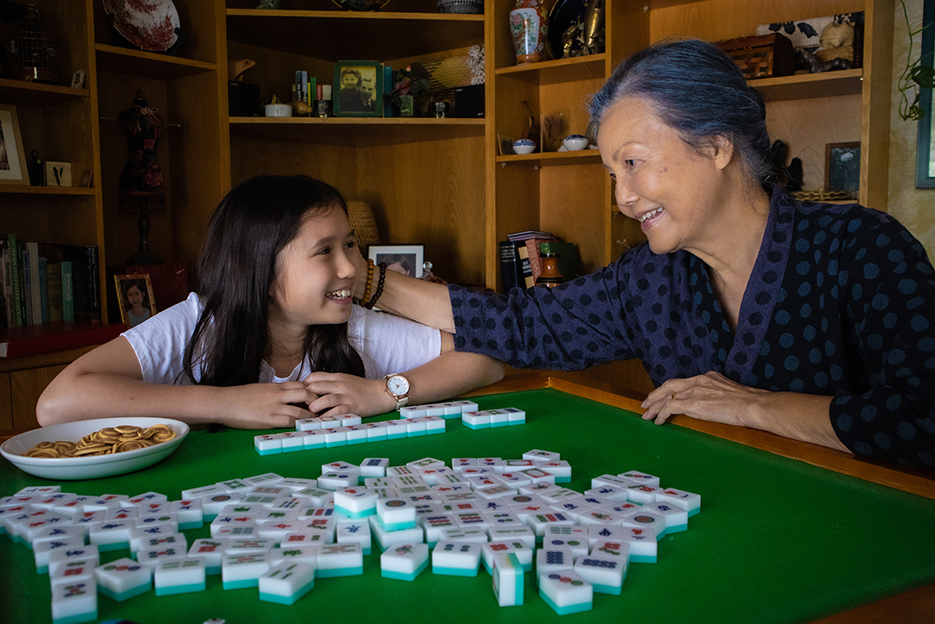
Nia Rush and Kieu Chinh in My Eyes.
Were you always going to act in the film?
No. With my producer hat on, I wanted to get someone famous. And then what happened was that one of my mentors was going through the script and he actually said to me, “Tsu, you know what? This is your story. You’ve got one chance to do this. You need to think really hard—if someone else was playing you in this film, are you going to regret it?” And they were really wise words. I thought about it more and I just went, “You know what? I would regret it.” If I didn’t have an acting background, maybe it would have been different.
So you co-wrote, co-produced and acted in the film. Which one of those roles do you feel the most comfortable doing?
Acting is the fun part. Producing is very stressful. I would love to not have to worry about the producing side if I was acting again. It is just such a different switch in the brain. But in terms of executive producing, I’m quite good at that. That gives me a lot of joy. But the acting gives me the most joy. Even my husband tells me that every time I come back from set, I’m a different person. I’m alive. Whereas with producing, I’m stressed. There’s a lot of stuff you’ve got to worry about. When I’m on someone else’s project, I understand how hard it is for them. And so I work harder. I’m on time, I don’t complain. It’s hard for everybody.
Nia Rush is excellent as your on-screen daughter, Isabella. What did you take away from working opposite someone so young?
She’s such a star. I knew straight away that she was the right person for this role as soon as I saw her first self-test. I still had callbacks because I wanted to be sure. It was so obvious. She’s a natural bright star. She was just unashamedly herself. Her mother was also amazing. I think it does make a difference if you’ve got the right parent supporting an actor as young as Nia. Kids can get tired quite early, so having that family support is really important for kids. But she was so responsible. She knew her lines. And that goes for the whole cast. We became a second family. We really were. And we’re still in contact. I can’t wait to celebrate the release of the film with them.
My Eyes will screen at the Gold Coast Film Festival on Sunday, May 4. Details here. My Eyes will release in cinemas from May 26 via FanForce.

ADVERTISEMENT
If you enjoy Cinema Australia as much as I love publishing it, please consider supporting Cinema Australia’s commitment to the Australian screen industry via a donation below.
I strive to shine a light on Australian movies, giving voice to emerging talent and established artists.
This important work is made possible through the support of Cinema Australia readers.
Without corporate interests or paywalls, Cinema Australia is committed to remaining free to read, watch and listen to, always.
If you can, please consider making a contribution. It takes less than a minute, and your support will make a significant impact in sustaining Cinema Australia as the much-loved publication that it is.
Thank you.
Matthew Eeles
Founder and Editor.Make a donation here.


 Cinema Australia