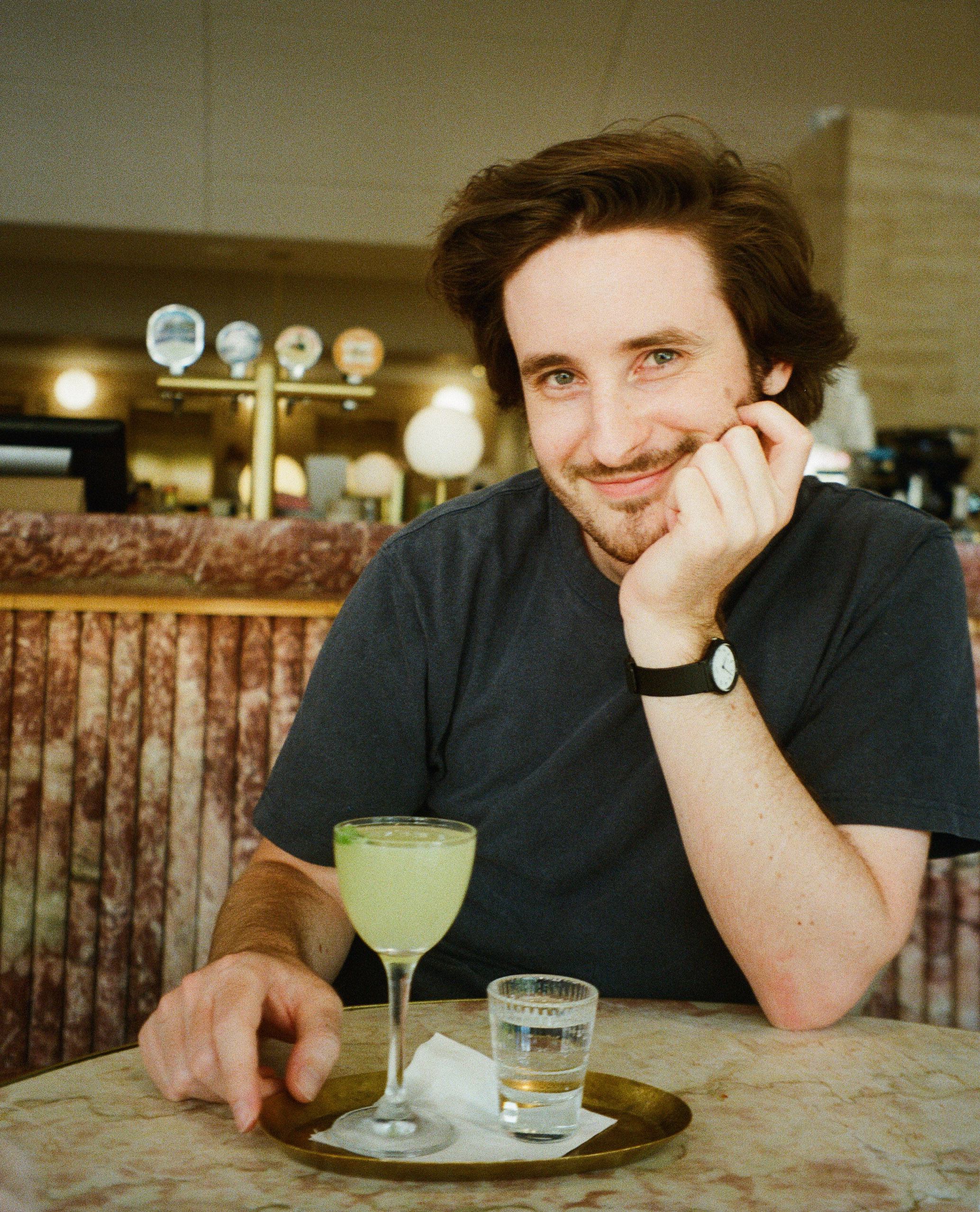
Angus Kirby
We’re only a few months into 2025, but it’s already shaping up to be a standout year for emerging Australian filmmaking talent.
One of the most exciting names to emerge so far is Angus Kirby, whose debut feature Carnal Vessels marks him as a promising new voice alongside filmmakers like Paul Evans Thomas (Within the Pines) and James Robert Woods (Moonrise Over Knights Hill).
Written, directed, and edited by Kirby, Carnal Vessels is a bold, sexually charged relationship drama that breathes new life into the body-swap genre. Far from the usual Hollywood take, Kirby’s film dives deep into the messy, funny, and painful sides of love, identity, and desire, creating something that feels so original, while being a complete joy to watch at the same time.
Carnal Vessels follows Liv, a drifting twenty-something, and Alex, a cemetery groundskeeper, whose undefined relationship takes a surreal turn when they fall in love and swap bodies. As they navigate the shock of their new realities, Liv and Alex are forced to confront uncomfortable truths about themselves and each other, leading to a wild, emotional ride full of surprising discoveries.
With a playful approach and a sharp sense of humour, Carnal Vessels is a brilliant debut that has left me keen to see what Kirby will do next and how far he’s willing to push the boundaries of his unique and intoxicating storytelling style.
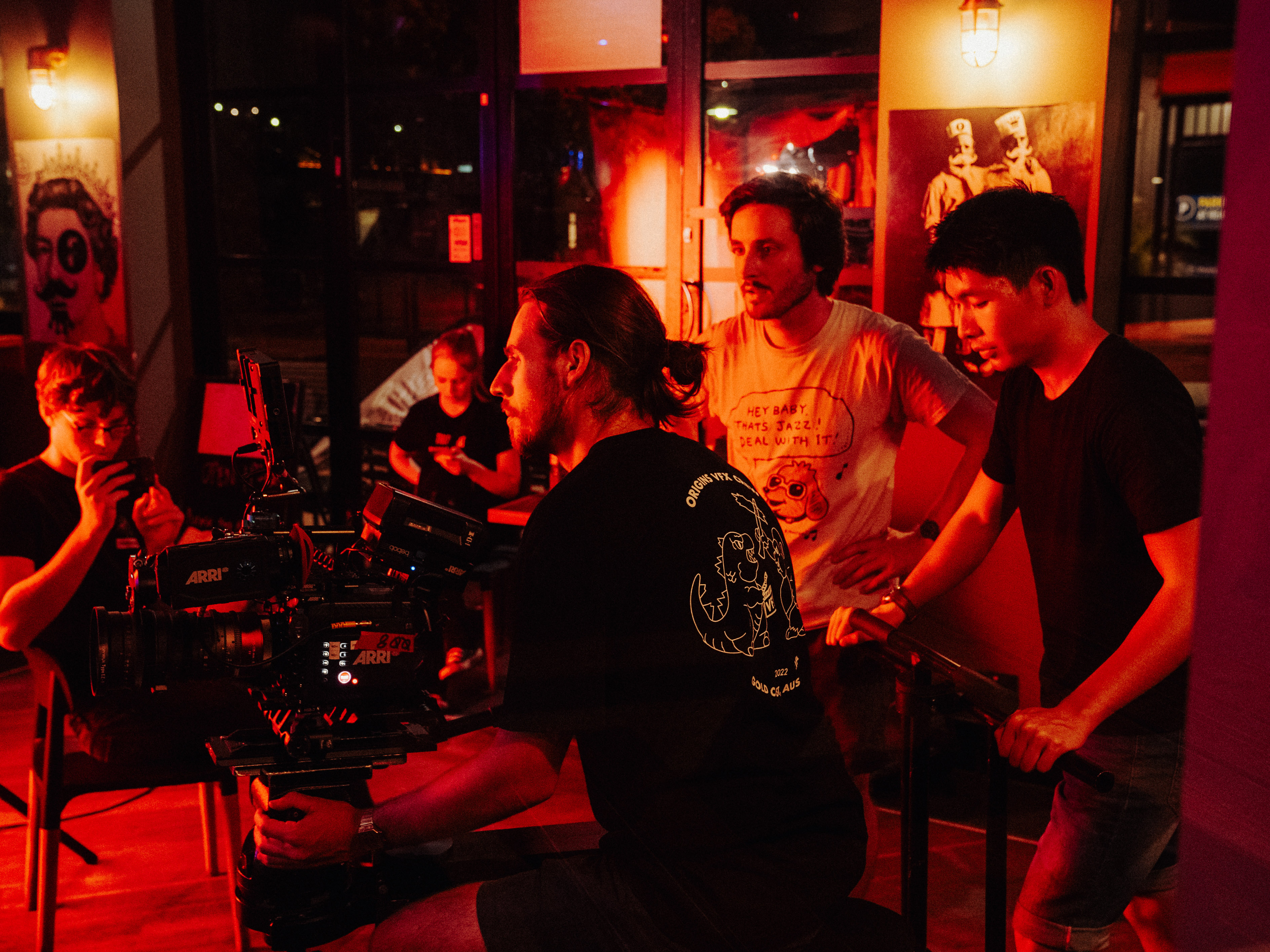
Angus Kirby on the set of Carnal Vessels.
“There seems to be a weird self-imposed idea that we can’t make films in Australia that think outside the box. I would never want to make someone feel like they were discouraged from pursuing their idea, even if it’s a little bit out there or unusual.”
by Matthew Eeles
Is the body swap sub-genre significant to you in any way?
The funny thing is that when I started writing Carnal Vessels, the original idea came to me from thinking that I’d never do a body swap film. And then I stopped myself and thought, “But if I did, how would I do it?” And then I had all these ideas that I actually thought I would really like to do. There’s a lot of personal stuff in this film, but hopefully that’s hidden well enough that it doesn’t expose too much of myself. Carnal Vessels started from my thinking that there’s a lot more ways to explore this sub-genre that haven’t been done before. And then I felt like there was a lot of room to play, and that was really exciting. When I think of body swap films, I think of very broad comedies, and we do a little bit of that, but I felt like there was just so much more to that particular sub-genre to have fun with and hopefully put a unique spin on. So it was exciting in that way. For the most part, there are films like Your Name from Japan, which did a wonderful job of finding a new way into this sub-genre. And there’s actually a really good Korean web series called My Runway, which I referenced as well. This whole thing often felt like a very open playground.
Carnal Vessels is a deep relationship drama with a touch of comedy, as you mentioned. Do you think your narrative could have been told without the magical realism aspect?
No, I don’t think so. Or at least it wouldn’t be as fun. It’d be too dry because it really is just about a couple who get in an argument and then have to find their way back to each other. That’s basically it. And I feel like we’ve maybe seen that before. So telling it from this angle was key to making it interesting.
I don’t want to give anything away, but there’s an outrageous subplot in which bodies are being taken from the local cemetery and used for a particular purpose. Did you take this story as far as you wanted to take it? Were you ever tempted to take its outrageousness any further?
I think it goes as far as it should. [Laughs]. My thinking around that subplot was that it was the darkest thing that I could think of that was still a bit funny. It’s still very twisted, and the tension is there and there’s real danger to it, but it’s still funny. And what appealed to me was that the subplot you’re referring to was the next logical step forward to tie everything together in the final act—which was a surprise, because I really just stumbled upon that angle. It wasn’t really thought out from the beginning, but when I did have that idea, I thought, “Am I taking this too far? Does it feel like a different movie?” And then I quickly realised that it ties in perfectly, and it brings everything together and really makes sense within this film’s overall plot.
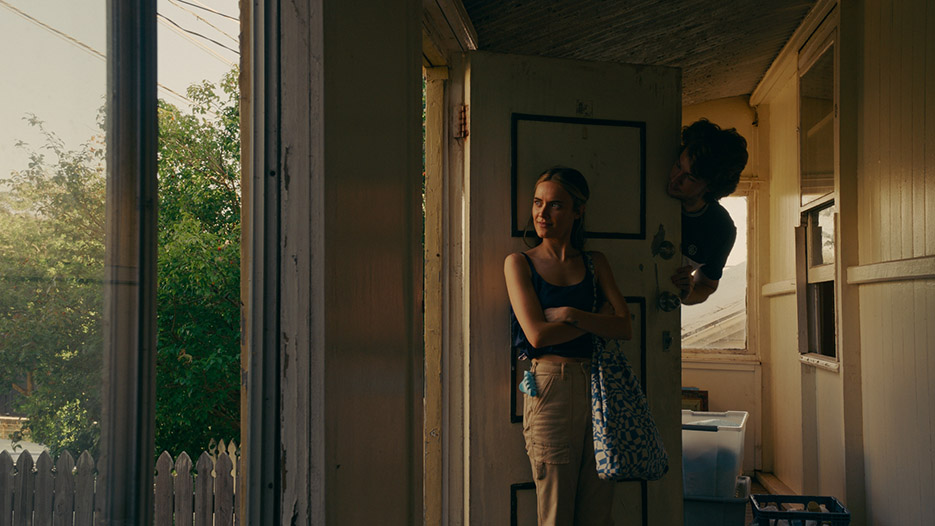
Arnijka Larcombe-Weate and Daniel Simpson in Carnal Vessels.
I recently described the film to my wife, and despite its simplicity, describing who’s who at certain points can be quite complex. How did you find writing these characters and keeping up with who’s who?
It did my head in sometimes. [Laughs]. Just getting it across on the page, figuring out the best way to format it in a way that would make sense. We got there eventually, and this is a credit to the actors too, because they did such an amazing job of internalising all that stuff. Once I finished this film, I immediately wrote a new script afterwards, which is a very straightforward A-to-B story, just to cleanse myself. [Laughs]. Once these characters have swapped bodies and they’re in these wild situations, every scene is loaded with a double entendre, or there’s a whole heap of subtext going on because of that knowledge that it’s not really that person. And that was a lot to carry in our heads. One thing that got us through the complexity of these character shifts was that throughout the rehearsal process, we tried not to think about it in terms of which character was in which body. I just said to the actors that they’re playing two characters, and as long as they’re both on the same page about each of those characters, they didn’t have to think about the body swap aspect. And that made it a lot simpler. Once we did that and we were shooting it, it became so much easier for all of us to articulate what was going on. There were times on set where these two actors were playing one character for the first half of the day, then they were playing each other’s character for the second half of the day. I was so relieved every time I watched them act because they’d clearly done so much preparation. I breathed a huge sigh of relief because it was just amazing to watch.
Both Arnijka and Daniel are seriously impressive here. How much preparation time were they given to learn about each other, as well as each other’s character?
We knew it was happening for a few months before we shot it, so they had a good amount of time. It may have been closer to a year. We’ve all known each other for a long time. I’ve known Arnijka and Dan for six years now, so we all have a pretty good idea of each other. So there was a lot of time even before we started rehearsing. There was a lot of time for them to process these characters, and for us to chat and have conversations. And I know they would’ve done a huge amount of prep.
Their chemistry is pure electricity. How important was that for you during the casting process?
The movie lives and dies by it. Once I saw them together, I instantly knew that it was going to work. Just the way they inhabited a frame and a shot together—it was just great. And what you said about them being pure electricity, that’s how I felt the first time we rehearsed. It’s very obvious. They clicked instantly, so it was something that I didn’t have to think too much about. We were very lucky, but they’re also two terrific actors, so they pick up on things super quickly. I hadn’t properly worked with Dan before. I’d worked with Arnijka a bunch, so I knew that she was great, but when Dan came in, we were all blown away. I don’t even think I auditioned him. I think we just met for coffee, and I said, “Do you want to do this?” And then we had a little read of the script, and I knew that he was going to be terrific. It was a very simple thing, which I think is a good thing.
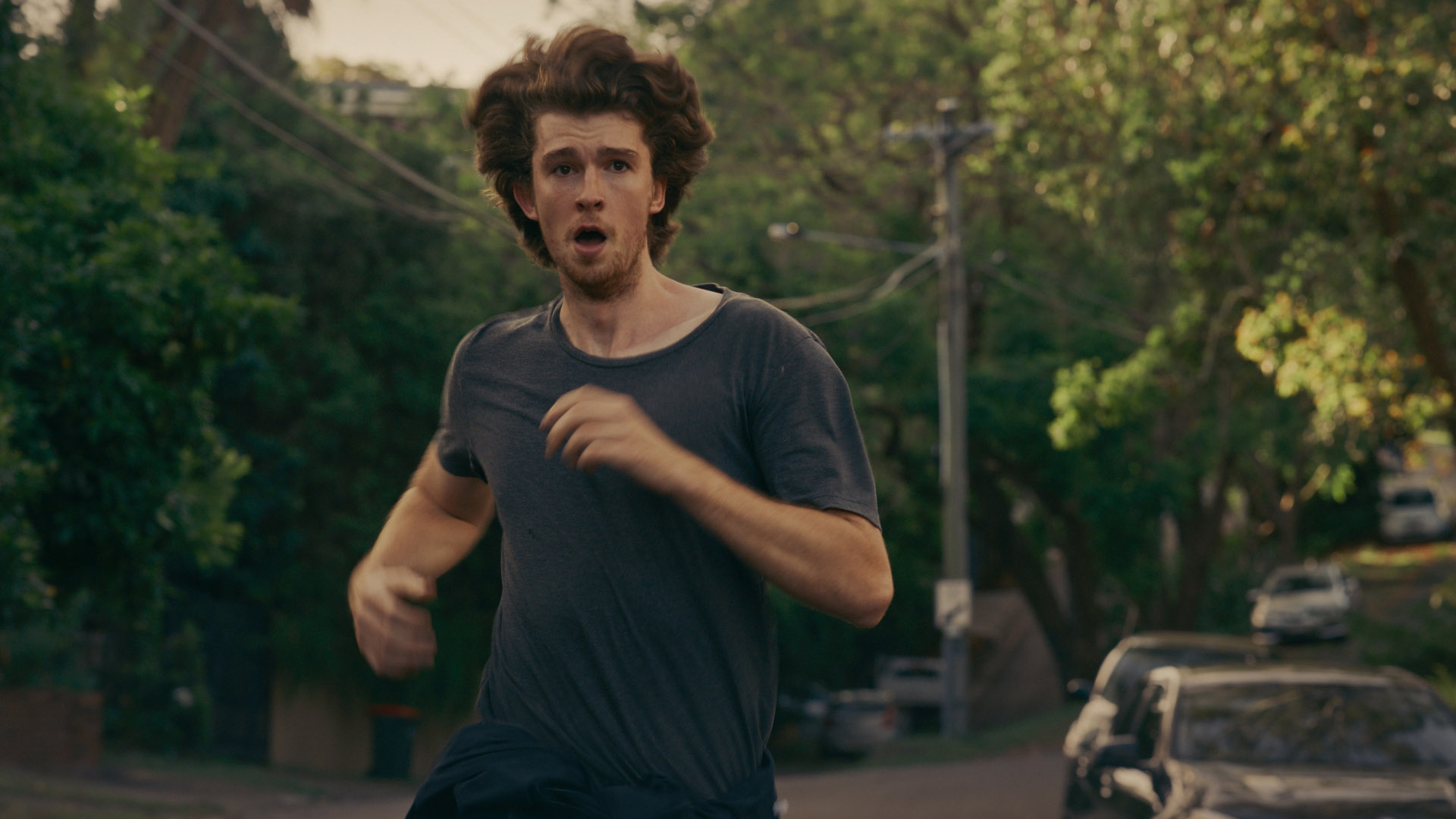
Daniel Simpson in Carnal Vessels.
He has an imposing presence which audiences will understand when they see the film. Talk us through your directing processes when it came to these two specifically.
Well, we put Arnijka on an apple box and we told Dan to crouch. [Laughs]. I guess it’s different for every actor. But with Dan, it was mostly just trying not to screw up him being a woman. We had a lot of advice from our female friends. But as I mentioned, there was a lot of preparation over the few months before we shot. I don’t remember having big conversations with them about their acting processes, because I think it’s mostly on the page. We also spent a lot of time working on each scene because I don’t like to do too many takes. Sometimes there were certain things that just weren’t working—you have to adjust and adapt as you go. The great thing about these two actors is that they’re both so down to play, and that can be a lot of fun when things aren’t quite clicking. They were very open to taking certain scenes in multiple directions. They really did throw themselves into this film, especially when it came to more of the physical scenes, with Dan taking advantage of his height. [Laughs].
Speaking of those physical scenes, there’s a tracking shot in which Daniel is running along a suburban street, and he trips over while the camera continues to track without him. Was that actually Daniel tripping, or was that planned?
It was planned. It was his idea. [Laughs]. He wanted to do that. He showed me what he wanted to do and I was happy for him to give it a go because he was on grass. After talking to our cinematographer, Elliott Deem, we knew that it couldn’t just be a fall—he had to catch up with the camera again to resolve his fall. I knew the music was going to play into that as well. It’s a good example, actually, of some of the shots in the movie that were kind of built collaboratively. It was an idea that one of us had, and then we worked together to build on the drama of it. It was almost like a self-contained arc within the shot. But that was all Dan. That was the first day of shooting too. We were worried about having him fall over on the first day, but he showed me how he was going to do it safely. It looks way more hectic on camera than it did in real life. [Laughs].
How does being on the set of a feature film compare to a short film? Is it a different feeling?
Well, it was more fun. [Laughs]. I felt like we had more space to breathe and we were doing something that we could really live in. We shot over five weeks and it was great. It was bliss, because you get to live in the world of the movie, and that’s just a real dream to get to do. With short films, you shoot maybe a couple of days, so you don’t get as much time to immerse yourself in that world. So to be in it for that much longer—I was in heaven.
Did you go under or over with that five weeks?
We had this five-week period that we knew we could shoot it in, and then we did a couple of days about a month or six weeks after that, on pickups. So it was a 26-day shoot in the end. We knew we had this chunk of time carved out where we could get everyone together and make it work. We wanted to shoot an average of three pages a day, knowing that it’d be however many setups a day on average. It was a 75-page script, with some sequences that were maybe only a couple of lines on the page but ended up being a couple of minutes in the film. So it was actually very early on that we figured out how much time we thought we needed, and it was pretty accurate. It was a pretty good educated approximation.

Arnijka Larcombe-Weate on the set of Carnal Vessels.
The film is beautifully shot. It captures the romance of the film perfectly. Did you provide Elliott with a visual brief prior to filming, or did you leave it all to Elliott?
It was a combined effort. He did a lot of his own research and he brought me a lot of stills that he was looking at, which were great. We talked a lot about how we wanted this film to look, and we both have pretty similar taste in terms of imagery, as well as a similar taste in films. He’s a real cinephile, which is great, but he also references paintings for inspiration, which I find really nice. Elliott paints with light—he’s a brilliant cinematographer. So the process was a big back-and-forth. It was very collaborative, which I love. We don’t like to do a lot of coverage. There’s only maybe two or three scenes in the movie that have a lot of coverage. I shot-listed the whole movie beforehand as a reference to suit our schedule.
At what stage did you decide on the blue and red colour palette?
It was in the script. The red was something we landed on very early. We talked about having these off-primary colours. There are reds and blues and greens, but it’s kind of a deep dark red and these off blues, and these sickly greens for the cemetery stuff. We were looking at Ektachrome film and other references, like analog references, for how to treat the colour. And actually, this is an important point as well — we didn’t have an art department. We did a little bit of decoration and design amongst us, but we knew that since we didn’t have an art department, and that we were relinquishing some control over locations, we wanted to restrict the colour palette so that it didn’t feel like a hodgepodge of locations. It has a style that runs through it. That was a big thing for us in terms of how we lit it and how Elliott shot it. We picked these colours and lit for these colours, and then graded it to have this very strong vision the whole way through. This worked out well for us, knowing that we couldn’t paint sets and dress sets certain ways.
By the way, the silhouette shot of Olivia and Alex sitting on the balcony is absolutely stunning. That blue sky in the background is incredibly cinematic.
Thanks, Matt! Hell yeah, dude. That was a lot of fun. And I think we just stumbled on that. We were at the apartment and we were on the street, and we knew we had a great shot instantly. That’s a Brisbane sunset, but shot away from the sun.
The film has an unusual run time of one hour and 18 minutes. How long was the original cut, and how much of that ended up on the cutting room floor?
We certainly cut a few scenes. I think the rough cut ran at about 85 minutes. We probably cut five or six minutes out of it for pacing and scenes that we didn’t need. There were a couple of scenes that felt like they were repeating themselves. That wasn’t too hard to do — they stuck out. But regarding the run time, that was a conscious decision. We had a small budget that I was obviously conscious of, and I was watching a lot of older B movies from the thirties and forties, and a lot of them are an hour long. We knew that this story needed to be told as a feature film, but because it sits around 80 minutes, it actually cut our budget and our schedule down quite a bit. I figured out how to make the story work in that runtime, and because it’s set over a long weekend, it doesn’t feel too plot heavy. Someone told me that if it was any longer, it would drift, but it’s tight, and that’s what we wanted. I wanted it to feel snappy. So it was a combination of those things. If you can make an 80-minute movie and it works, you’re saving a heap of money and time — but we also wanted to make something that was super snappy and didn’t outstay its welcome. And hopefully the strongest part is the last 10 minutes. I’m the most proud of the last 10 minutes. It’s so twisted.
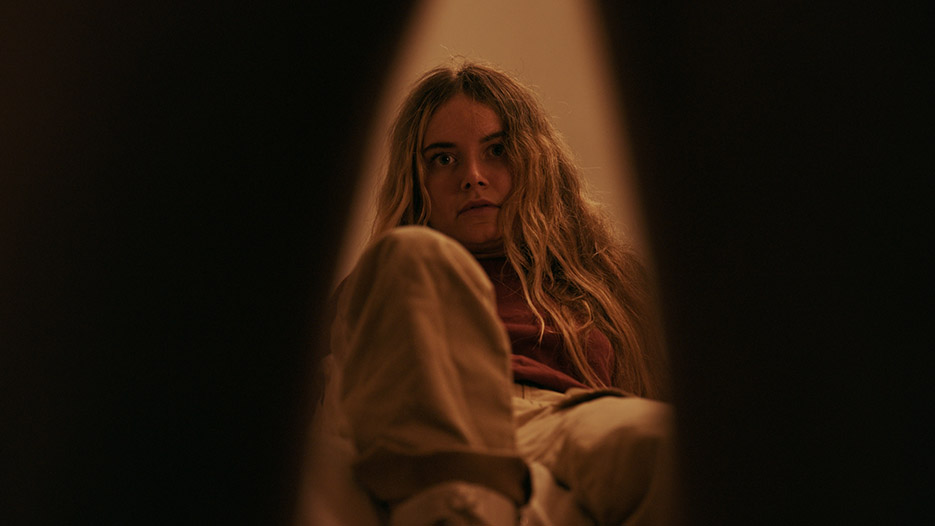
Arnijka Larcombe-Weate in Carnal Vessels.
Speaking of B movies, tell us about the classic film playing on the TV throughout Carnal Vessels. I assume it’s in the public domain?
That’s Plan 9 from Outer Space. We had a list of films that are in the public domain that we were able to choose from, and Plan 9 from Outer Space was the one that felt the most appropriate.
Was there a reason you chose that particular film?
I love Ed Wood films. I feel a weird kinship and a lot of sympathy for someone like Ed Wood. He had a very hard life making these films, and the films are not great movies, but the guts that he had to do what he did and make a life out of it I really admire. I love his films. I have a lot of affection for his films. Having Plan 9 from Outer Space in my film was almost like planting a flag and saying, “Here’s where my sympathies lie.”
It’s hard not to admire what he was able to achieve as a filmmaker.
Absolutely. Maybe less his technical craft and more his pure guts. He was also someone who took people like Bela Lugosi at the end of his life and gave him work by putting him on screen and mingling with this really strange group of people. I love that stuff. I don’t know how seriously he took himself. Maybe he did, but the films are very funny, and I get the sense that there’s someone in there that knows very well that they’re goofy — but I’m not sure.
I can see some of that in your work. It takes a lot of guts to go out there and make a film like Carnal Vessels that’s so different to what government-funded Australian cinema is currently making.
Thank you. I am quite sad about how narrow the scope is here for feature films, just in terms of what people think is possible, and what people think can be done. There seems to be a weird self-imposed idea that we can’t make films here that think outside the box. And I’m not the first person to say this — heaps of people have said this before me. I don’t know how that way of thinking is ever going to change. It’s a strange thing. I really can’t explain it. I definitely am conscious of it. I would never want to make someone feel like they were discouraged from pursuing their idea, even if it’s a little bit out there or unusual. We make a lot of horror films in Australia, which are great. They’re terrific. But we don’t make a whole lot of genre films outside of that, particularly at this point of time. I guess Carnal Vessels is unusual because it’s multiple genres, so I’ve pushed it quite far. Audiences love genre films, and audiences are sophisticated enough that they can comprehend a mix of genres. And if it’s done well, it’s a very satisfying experience because genre gives you a framework that is somewhat familiar to an audience for you to hang your story on. But within that, you can tinker, you can twist it up, you can change things and create something — and hopefully put something at the core of it that’s really strange.
Less tourism films and more films like yours in my opinion.
Oh, Matt, I really appreciate you saying that.
Audiences aren’t dumb. We know what we’re being fed.
We do make Brisbane look beautiful, but. [Laughs]. But it’s good that you don’t think of it as a tourism film. There’s a point where if you dip too far into that area, it stops being an interesting movie. I think as soon as it starts feeling like a commercial, then it becomes a problem.
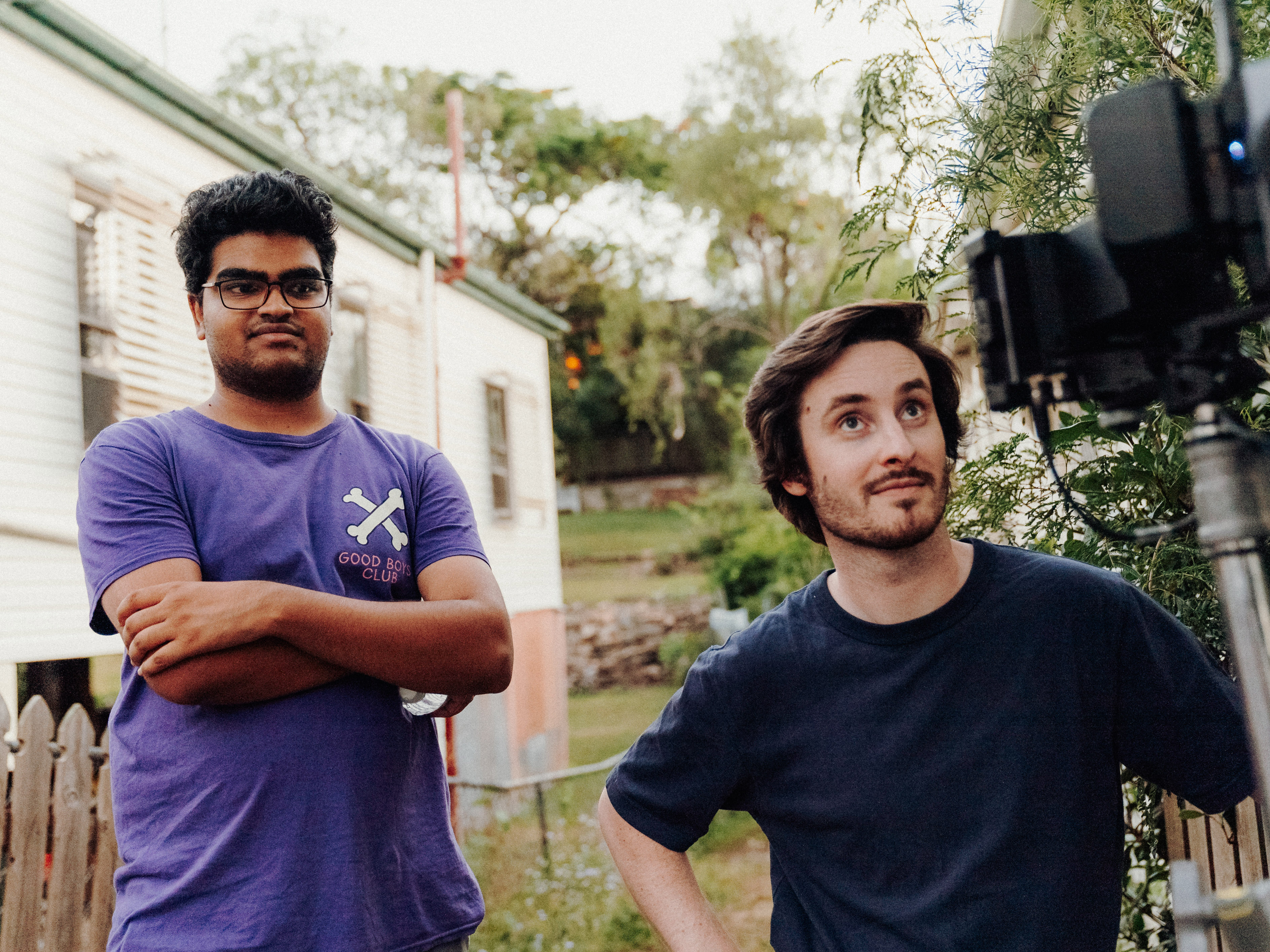
Producer Mihir Chakrapani and Angus Kirby on the set of Carnal Vessels.
It’s common for independent filmmakers to take on extra duties like editing and cinematography, but I always admire filmmakers who take on composing duties. Do you have a background in music?
I do have a small background in music, but this came more from knowing that I had no choice. [Laughs]. I had a great music education in high school. I was really lucky, and I have played guitar since I was 11. I really wanted this film to have a great soundtrack. I knew it had to have a great soundtrack. One thing that often lets down an independent film is that there are limited resources for a great soundtrack. The pop songs in Carnal Vessels were almost like one-hit wonders or B-sides from a forgotten pop star from the seventies. It’s not that hard to write some pop songs. Ultimately, if a pop song is hard to write, it might not be a good pop song. [Laughs]. So I wrote most of the songs over a few days. I just sat down and scribbled out the lyrics and mapped out each part of the movie as I was writing the script. And then I didn’t return to it until after we shot and cut the film. I took three months off basically to finish all the songs and produce the soundtrack. We’re super lucky in that every musician friend I’ve met in the last 10 years is on this soundtrack. [Laughs.] And there’s also the jazz, which was performed by my good friend Andrew Saragossi, who plays the saxophone in the film. We put together a quartet, and we did some improv jazz for a couple of the sections of the movie as well. I’m very grateful that I know all these great musicians.
Who played and performed as Sharon Sunflower in this film? Was the actor the same performer?
She was the same performer, yes. Her name is Gabriella Cohen. She’s a singer-songwriter in her own right. I think she lives in Nashville now, or she’s over in the States at least. She came in and did a great job on the vocals, and she made the songs a lot better than they were.
I have a final question that you will be asked a lot during press for this film, but hopefully I’m the first to ask you. If you could swap bodies with anyone for a day, who would it be?
Oh God. Oh, I did not see this question coming. I should have, but I didn’t. Maybe I’m not media trained enough. [Laughs]. I’d be utterly terrified if I was anyone’s answer to this question. The thought of someone else rattling around in my bones is deeply unsettling, and I can’t believe I got this far without seriously considering this question. One of the only people who I could swap with and not feel like a complete freak is my producer Mihir Chakrapani, so I’m going to go with that. Also because I know it’ll haunt him. [Laughs]. Since we’ve made this film together, I guess I kind of feel safe swapping with him.
Carnal Vessels will screen at the Gold Coast Film Festival on Wednesday, 7 May. Details here. Carnal Vessels will release across VOD platforms in Australia on May 15, launching on Prime Video, Apple TV, and Google Play.

ADVERTISEMENT
If you enjoy Cinema Australia as much as I love publishing it, please consider supporting Cinema Australia’s commitment to the Australian screen industry via a donation below.
I strive to shine a light on Australian movies, giving voice to emerging talent and established artists.
This important work is made possible through the support of Cinema Australia readers.
Without corporate interests or paywalls, Cinema Australia is committed to remaining free to read, watch and listen to, always.
If you can, please consider making a contribution. It takes less than a minute, and your support will make a significant impact in sustaining Cinema Australia as the much-loved publication that it is.
Thank you.
Matthew Eeles
Founder and Editor.Make a donation here.


 Cinema Australia
Pingback: Things are about to get weird as Carnal Vessels release date confirmed | Cinema Australia