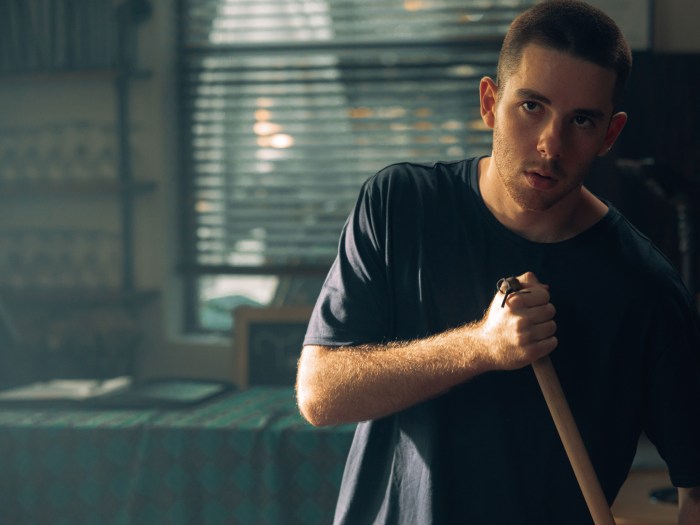
Archie Lush as The Aspiring Chef in Blunt. Photo by Dasha Melnik.
A rising chef pushes himself to the edge in Blunt, a gripping new short drama that dives deep into the relentless world of high-pressure kitchens. Blunt explores the sacrifices, ambition, and obsession that come with chasing culinary greatness.
By Matthew Eeles
Let’s get the obvious out of the way first.
It’s inevitable that Blunt will draw comparisons to the wildly popular Disney+ series The Bear. And how could it not?
Like The Bear, this sharp, fast-paced, and rather brilliant short film also follows an up-and-coming, fiercely determined chef—known only as The Aspiring Chef in Blunt—on the cusp of breaking into the culinary world and the physical and mental toll one must endure to reach the top of their game.
Faced with mounting pressure from a skeptical family, The Aspiring Chef refuses to back down. What unfolds is a story of resilience, ambition, and pushing the limits to turn challenges into opportunities.
Blunt director Alex Power tells Cinema Australia that the comparisons are warranted and that The Bear was indeed an inspiration for the film, with cast and crew often joking that Blunt could be an origin story for The Bear’s lead character, Carmy, played by Jeremy Allen White—such are the similarities between the two characters.
“I have always pitched this short as The Bear meets Damien Chazelle’s Whiplash,” Alex tells Cinema Australia.
“Having references is so important—not only does it help people immediately get the tone of the film, but for me as a director, I can draw from those projects and hopefully bring a bit of what I love from them into our own film.”
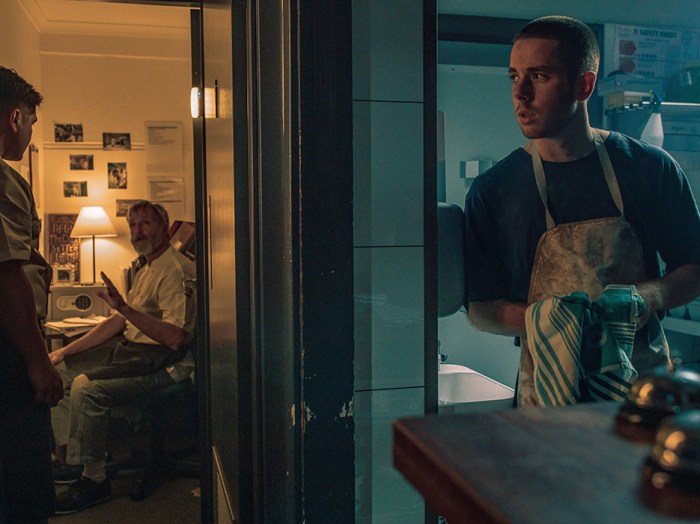
John Shrimpton as Damien, Paul Walenkamp as Leon and Archie Lush as The Aspiring Chef in Blunt. Photo by Dasha Melnik.
Much like The Bear and Whiplash, Blunt implements a rapid-fire, intense editing style that draws the viewer in while allowing enough breathing room for more emotional moments.
Alex says he worked closely with editor Hamish Paterson to achieve these rhythmic and dynamic results.
“Hamish and I have worked together on a bunch of projects, and his natural instinct for story makes everything so much easier. But there’s always a risk with using references like these—you don’t want to fall into the trap of just copying what’s been done. So we had to be careful to find a fresh approach. We wanted it to have a similar vibe to The Bear but still feel original and unique. I hope we found that sweet spot,” says Alex.
Blunt was made by a group of emerging Perth filmmakers, including director Alex; co-writers Archie Lush and Luis Basnett, who also star in the film as The Aspiring Chef and Charlie, respectively; and producer Mark Zanosov, who has received acclaim for his previous short films Still There?, HighAway FlyAway, and Escape the Noise to Find Your Rhythm.
The quality of Blunt is so top-tier that you’d be excused for thinking this group of filmmakers had been making movies together forever. But they were brought together by a method that’s becoming the norm for indie filmmakers—social media.
“I reached out to Archie and Luis, successfully pitched myself as producer for Blunt, and we got to work immediately,” Mark tells Cinema Australia.
First introductions and wild ambitions
Archie and Luis have known each other since high school, having met during a production of Frankenstein. Archie was in Year 12 and Luis in Year 11, so the two very nearly might have never met if not for that production.
“There was a small moment that Luis describes as the moment we truly spoke for the first time,” says Archie.
“In the play, Victor attacks The Creature with a knife, and up to that point, the movement had been too exaggerated—an over-the-top arc that killed the suspense. I asked Luis what he thought, he agreed, and we workshopped a better way to do it. As rehearsals went on, I found myself drawn to his natural talent as a performer.”
During this period, Archie’s agent was also encouraging him to create his own projects.
“The ambition to create a short film was growing in me, but I knew I didn’t want to do it alone. My first instinct was to ask Luis. He was shocked, nervous, and hesitant to jump headfirst into an industry he wasn’t yet familiar with—and to be honest, so was I. But we got to work, faced our fears, and we couldn’t be happier that we did.”
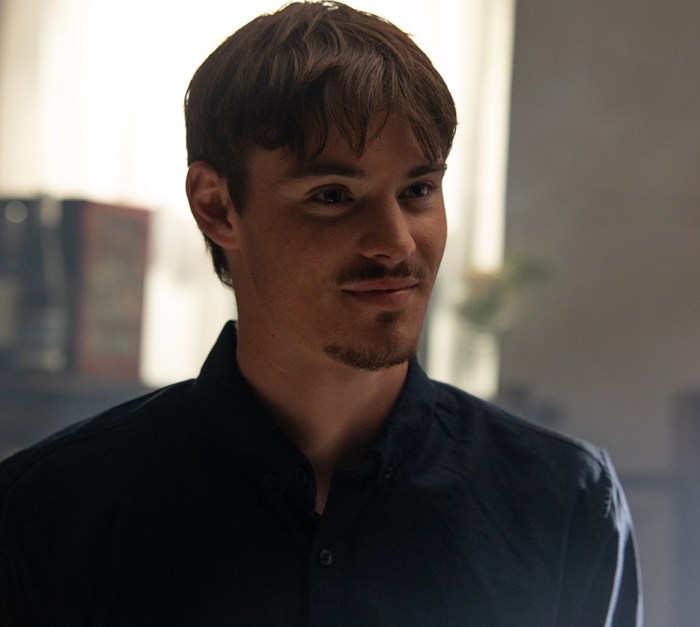
Luis Basnett as Charlie in Blunt. Photo by Dasha Melnik.
Enthusiastic about their partnership, Archie tells Cinema Australia that he has never collaborated with someone he has been more in sync with, often finishing each other’s sentences and building on ideas together.
“We’d bounce off each other for hours, completely in flow, only to realise it was 3 a.m. and we’d been writing non-stop for most of the day,” says Archie.
Since this was the duo’s first proper script, their instinct was to strip everything back to the basics. For the first six months, Archie and Luis didn’t touch a computer or screenwriting software. Instead, they sat together on Archie’s living room floor with sticky notes and a whiteboard, meticulously fleshing out Blunt’s story and characters.
“While I scribbled down notes, Luis would sketch quick storyboards to visually map out our ideas, making sure we were always on the same page,” Archie says.
“This approach helped us more than I can even explain. Once we had our sticky notes—every millimetre filled with details—we stuck them to the wall next to my computer and finally sat down to write the first draft of what would eventually become Blunt.”
After months of changes, cuts, and rewrites—right up until a week before shooting—Archie and Luis landed on a script they were proud of. One they could actually pull off, and most importantly, one that resonated not just with themselves but with everyone they would share it with.
Listening to their process, I couldn’t help but wonder how Archie and Luis decided who was going to play which character in the film. Surely The Aspiring Chef was a more attractive lure for two aspiring actors?
“At John Curtin College of the Arts, our acting coach and Frankenstein director, John Shrimpton (who also stars in the film as supporting character Damien), always used to tell us that there is no such thing as a small role and that every character within a play or film is just as important as the next,” Luis answered.
“Archie and I always put the narrative first, and as writers, we focused on communicating our film’s message through fictional storytelling based on our real-life experiences rather than constructing scenes based on character screen time or importance to the plot. Allocating roles as actors was easy because we wanted this film to feel as authentic as possible, and we chose our roles based on the characters we most felt connected to.”
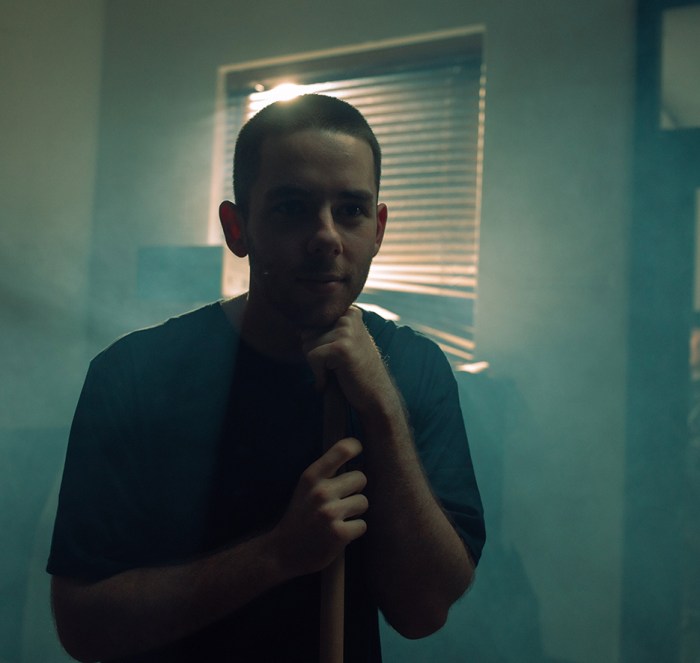
Archie Lush as The Aspiring Chef in Blunt. Photo by Dasha Melnik.
Luis was still completing his final year at John Curtin during the bulk of Blunt’s production and was consistently asked what he wanted to do with his life. As someone who aspired to be involved in the arts, he was torn between pursuing acting after graduating or using his ATAR score for university.
“Charlie, as a character, represents the population of young adults who are too scared to dream and grow as individuals, or those who play it safe,” says Luis.
“Charlie cares less about the plot developments that occur throughout the story—he rolls with the punches and moves forward, but never in any specific direction. I felt as though I was experiencing the same thing, practically waiting to finish my final year and graduate before taking the leap to pursue my passion for the arts. However, when Archie and I discussed the timeline of production and landed on filming in September 2024, right before my final WACE exams, I knew I had to take the leap.”
Much of the dialogue delivered by particular characters resonated with both Archie and Luis in different ways, so it was a no-brainer as to who was going to play whom.
“At the end of the day, it’s not about a character’s screen time but the impact they have on the narrative and its audience. It was important to me that these performances were just as authentic as the narrative is for so many individuals struggling with young adulthood and chasing their dreams,” says Luis.
A strong direction
Director Alex Power was the final piece of this collaborative puzzle, having come on board Blunt when it was still in the early stages of script development. Power was attracted to the heart of the story but was aware that work was needed to refine the script—or to “trim the fat,” as he puts it.
“After a few brainstorming sessions with the boys, we had the version we shot—a 14-page script,” says Alex.
“Once it was refined, I finally started to see how everything would come together, and it just clicked. It came at a time in my life when I was deep in the grind, working full-time in the industry and making my own stuff, but still craving something more meaningful. It also happened to land in the middle of one of the most physically and emotionally exhausting jobs I’d ever taken on—so, in a way, it became my escape, something to sink my teeth into creatively. The imagery and rhythm of the story really drew me in. It was the kind of script I could almost taste—something that let me completely picture how it would look and feel.”
Now that Blunt’s core team was assembled, what followed was a tough road of locking in crew and locations and securing funding, which came via Blunt Fest, the music festival organised to raise money for the film.
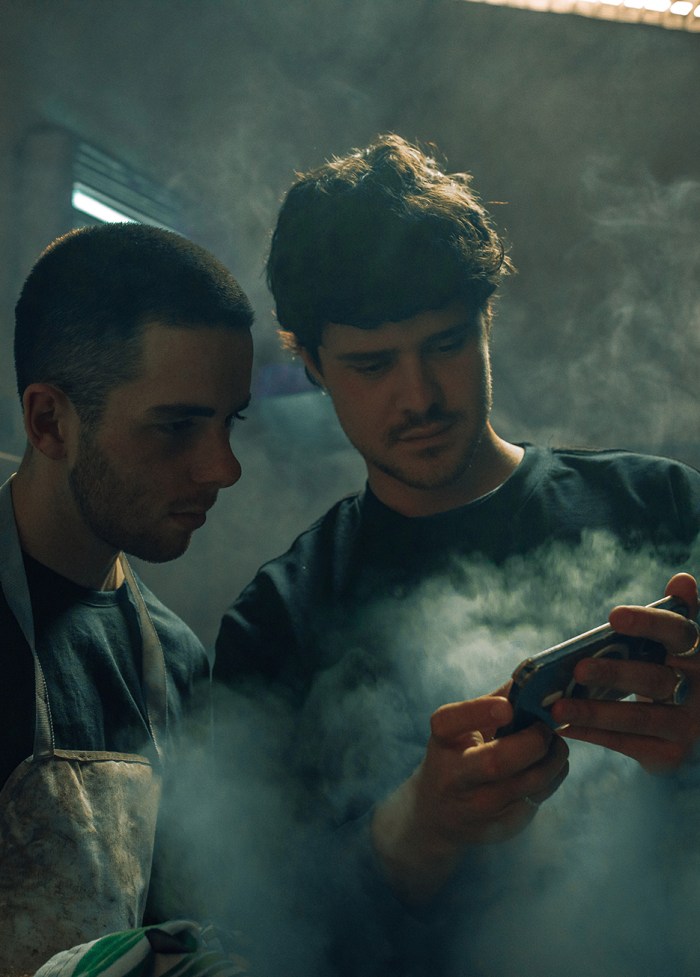
Archie Lush and director Alex Power on the set of Blunt. Photo by Dasha Melnik.
The following weeks were spent scheduling rehearsals, scouting final locations, and ensuring their budget stretched as far as possible. Once the crew was ready to shoot, it was important to Alex that he, Archie, and Luis could work as closely as possible together and make sure they were all on the same page creatively.
Alex tells Cinema Australia that Archie and Luis have a boundless energy and creativity that made them an absolute pleasure to work with.
“Once we started shooting, they did exactly what any director dreams of and gave it everything they had,” says Alex.
“The way they dove into their characters was so much fun to watch. They knew who these characters were inside and out, but they were also super open to any direction I gave them, always eager to push their performances even further.”
Alex recalls one scene where Archie needed to tap into a very specific emotional space, so he asked if the room could be cleared so he could focus. Archie immersed himself so deeply in that emotional space that, at one point, Alex thought he might actually faint.
“That kind of passion and dedication to the craft is rare and really special,” says Alex.
Collaboration is key
While Archie and Luis are the main stars here, Blunt also boasts two standout supporting performances by up-and-coming talent Ashton Bolt—who’s currently impressing audiences with her lead role in the topical short film Skin Deep—and established actor Paul Walenkamp, who recently gave an unsettling and intense performance as the titular character in the addiction drama Handsome Hank.
In Blunt, Walenkamp brings some of Handsome Hank’s intensity to his performance as Leon, an old-school chef with a quiet authority who hides his wisdom behind a worn exterior.
“When we were casting for Leon, we went through so many self-tapes, but we just couldn’t find the right fit. Then, Paul’s audition popped up on my screen, and I knew right away—his striking look paired with his soft, almost calming voice was exactly what Leon needed. Paul had previously gone to culinary school in Europe and trained at top hotels and restaurants. He showed up to our first rehearsal with a picture book of him working in the hospitality industry around the world—so, yeah, he definitely did his homework,” Alex laughs.
Regarding Ashton, Alex actually got a chance to see the actor in action on another project a few weeks before filming commenced on Blunt, and he immediately felt her infectious energy as an artist. Not only was she part of the cast, but she was also a co-producer whose dedication to the whole project brought a positive, welcome energy to the set.
“Ashton’s scene with Archie is one of the best in the film. It was one of those scenes where we just had to get it right, and Ashton’s character, Willow, was the backbone of that. I remember we did a rehearsal, and it was perfect,” Alex recalls.
“It was one of those moments where I kicked myself for not rolling on it, but thankfully, both Archie and Ashton brought that energy to every single take. She has this incredible depth that makes her so endearing to watch, plus a curiosity that makes working with her such a joy.”
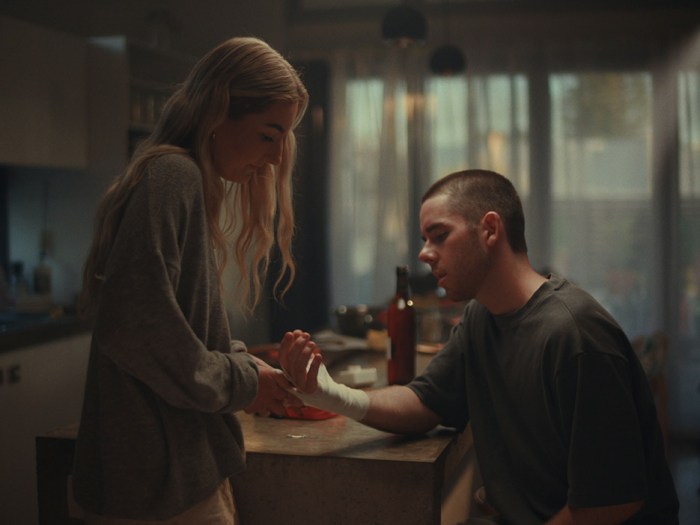
Ashton Bolt and Archie Lush is Blunt. Photo by Dasha Melnik.
Beyond the film’s impressive performances are stunning locations that create a genuine sense of authenticity. And they don’t get more authentic than Fremantle, one of Western Australia’s most iconic cities, which also happens to be home to many world-class restaurants, making it a real culinary hotspot.
While locking in locations can often be a challenge throughout the filmmaking process, securing the main location for Blunt was relatively simple.
“The Bistrot, a Fremantle restaurant in the heart of the city, was Alex’s first choice after seeing it on a scenic walk around town. Securing that was as easy as asking the absolute legend of a venue manager, Val, who loved the film’s story and was happy to let us use the place for nothing at all,” reveals Mark.
Finding The Aspiring Chef’s home, however, was the real challenge. With little budget, convincing someone to give up their kitchen for two days wasn’t easy. Luckily, in the final weeks of pre-production, the Dickenson family—who were friends of a friend—saved the day by offering their home to the production.
Shooting in Fremantle itself was an experience in its own right. And from all accounts, the city is a filmmaker’s dream, with its rich history, vibrant street life, and stunning backdrops around every corner. The council is also incredibly supportive of independent filmmakers, making the permit process surprisingly smooth. Within a couple of weeks, the team had approval to shoot in multiple outdoor locations, allowing them to capture the city’s energy and unique character with ease.
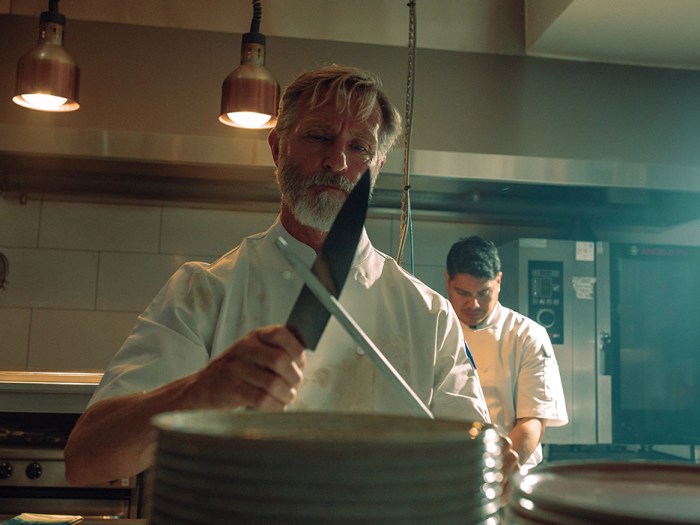
Paul Walenkamp and John Shrimpton in Blunt. Photo by Dasha Melnik.
And yet, despite all this careful planning, nothing could have prepared the Blunt cast and crew for the chaos that would ensue when they actually hit the streets with their cameras.
“Wherever we went, we looked hilariously out of place, packed into tiny spaces with a whole ant’s nest full of people—especially when shooting at a crosswalk in Fremantle, where we packed ourselves into an invisible box so people could still walk around us,” says Mark.
At The Bistrot, the set was a hive of activity, with everyone working in close quarters to make the most of the space. With over forty crew members packed into the café, Mark admits that it was a bit of a logistical puzzle, but somehow, it all came together.
“The most unexpected challenge came while shooting at The Aspiring Chef’s home. In the middle of a take, the power suddenly cut out. At first, we thought it was just a blown fuse, but it turned out to be a full neighbourhood outage,” says Mark.
“With no way of knowing how long it would last, we had to adapt quickly. We pulled out battery-powered lights and kept going, making the most of the situation. It wasn’t ideal, but the footage ended up looking great, and it proved how well the team could think on their feet. By the end of the shoot, we were exhausted, but it was all worth it. Despite the hiccups, everything fell into place, and the experience reinforced how important flexibility and problem-solving are in filmmaking.”
Mood and atmosphere
Bringing additional life to the film’s overall aesthetics is James Dudfield, arguably Western Australia’s most in-demand cinematographer. His unique and instantly recognisable style elevates Blunt’s overall quality and delivers a polished, cinematic look.
“James is a beast. It honestly feels like he’s shooting every short film and music video in Perth right now. His ability to craft a signature ‘Hollywood look’ while still keeping things fresh and unique is exactly why we wanted him on Blunt,” says Mark.
Another aspect of James’s work that excited Mark was how he and Alex approached the food shots. Rather than the clean, sterile look you’d see in a typical commercial, the cinematographer and director leaned into a grungier, more stylised aesthetic that made the visuals feel distinct. With the help of food stylist Iara Arruda and Blunt’s production designer, Alexia Hartnett, the food wasn’t just there to look appetising—it became part of the film’s atmosphere, adding to the tone and texture of the world they strived to build.
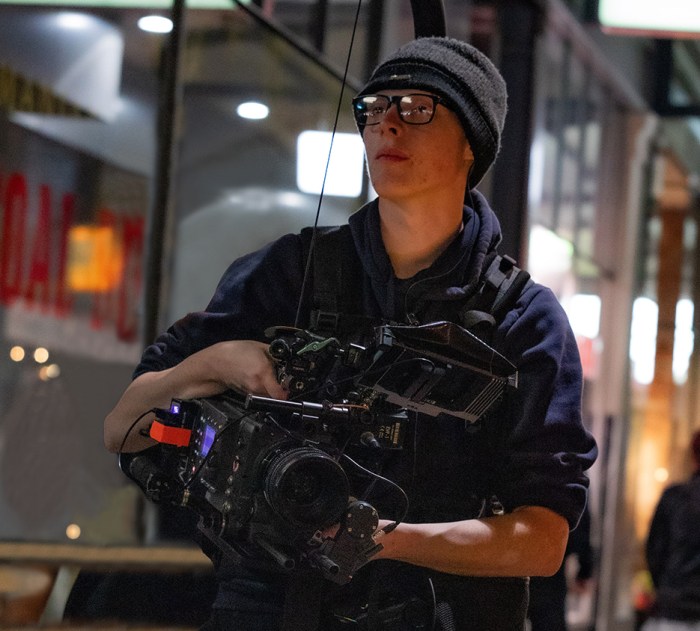
Cinematographer James Dudfield. Photo by Dasha Melnik.
“Before he jumped on board, Alex and I sat down with James to talk through the vision for Blunt, breaking down the look and feel we were aiming for. We wanted to make sure he had a solid understanding of what he was stepping into, but after a few more discussions with Alex, he hit the ground running. Once James locks onto an idea, he just goes for it, and that’s exactly what happened here—he took our discussions and ran with them, shaping the visuals into something even better than we imagined,” explains Mark.
“James’s background in lighting gives him an edge that not every DoP has. At times, he feels like a one-man crew, effortlessly balancing lighting, camera movement, and framing all at once. He works closely with the gaffers, making sure the lighting not only looks great but also serves the story, while at the same time keeping an eye on the camera’s composition and movement. When your DoP is that in tune with both the technical and creative sides of cinematography, everything on set flows more efficiently, allowing the director and crew to focus on the performances and storytelling.”
The future is bright
Like most short films, Blunt is currently on the festival circuit, giving audiences the chance to see this remarkable film on the big screen, where every bit of it can be celebrated and appreciated—both internationally and nationally, as well as at home in WA.
“The strategy isn’t just about getting into as many festivals as possible—it’s about finding the right ones, where the film can truly stand out and connect with audiences who will appreciate its distinct visual and narrative approach,” says Mark.
Beyond festivals, the crew is also thinking about the film’s long-term reach and hopes to explore wider release options. Whether that’s an online platform or special event screenings, the goal is to make Blunt accessible to as many people as possible.
“It’s an exciting journey, and we can’t wait to see where Blunt goes next. We’re grateful for all the support so far and hope people continue following the film’s path as it makes its way onto screens both near and far.”
Blunt will screen at CinefestOZ on Saturday, 6 September. Details here.
ADVERTISEMENT
If you enjoy Cinema Australia as much as I loved publishing it, please consider supporting Cinema Australia’s commitment to the Australian screen industry via a donation below.
I strive to shine a light on Australian movies, giving voice to emerging talent and established artists.
This important work is made possible through the support of Cinema Australia readers.
Without corporate interests or paywalls, Cinema Australia is committed to remaining free to read, watch and listen to, always.
If you can, please consider making a contribution. It takes less than a minute, and your support will make a significant impact in sustaining Cinema Australia as the much-loved publication that it is.
Thank you.
Matthew Eeles
Founder and Editor.Make a donation here.


 Cinema Australia