
Larissa Behrendt.
Award-winning filmmaker and academic Larissa Behrendt uncovers a pivotal chapter of Australia’s history in her latest documentary, One Mind, One Heart which traces the remarkable story of the Yirrkala Bark Petitions, groundbreaking documents that set the foundation for the recognition of Aboriginal rights in Australia.
One Mind, One Heart uncovers the extraordinary story of the three landmark Yirrkala Bark petitions that sparked the flame towards recognition of Aboriginal rights.
In August 1963, two bark petitions 3 traditional documents prepared and signed by Yolngu people 3 were sent to the Australian parliament and became the first documentary recognition of Indigenous people in Australian law. When a fourth bark petition is found in Derby, Western Australia in 2022, the community begin the ceremony of guiding its journey back to Yolngu Country. The repatriation provides the opportunity to track the long political campaign 4 through petition, song, dance, campaigning 4 to keep culture strong and to have a voice for country.
Behrendt, a Euahleyai/Gamillaroi woman, is celebrated for her contributions to law, education, and the arts. Her extensive filmography includes acclaimed documentaries like After the Apology and Maralinga Tjarutja. She’s also a Distinguished Professor at the University of Technology Sydney and an advocate for Indigenous rights.
In One Mind, One Heart, Behrendt masterfully connects the past and present, highlighting the resilience of Yolngu culture and the importance of their political legacy. This poignant film is a testament to the enduring spirit of Indigenous communities and their fight for justice.
One Mind, One Heart is available now to stream via SBS on Demand.

One Mind, One Heart.
“I strongly recognise that legal arguments and lectures are not the way to win the hearts and minds. But compelling characters, stories about family, stories about country, stories with heart are actually the way to bring in a broader audience.”
Interview by Matthew Eeles
When did you first become aware of the Yirrkala Bark petitions?
Because I was a lawyer in a formal life, I’d actually known about them for a very long time. I knew about their significance. I did know that they sat in Parliament House. I did know there was one at the National Museum of Australia. I was fully aware of how important they were politically and legally. I was aware of the strong advocacy of the Yolngu through their litigation because of that background. So it wasn’t until I ran into Clare Wright, who was writing a book about them, that she mentioned the repatriation and said, “I think it would make a good documentary.” And she was right. But I have to say, I wasn’t convinced it was my story to tell until I was appreciative of Yananymul Mununggurr’s role in the story and with her and those thematics. Then I thought, Yes, that is a story I could tell. I felt like I understood that I am the daughter of somebody who was also very significant in our community. I know what it’s like to try and honour that father-daughter relationship. So I felt like there were other elements of it beyond that. Clare pitched the idea, and once I looked a little bit more into it, I thought, Yeah, this really is a story that could open the door to the telling of a bigger story, which is, I think, what we’ve tried to do in the film.
Was there support for the film outside of the community?
Look, it wasn’t an easy road. We had to fight a little bit to get this made, but NITV did come on board, and it’s wonderful that it’s screening both there and on SBS. Screen Australia was always very supportive of it. We got knocked back from other broadcasters, but in the end, I think it found the right home for the story. So it wasn’t an easy thing. I really credit our producer, Michaela Perske, who absolutely would not take no for an answer when people were hesitating about the importance of the story. So you kind of need somebody like her in your court, that kind of producer who’s not going to take no for an answer. Her hard work really made sure that we got supported, and once all of those people were on board, then the rest was very easy to get from start to finish. As well as being a story of great cultural significance, One Mind, One Heart is also an incredible educational tool. There should be no hesitance from any funding body about getting a story like this made and put in front of an audience. Stories like this are critical. We had enormous support from the Adelaide Film Festival. I think they were almost first on board to say that these are the kind of stories that we need to tell. They are a really important investment fund for Indigenous storytelling. I think we can see, with the fallout from the referendum, that there is a view that there needs to be a lot more work done on what we might call truth-telling, but telling the history. That’s a very big part of the lived experience of Aboriginal people, and I feel like this story is really right for this moment. The original Bark petitions were asking for consultation about mining that was happening on Yolngu land with absolutely no consultation. That request for consultation, that quest for having a seat at the table, is as relevant today as it was in 1963. So there are these sorts of stories, and these sorts of traditions, and this sort of history. And look, having been a lawyer and an academic, I really strongly recognise that legal arguments and lectures are not the way to win the hearts and minds. But compelling characters, stories about family, stories about country, stories with heart are actually the way to bring in a broader audience. They’re important for us to tell as First Nations people and to keep those stories strong, but they are a really effective tool in inviting people in to spend some time to see our worldview, to see our experiences, to see our history, to see our strength, to see our resilience. And so with that, I also feel like documentary is the perfect tool.
You’ve said you were familiar with the petitions early on, but were you taken aback by any aspect of this story you may not have been aware of previously?
There’s always something that surprises you throughout the research project. There always is. I don’t think you’re doing your job if you think you already know it all. When you come in, you’ve got to be very open to what you find. I certainly had a deeper appreciation of how skilful the Yolngu were at using their culture and integrating it into this petition. It helped me think more deeply about its broader impact. I guess one of the things, when the petitions weren’t listened to, the Yolngu did also undertake litigation, and it was a fundamental case because of my age. When I first went through law school, the Mabo case hadn’t come down. It was still being argued. And so the case of Milirrpum v Nabalco, which was run by the Yolngu, was the leading case in Australia that said that Aboriginal people had no interest or no rights to land. And we cover that in the documentary, but it gave me pause to think how clever the Yolngu were, because the natural reaction to losing that case would be to take it to the High Court. If they could have taken it to the High Court in the 1970s, they would’ve lost, and we would’ve had a different outcome than we had. They were so wise that they sat on that judgment. They continued to work. They were instrumental in the setting up of the Northern Territory land rights legislation, which did give them access back to their land as the start of a long journey. But that decision to not run that case through the High Court—I was just so impressed by the level of political and legal sophistication that I hadn’t appreciated. So that was nice to know that an old lawyer can still learn new tricks. [Laughs].
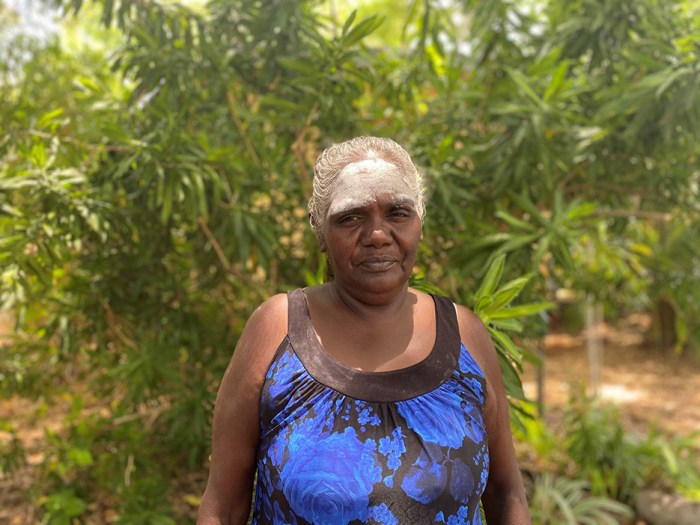
Yananymul Mununggurr.
The Bark Petitions were dismissed as a gimmick by the Yolngu at the time, but it was anything but, wasn’t it?
Absolutely. I think that part of that was just the racism of people not appreciating just how politically savvy the Yolngu leadership was and continues to be to this day. Just as they failed to recognise the sophistication of Aboriginal laws and culture, the sophistication of the Aboriginal worldview, it was a classic case of seeing something incredibly poignant, incredibly well-argued land on their desk and then saying, “Oh, this is too good. This couldn’t possibly have come from them.” So there was all of that, I think, the mask of prejudice that mastered it, but they continued to show their savviness. They continue that to this day. It’s why it was such a privilege to tell their story. They won a significant native title case with the Blue Mud Bay case. They actually have another case before the High Court at the moment, which could be a very important case in terms of compensation for native title. So they have not rested, and I think that’s an important part of their story.
What did it feel like for you personally to be in the presence of Yirrkala Bark Petition?
I didn’t get to hold it. I think it’s a bit too sacred for that. It was in a frame, and it’s very delicate. Although the bark was incredibly important, the thing that I think affected me the most in terms of that history was actually looking at the archive of those amazing Yolngu leaders. That community has an incredible archive. They’ve worked very hard to protect their own stories and to be custodians of that archive. And we were very privileged to be able to access some of that for the film. Being able to see those men like Roy Marika, who I grew up, even in Redfern, knowing that name as part of the Land Rights movement as a significant figure, seeing them speaking in their own words and advocating on their own country — that was the bit of history that gave me goosebumps, and it felt incredibly moving. To be able to integrate that into a film in the present day was such a privilege and such a gift. And I guess the sobering thing was their message is as relevant today as it was when they were saying it back in 1963 and 1971.
One of the most emotional scenes for me throughout the film was the repatriation ceremony. How did it feel for you to be a part of that process?
It was really incredibly joyous. What I found the most moving was seeing Yananymul and her father on that day, which obviously reinforced the fact that that was the heart of the film. But there was also something incredibly moving about the involvement of the schools and that group of young students. There were four schools that participated as part of the ceremony, and they all did their own bark petitions. Of course, we’ve incorporated that into the film. That lovely thing about a daughter wanting to honour her father and that acknowledgment of the generation, and then you see the generations coming behind Yananymul who are acknowledging that significance and keeping that culture strong, finding their voices, and appreciating the ceremony of writing and the thumbprints and speaking to the things that are important to them — I found that incredibly moving. It was an absolutely enormously hot, roasting day, so everyone was baking, but in all of that heat, it was hard not to be moved. I found the singing really moving and the women dancing the Bark Petition onto the ceremonial ground. All of those things just really brought together what an important moment it was. It was wonderful. I mean, as a filmmaker, you’re sort of in the background and a fly on the wall, but it felt like such a privilege to be there at that moment.

One Mind, One Heart.
Can you speak more specifically about that younger generation and what this petition means to them? It’s touched on briefly towards the end of One Mind, One Heart, but are they taking an interest in it?
They absolutely are. It was wonderful that, as part of the repatriation, they did a lot of work in the schools around getting the kids to really understand what significance that was. They’re all so strong in their culture, they’re very strong in their language, but you could see how this additional knowledge of this petition was enriching their own understanding of their own political history and their own sense of self. It was just wonderful to feel that. I mean, the Yolngu have been such staunch advocates, not just for their own rights, but they have been significant as advocates for the protection of rights of First Nations people around the country. What you could see in that younger generation was that same connection to country and that commitment that the older generation had to make sure that their young people would grow up knowing their Yolngu culture, but being able to navigate and be educated in the Western culture as well, so they could navigate both but remain Yolngu most strongly. You could see that in these amazing young people that were there with their strong voices, their strong views, and their strong sense of who they were. I just found that to be a wonderful element of what the thinking was behind it. This wasn’t just about repatriating an object back to the community. This was about ensuring the whole community understood the importance and was a significant part of that ceremony.
How are you feeling about the current state of politics in Australia when it comes to land rights issues?
Look, I think it’s fair to say that there’s been a sense since the referendum that things are pretty difficult in this space, and people had been fairly demoralised by the experience of it. But it made me realise how important the story was. I mean, you always ask yourself, why this story at this time? It felt like the uplifting nature of this story, the strength of the sense of the continuation of culture, this idea that what happened to them in 1963 with the mining was absolutely catastrophic in terms of the impact on their culture and their connection to country. But they have remained so strong. These are stories that we need to be reminding ourselves of at this point in time, to remind ourselves of the strength and resilience in our own communities. In many ways, there are always bumps in the road, but we need to keep that connection. It feels like that’s really an important space to look at. Governments will come and go. The tide will rise and fall. But you need to keep your eye on what’s important, keep strong, and not waver from what you know is the right thing, what your rights are, and what’s best for your community. That’s really the gift the Yolngu give us in this story, showing how they’ve done that.
You’ve done such a terrific job with this documentary. Is there another story that you’d love to make a documentary about?
I always have something on the boil. [Laughs]. I’m looking at doing a series for the ABC off the back of The First Inventors, which was my previous escapade in filmmaking. I’ve taken on the challenge of being a series director, and I’ve got something in the pipeline of that nature until the next quiet, gentle story comes knocking on my door.
You’ve written an episode of Top End Bub, which I know a lot of Cinema Australia readers are looking forward to. Can you tell us anything about working on that show?
I absolutely loved it. It was wonderful. Miranda Tapsell and Joshua Tyler were just absolutely delightful. I am biased, but I thought it was even better than the film. It’s got that wonderful black humour, but it’s got heart too. It doesn’t shy away from the hard issues, and I’m really excited to see it come to the screen. It’s an absolute privilege to work on it.
One Mind, One Heart is available now to stream via SBS on Demand.


 Cinema Australia