

Interview: Kitty Green

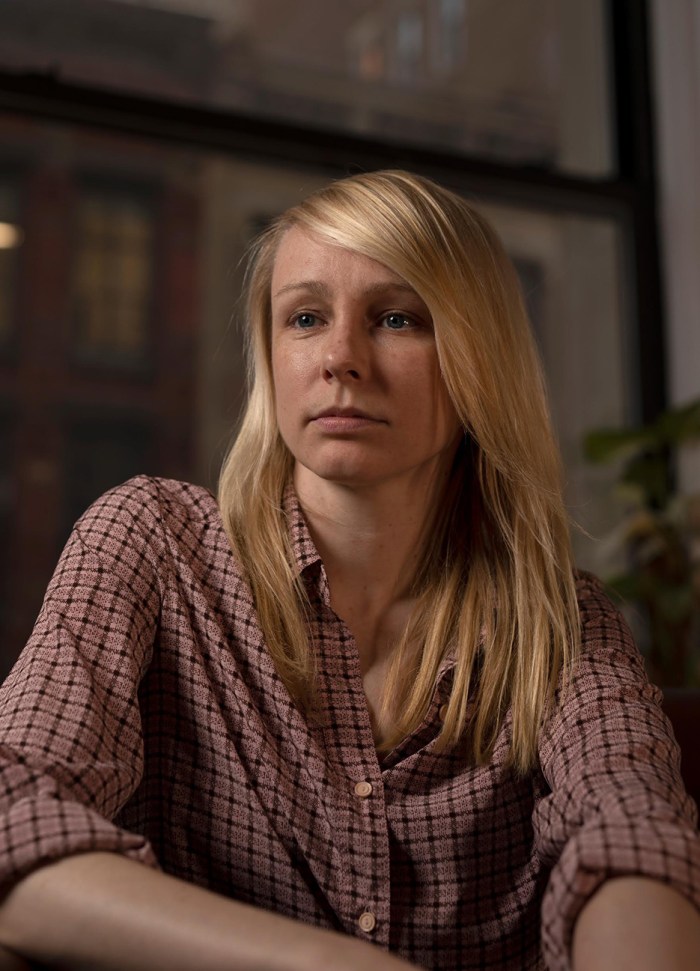
Kitty Green.

Australian filmmaker Kitty Green has carved a niche for herself with her distinctive storytelling and a keen eye for gripping narratives. After earning international acclaim for her feature film debut, The Assistant, and a string of award-winning documentaries, Green returns to Australia with her latest film, The Royal Hotel.

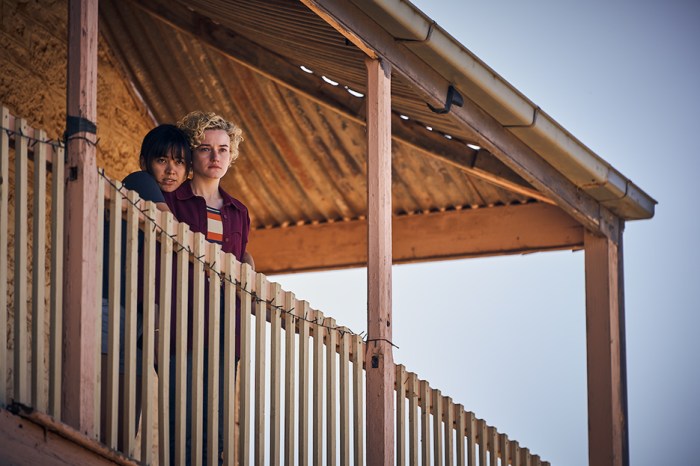
Set against the backdrop of a remote Outback mining town, The Royal Hotel follows two American best friends, Hanna (Julia Garner) and Liv (Jessica Henwick), as they embark on a backpacking adventure in Australia. When financial woes force them into a temporary live-in job at the local pub, their encounter with the vibrant Down Under drinking culture takes a dark turn, thrusting them into an unnerving and rapidly escalating situation.

Green’s filmmaking journey began with studies at the Victorian College of the Arts in Melbourne. After a stint working as an editor and producer for the ABC, she gained international recognition with her documentary work, including the award-winning Ukraine Is Not a Brothel and Casting JonBenet, picked up by Netflix as an Original. Green’s distinct approach to storytelling and her exploration of complex human experiences have earned her accolades, including nominations at prestigious events like the Gotham Awards and the Independent Spirit Awards.

In this interview, Kitty talks us through the making of The Royal Hotel, how Pete Gleeson’s documentary Hotel Coolgardie inspired her film, her creative partnership with acclaimed actor Julia Garner, and developing the film’s rocking soundtrack.

Liv (Jessica Henwick) and Hanna (Julia Garner) in The Royal Hotel. Photo by See Saw Films.

“I’m in a very privileged position to have a great actor like Julia Garner who trusts me on that level. It’s a really, really lovely relationship.”


Interview by Matthew Eeles

The Royal Hotel is based on Pete Gleeson’s highly disturbing documentary, Hotel Coolgardie, which shocked audiences back in 2016. Can you take us back to the first time you saw Hotel Coolgardie and the effect that film had on you?

I was on a film jury at the time. I watched ten documentaries on this jury. I remember feeling pretty tired, and I was craving something to really spark my interest. And then there was a point where this film came on called Hotel Coolgardie. I just stood up out of my chair. I just couldn’t believe it. It was so different, and I hadn’t seen that kind of Australian drinking culture viewed through this sort of lens of these two young women who were foreigners and had no knowledge or understanding of the rules of that place. So to me, that was really kind of a fun and interesting subject for a screenplay. So I pitched the idea to See Saw Films, and they liked it and started work on it.

Did you speak with Pete, or anyone from the Hotel Coolgardie team, before you started writing The Royal Hotel?

Yeah, we had to get their permission. I spoke with Pete a lot, and he put me in touch with the women in the movie, so I was able to chat with them. It was all such a good process. So that was the start of getting some background, finding out about the place and what was in their film, and also the larger context of how the doco was made. It was really great to chat with them. We were taking their story and making it our own, which they were very respectful of, which was great. But it was great to get some background, and Pete really understands that world, and he taught me a lot about what’s out there and what he had come up against.

Hotel Coolgardie is set in Western Australia. Were there ever plans to make The Royal Hotel in WA?

I really would have liked that. For some reason, it worked out cheaper to shoot in South Australia, so that’s where the production ended up. We really didn’t want to place this story at any particular place. This film is more about drinking culture in general, so it really could have been set anywhere. To us, it became about finding a good location that was affordable with our budget. All really boring practicalities essentially. [Laughs].

Well, as someone who lives in Perth, I’m glad Perth gets a mention as being a “beautiful city.”

Yes, it does. The Torsten character really loves Perth. That’s true. [Laughs].

Matty (Toby Wallace), Billy (Hugo Weaving), and Live (Jessica Henwick)in The Royal Hotel. Photo by See Saw Films.

Your grandfather owned a pub in regional Australia. Did you spend time at that pub? Were you ever exposed to the kind of culture that’s explored in The Royal Hotel?

Not so much. My dad grew up in that pub, but they sold it before I was born. We definitely went back and visited to see it a lot of times. I’ve been around it all. And I think as an Australian, I’ve spent a lot of time in pubs. I co-wrote with Oscar Redding, who spends his own time in pubs too. So I mean, between the two of us, we all had some stories, a lot of which are in The Royal Hotel. A lot of them turned into what happens in the film in different ways. We had a lot of fun talking about the power dynamics in a place like that and how people assert dominance, and assert their authority, and how people handle their liquor and that sort of stuff.

The Royal Hotel is an expansion on the themes you explored in The Assistant. There are quite a few parallels between these two films. Either positive or negative, what mental impact has it had on you working on two films back-to-back that explore such heavy themes?

Regardless of whether there were mental impacts or not, I think it’s probably not a bad thing. I think it’s cathartic that I get to put all of this on screen, and I can forget about it and move on. With The Assistant, we had a lot to say about the industry and how unfair the industry is and how it treats women. I was able to put that out there. Other people don’t have that luxury of really getting that anger out. I see it as a good thing that I’ve been able to throw all this stuff out there, and other people write to me to tell me that a particular story has resonated with them and that they’re happy to see it on screen. So it feels really positive in the end, even though it’s a heavy, heavy subject.

I’m glad you’re able to find the positive in it. Obviously, these themes transcend both films and into filmmaking itself. Over the past decade, we’ve seen significant shifts in the film industry towards greater inclusivity and diversity. Can you share some specific examples of how you believe the industry has changed in a positive way for greater inclusivity during your time in the industry?

It’s always hard. It always feels like a real uphill battle when you’re working in this industry, especially as a woman. Lately, I’ve seen my friends get more opportunities. I’ve seen more women direct TV. I think TV was traditionally a boys’ club. So it’s nice to see a bit of a shift that way. It still takes a minute, though. I still feel like I have to prove myself in a way that I think my male colleagues often don’t have to do. I’m still kind of always trying to convince people that I’m a film director, and it takes people a minute to believe me almost. So there’s an element of that that gets a little tiring. But in general, I do think it’s getting better, and I think in the next few years, we’ll keep getting better. And I think in ten or twenty years time, hopefully, it’s a lot more equitable and a safer place for everyone to work.

Did you find a difference between working on an American film compared to working on an Australian film?

The Assistant was quite successful in America, but I didn’t really have a name here in Australia, so it was like I was starting from scratch where people didn’t really know what I’d done. It takes a minute for everyone to figure out that you know what you’re doing and trust you and can believe in your vision. It always takes a second no matter where you are, but I feel like you just try and find your people wherever you go and find people who understand what the project is and who can help you realise that.

I love the idea of a filmmaker and actor who enjoy working together so much that they continue their partnership throughout their careers. Other than being such a phenomenal actor, what is it about Julia Garner that made you want to work with her again following The Assistant?

Everything. [Laughs]. The Assistant really hinges on her performance in a way. The movie is on her face and her facial expressions for the entire thing. And so it’s about her assessing her environment in a way. She’s such a big part of my work that it’s hard to figure out what she brings. She is the work in a lot of ways. Bringing her on this one, I had no doubt that Julia was what this film needed. I asked her to do it, and she agreed. It worked out really beautifully. We work really well together. We don’t need to communicate that much. We sort of get each other now, which is great. I’m in a very privileged position to have a great actor like that who trusts me on that level. It’s a really, really lovely relationship.

Australia is a long way to travel from America. Was Julia ever hesitant to come all the way to Australia?

She was game. She was up for it. I think the first few days she was like, “Oh, what have I signed up for?” [Laughs]. It was freezing. I think she wasn’t expecting that. But yeah, she had a great time. So I was happy to show her a little bit of the country and take her around. I took her swimming in a waterfall. It was a pretty fun time.

Hanna (Julia Garner) in The Royal Hotel. Photo by See Saw Films.

I can’t talk to you about the cast without asking you about casting Dylan River as the barman. I had a moment where I yelled out to no one in particular, “It’s Dylan!” the moment I spotted him.

[Laughs]. We needed a cheeky bartender, and our producer, Kath Shelper, mentioned Dylan. He had played a lifeguard in a short film that Kath had seen. She, of course, is very close with Dylan and Warwick Thornton. His name popped up, and then we couldn’t get over the idea. Then we were like, “Well, we have to ask him to do it.” He agreed, which was fabulous, and came down and helped us out. It was wonderful to work with Dylan.

What a treat to have him in your film.

I knew he’d be great. I think he auditioned, but I think we pretty much knew he already had the role when he agreed to it. It was great.

I want to ask you about the casting of Daniel Henshall as Dolly. Daniel is arguably one of this country’s best actors, but he has suffered a bit from typecasting since his phenomenal performance in Snowtown. I haven’t met Daniel, but can you assure our readers that he’s nothing like he is in most of his films?

Daniel is such a lovely person. It was a joy. I’ve always wanted to work with Daniel. I thought he was phenomenal in Snowtown, and to be honest, I don’t even think I sat through the whole of Snowtown. It freaked me out too much. [Laughs]. He’s so terrifying. I knew I needed him in this production. I knew he could just bring this level of terror with very simple things without the dialogue needing to be terrifying. He could make it terrifying. It was so wonderful to have him there.

There’s a moment in the film where Daniel shares an intimate scene with a snake. Was he dealing with a real snake in that scene?

Yeah, it was a very real snake. He had a day getting to know the snake. He and the snake had a buddy day so that he was comfortable with it. He was really great on the day. He looked like he wasn’t terrified at all. I have no idea how scared he was because he looks really calm and in control on screen.

Carol (Ursula Yovich) and Billy (Hugo Weaving) in The Royal Hotel. Photo by See Saw Films.

Can you tell us about the dynamic between Hugo Weaving’s character Billy and Ursula Yovich’s Carol? They own a hotel called The Royal Hotel. He’s a white man, obviously of British descent, while Carol is an indigenous woman. Is this a comment on Australia’s colonisation by the British?

Their dynamic is not really a comment on anything. It’s sort of established that it’s his family’s pub, which has been in his family for generations. Carol and Billy have this beautiful relationship, but it’s messy. The idea is that she’s been his on-and-off again girlfriend for years and years, and she’s really at a breaking point because Billy is an alcoholic who can’t handle his drink and he really just keeps wrecking things. Just when she thinks he’s going to pull it together, he messes it up. She’s the moral center of the place, and when she decides to leave, all bets are off. It was important to us to find a great actor who could sit in the middle of all that. We wanted to work with Ursula just because my co-writer Oscar Redding had worked with her before and he was such a fan. We wrote the role for her and hoped she would want to do it. She said yes, and she brought a lot to Carol. She brought a lot of her own sort of wisdom and beauty. It was wonderful.

I was reading way too much into those characters then.

Yeah, I think so. [Laughs]. I certainly understand where you’re coming from. It was more that we were excited to work with Ursula. That’s where these characters stemmed from more than anything. I felt like Hugo and Ursula would have a really lovely relationship, and they’re so good together, and it really worked. I think if we were going to do a sequel, it would be the two of them, and us going back into their past. That would be really interesting.

The Royal Hotel was co-written by actor, writer, and producer Oscar Redding. What does Oscar bring to a film like this?

When I was at film school, Oscar was at drama school. He was always around. He’d written some pretty weird, dark stuff. I knew he was a good guy and he was a friend. I felt like if I was going to tap into some dark stuff, I wanted someone who would be safe to do that with, and he was the perfect person. I asked him to help, and he came in and did an amazing job. Oscar brought so much to this film.

Every song in The Royal Hotel fits in perfectly with where it’s featured. I had goosebumps during the opening scene while Men at Work’s Down Under was playing. Did you have much to do with the film’s soundtrack?

There were a lot of us who worked on that soundtrack. So there’s a big team of music supervisors and my composer and sound designer. I did a lot of trawling through so much music to find the right vibe, finding the right feel, and the right era. We had a lot of conversations about what would be played in a pub like this, and what era the pub’s jukebox would be from. Anything to do with music is really tricky and it can be expensive. It was actually quite a big process, but it was something we were very excited about. It was a lot of fun. There’s some great stuff in there. I’ve got a little Spotify playlist that is public. A few people have followed it. It’s got all the tracks from the film.

ED’S NOTE: You can search The Royal Hotel on Spotify to find the playlist.

What’s your worst pub experience?

The “Dick Inside Her” happened to me in real life. People will watch the film and hear the Dickens Cider joke told by Toby Wallace’s character. That happened to me. I wasn’t a bar person. I was just at the pub generally, and I was asked by a guy to get him that drink. It made me feel uncomfortable. Jesus, that’s not cool.

The Royal Hotel is in cinemas from November 23. 

Leave a comment