
Solstice.


Solstice
Written and directed by Helen Newman
When 15 year old Mary died by suicide her parents were met with shame and stigma. They refused to be silent.
Solstice is a bold, grassroots voice raised to unite, challenge and change how we respond to our collective mental health crisis now and into the future. To find out more visit http://www.solsticefilm.org
“As more and more survivors of suicide added their voices, I increasingly became witness to the failings of our mental health systems and the vast human wreckage being left behind.”
Article by Helen Newman
Solstice is a film about suicide – a difficult word still wrapped in awkward silence. To have lost someone to suicide speaks of a grief, loss and heartbreak none of us ever want to know – but sadly many do. Every 40 seconds, someone dies by suicide (World Health Organisation, 2019).
This film began in 2018 as a story of one regional Australian family, the Bakers, who had lost their 15-year-old daughter Mary to suicide. But, as more and more survivors of suicide added their voices, I increasingly became witness to the failings of our mental health systems and the vast human wreckage being left behind. I wanted to use this film to push beyond the isolating silence of suicide loss and offer a different narrative for how we can respond to this most shocking of actions, and why we must do so.
So, over the next four years, I sat with families, partners, mothers, wives community leaders. They told their stories. They cried, I cried. We laughed at the absurd and despaired at the needless failings. They shared their memories, precious photos, and videos shot on their phones. I discovered that each person was driven by the same thing – a deep need to not have others experience the grief they live with.

Solstice.
I also found these very personal stories were enmeshed in multiple external threads that needed to be untangled: The historical shame and stigma that accompanies mental illness and suicide; the resultant disparity in funding for mental health services compared to physical health services; the impact and cost of collective trauma across communities, cultures and nations; and then the last-minute latest curveball, the mental health aftermath of a global pandemic. The challenge was to ensure the voices of the survivors were clearly heard within the context of the myriad external forces.
I believe the raw humanity of the stories in Solstice makes them relatable and compelling. This is a film where bravery and hope live alongside the deepest of grief. It is this dichotomy of the two extremes that I think audiences will be drawn to – the surprising hope found in the darkness, the visceral determination found when you are broken.
My aim is that Solstice helps to begin conversations, unite communities and ignite positive change for those struggling with a mental illness and those left behind when a person dies by suicide.
Solstice will screen online at the Melbourne Documentary Film Festival from 1 – 31 July. Details here. Solstice will screen in cinema at the Melbourne Documentary Film Festival on Saturday July 29th at 10.30am. Details here.
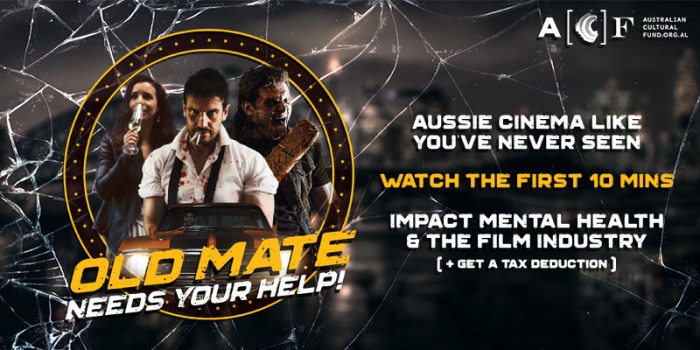
FIND OUT MORE ABOUT THE OLD MATE CROWDFUNDING CAMPAIGN HERE!


 Cinema Australia