Walkatjurra


Walkatjurra
Directed by Francisca Silvia Bravo and Carole Riesler
Produced by Alessandra Cristina
It is the 70th anniversary of the first nuclear test in indigenous Australian territory and the aboriginal communities call on activists from all over the world to carry out a 200 km anti-nuclear walk through the desert. Among them, the directors of this documentary join to record this walk, which seeks to end the extraction of uranium, the mineral with which atomic bombs are produced. What attitude will we take as humanity in the face of the possibility of creation and destruction?
“It is clear that this documentary wants audiences to reflect on their own relationship with nature.”
Review by Reuben Lazarus
Walkatjurra is a nature documentary from directors Francisca Silva Bravo and Carole Risler that follows a 200-kilometre anti-nuclear protest walk through the Western Australian desert. The documentary is filled with environmentalist themes that are key to the area they’re walking through, primarily anti-mining and anti-nuclear weaponry, as the area is filled with uranium deposits.
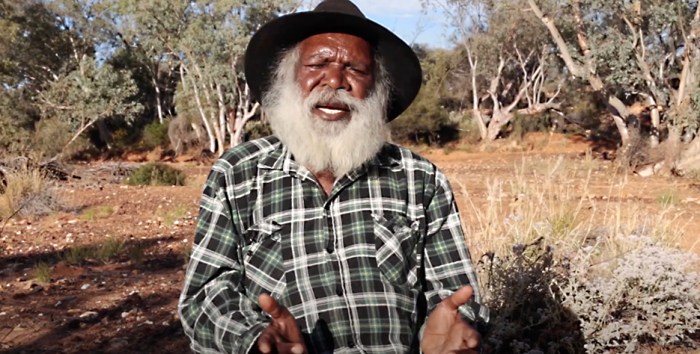
Walkatjurra follows two primary narrative arcs throughout its feature-length; the 200-kilometre walk itself and the meaning behind why they’re protesting, and also how community life works in these arid areas of Australia. A large focus is placed on how the creation of mines for uranium destroys the natural environment and ecosystems that rely on them. The directors use interviews with Aboriginal community members to let them discuss how these mines affect them, including the destruction of sacred sites. Additionally, another purpose of their protest is against the creation and use of nuclear weaponry as they discuss the damage to both human life and the environment that such weaponry can have.
Walkatjurra also delves into stories of the Aboriginal Dreamtime, discussing how certain locations they pass on their journey relate to their spiritual stories. The directors spend a lot of time showing audiences how Aboriginal communities lived off this land, showing how they procured food through gathering in certain ways, as well as how they cooked and prepared food such as how they turned seeds into flower, or bark into medicine. They even go as far as to demonstrate how to properly butcher a kangaroo, showing how to cut and trim the meat.
The primary focus of this documentary is on the different types of visuals that are shown throughout, with dialogue and other audio elements seemingly secondary. Significant screentime is dedicated to the natural elements of the documentary showing numerous shots of different outback landscapes and the endless flora and fauna that inhabit them. Intercut with these environmental images is footage of protesters walking and camping together as a temporary community, demonstrating how Aboriginals live in these conditions. Short animation sequences are also used to explain some of the Dreamtime stories that are presented using Aboriginal art. Audio is often sparingly used, letting the imagery and landscapes take priority. When audio is used it is often interviews with members of the protest, music being performed by locals, or voiceovers of poetry-esk protest prose in either French or Spanish.
The use of varied types of imagery helps intertwine the different themes that are present in Walkatjurra as the documentarians touch on many different environmental themes. While at times the overall message being presented can be obscured, due to having an anti-mining, anti-colonialism, anti-uranium and anti-nuclear weaponry agendas, overall it is clear that this documentary wants audiences to reflect on their own relationship with nature. The documentary asks us to learn from our country’s original custodians on how to live alongside nature, as equals, and not to dominate and manipulate the environment till it’s destroyed beyond being habitable.
Walkatjurra will screen online at the Melbourne Documentary Film Festival from 1 – 31 July. Details here.


 Cinema Australia