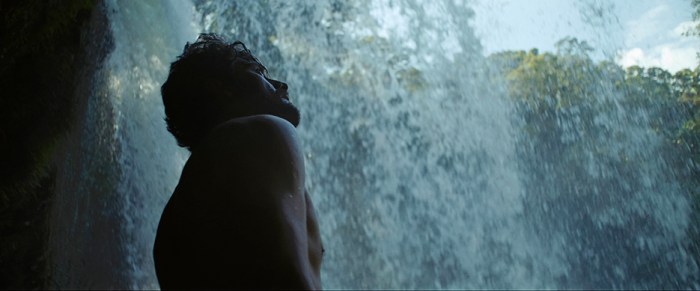
Freedom is Beautiful.


Freedom is Beautiful
Directed by Angus McDonald
Story by Angus McDonald and Nolan Verheij
Produced by Angus McDonald, Mélita Toscan Du Plantier
A documentary feature about captivity, freedom, music and art featuring Kurdish refugees Mostafa Azimitabar and Farhad Bandesh
“The interweaving of the visual and audio elements of the documentary combines to create an extraordinary story of the perseverance of the human spirit under tremendous and constant persecution.”
Review by Reuben Lazarus
Freedom is Beautiful, the debut documentary feature from the award-winning visual artist, Angus McDonald, details the incredible story of two Kurdish Refugees freed from Australia’s brutal offshore detention centres. The documentary follows Farhad Bandesh and Mostafa (Moz) Azimitabar who were incarcerated for almost 8 years, with time imprisoned split between Papua New Guinea and on the Australian mainland. Freedom is Beautiful highlights the enduring nature of the human spirit in the face of atrocities, and the power of a shared humanity.
Angus McDonald co-produced Freedom is Beautiful with French film producer Mélita Toscan Du Plantier known for Masaan (2015) and In The Fade (2017) which were both award winners at Cannes Film Festival. The documentary is supported by both Amnesty International and ex-football player turned activist Craig Foster, who not only is an executive producer for Freedom is Beautiful, but also features, detailing his own experiences with Farhad and Moz.
The documentary details Farhad and Moz’s life, from their childhood in the warzones of the Iran-Iraq war of the 1980s, through to their almost 8 years of detention by the Australian government. As the characters narrate their own experience, we hear harrowing stories of the horrors they faced on their journey to eventual freedom in Australia. Such stories primarily revolve around the conditions and treatment they faced while in detention, with conditions in Australia also being torturous to asylum seekers. The documentary gives attention to the Nauru Files that were leaked in 2016 which included 2000 incident reports of the treatment of children. Such incidents included sexual and physical assault of children and numerous accounts of suicide attempts. Alongside this, Farhad and Moz detail their own experiences including the mistreatment by guards, inadequate living conditions and being denied basic necessities like food, water, electricity and sufficient medical assistance.
Beyond the focus on their condition while detained, Freedom is Beautiful spends a lot of time examining Farhad and Moz’s life post-detention and how they aim to assist and raise awareness for those still under brutal imprisonment for doing nothing more than seeking refuge. We see them undertaking many creative activities such as creating music in their native tongue, creating art that speaks of the horrors they saw, investing time in charities to assist others, and even making wine with the help of local Australians.
While the narrative, as explained by Farhad and Moz themselves, is incredibly thought-provoking and heartfelt, it is the intertwining of a vast variety of visual sources that make this documentary as confronting as it needs to be. We see different instances of video used at every step of their journey that adds real legitimacy to their stories as we see what the journey on the boats was like in their initial escape from the warzones, we see what inside the detention centres looks like and we see the press coverage of numerous Australian politicians neglecting proper treatment of the issues. All these images are heavily juxtaposed with each other as footage intercuts between life in the detention centres with anti-asylum seeker sentiments from politicians. These images add tremendous weight to the story, and alongside statements from inmates, such as claiming that their captors want them to either kill themselves or reject any notion of gaining asylum and simply return home to a warzone, gives audiences some idea of the true horrors being perpetrated.
The interweaving of the visual and audio elements of the documentary combines to create an extraordinary story of the perseverance of the human spirit under tremendous and constant persecution. While much of Freedom is Beautiful is dedicated to the negatives and the horror of inmates’ lives, the uplifting themes balance out the narrative into a complete and fulfilling protest documentary. As a protest documentary, much of the agenda is to criticise the policies of the government that led to the creation of these detention centres, but Freedom is Beautiful also aims to show that even in the face of horrors, the human spirit can endure and create beautiful art and music that will live on after this inhumane chapter in our history has closed.
Freedom is Beautiful will screen at the Melbourne Documentary Film Festival. Details here.


 Cinema Australia