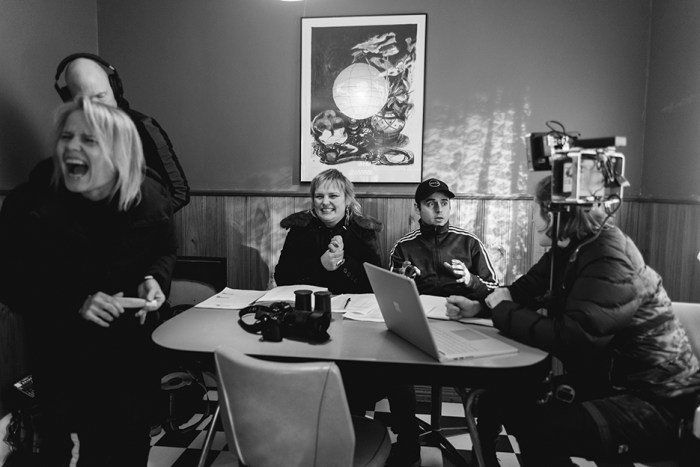
Shaynna Blaze, Carly Anne Kenneally and Jess Kenneally on the set of The Fort. Photo by Theresa Harrison.


In this interview, The Fort co-directors Carly Anne Kenneally and Jess Kenneally, who also wrote and stars in the film, share their insights into the making of their new film.
Having launched its film festival run in 2021 at CinefestOZ, The Fort faced a setback due to the COVID-19 pandemic. However, this unexpected twist extended the film’s longevity and ignited a renewed momentum for its release.
The Fort follows young mother Kitty (Eliza Charley), and son Tom (Dean Bills). Living with family violence, Kitty and Tom create a fort that transports them to a series of fantasy worlds that provide an escape from the hostilities they face at home. When reality overtakes fantasy, what does a mother do when she doesn’t want her son to become his father?
Carly Anne Kenneally and Jess tell Cinema Australia of the challenges of being independent filmmakers and battles they had to face throughout the production process. Despite the hurdles, they remained determined to bring the film to audiences, recognising its strong social impact.
When asked about the necessity of traveling with the film for Q&A sessions, Carly Anne Kenneally acknowledged the logistical limitations of being present at every screening. To address this, the team incorporated a post-screening discussion, featuring influential figures from various spaces, such as the Carlton Football Club and organisations like Man Cave and the UN Women’s Council. These discussions provided viewers with a deeper understanding of the film’s themes surrounding family violence and respect towards women.
Emphasising the importance of responsible storytelling, the co-directors reassured that The Fort does not aim to leave viewers broken or overwhelmed. Instead, it presents its sensitive subject matter in a nuanced manner, prompting meaningful discussions and increased awareness.
Carly Anne is a director, producer and editor working in narrative, documentary and television, with a focus on storytelling. From 2012 to 2016 Carly Anne was production manager for radio show All the Best, which was made by FBi Radio in Sydney and broadcast nationally via the CBAA. During that time she earned a Cert III scholarship in live TV with Metro Screen (2014), and studied Cert IV in film and TV at Metro screen in Sydney (2015).
Carly Anne was a Union Docs collaborative fellow from 2015 to 2016, specialising in experimental documentary and non-fiction media in New York, and the Production Manager for SXSW Audience Favourite award winner and New York Times acclaimed film The Light of The Moon in 2016. Carly Anne won the ASE Edit Royale 2020, where she edited a complete music video from unseen media in only two hours, Carly Anne was formerly an assistant editor at The Butchery, and now freelances for The Editors, ARC, and for renowned senior editors.
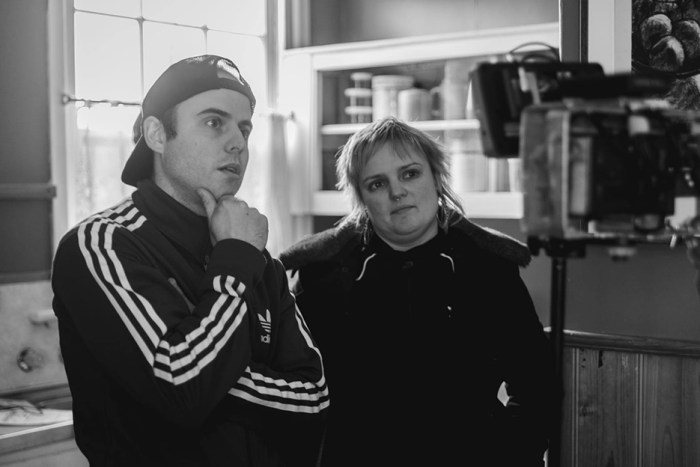
Jess Kenneally and Carly Anne Kenneally on the set of The Fort. Photo by Theresa Harrison.
Jess Kenneally is a writer, director, producer and actor working across film, television and theatre. He briefly studied Arts/Journalism, then outdoor studies, before attending NIDA Open in 2013 to study acting.
Throughout his acting career Jess has strived to tell stores that cross demographics playing key roles in a number of short films such as Hirani (2015) and The Escape Hatch (2016), both of which enjoyed success on the festival circuit.
Working on both sides of the camera, Jess has produced stage productions including the Australian Theatre debut of Good Egg, a play that tackled mental health themes, in which he also played one of the lead roles.
He has worked in the audio department at Endemol Shine Australia, Eureka Productions and the Nine Network on productions including LEGO Masters, Survivor, Gogglebox Australia and The Block. The Fort is Jess’ first produced screenplay.
Regarding the future of The Fort, Jess Kenneally highlighted the ongoing distribution through FanForce, with screenings taking place across Australia. The team encourages people to host their own screenings if a screening is not available in their area, fostering a grassroots movement to promote independent films.
In addition to screenings, Carly Anne Kenneally told Cinema Australia about their efforts to collaborate with AFL football clubs, parliament members, and the police force, aiming to utilise the film as a catalyst for change. They aspire to incorporate it into the education system, focusing on prevention and raising awareness to combat domestic abuse.
Looking ahead, Carly Anne and Jess hope to make The Fort more accessible by exploring streaming options, broadening its reach and impact.
The Fort is a testament to the tenacity and dedication of its creators. It serves as a powerful medium to amplify the voices of survivors and initiate vital conversations, ultimately inspiring positive societal transformation.
As the film continues to make its journey across Australia, its influence and significance are poised to resonate with audiences, empowering communities and fostering a collective commitment to creating a safer future.
You can find out more about upcoming screenings of The Fort here.
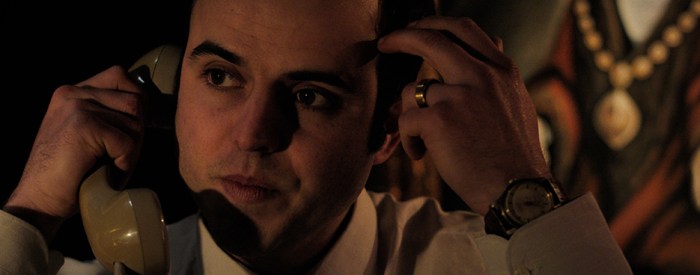
Jess Kenneally as Graham in The Fort.
“Some of the conversations that we ended up having on set were quite confronting to some people who admitted that they’d never really spoken about this topic. Our on-set environment was very cathartic for a lot of cast and crew.”
Interview by Matthew Eeles
Jess, you wrote the original script for The Fort back in 2015, and you re-wrote the script in 2017 after attending the Safe Steps Family Violence Candlelight Vigil. Can you tell us about the effects that vigil had on you and how it inspired change in the script and your approach to this story?
Jess Kenneally The original script was probably more of an original idea than a script. I think things always evolve when you have little ideas to build off. What we ended up with was quite different from the original idea. We expanded on it and realised what this small idea could become. When we attended the vigil, it really affected us. The most affecting part was the roll call at the end, where they listed all the women and children who had lost their lives to family violence that year, along with their ages and names. We thought, what can we do to help spread this message or bring about change? So, we adapted the script to have a social voice and message. It was an important thing for us. It was confronting, and we thought, let’s create a piece of art to reach people without them having to attend a vigil. Hopefully we can prevent more lives from being lost and bring about change through art.
Why was film the right artistic medium to tell this story?
Carly Anne Kenneally Everyone involved had a certain set of skills that we could utilise to make a movie. We all have skills in our respective fields. Jess is a trained actor and has experience in writing. I’m a trained editor. Those were the areas where we could contribute, and as filmmakers, we initially planned to make a short film on the side, which eventually turned into a feature. So why not combine our skills and interests? We already wanted to make a film, and now we can make a film focused on social change.
Carly Anne, were you involved in the film from the very beginning?
Carly Anne Kenneally From the beginning, yeah. Jess and I used to hang out on Saturdays and brainstorm film ideas. We both had a strong desire to make a film. We would discuss various possibilities and throw ideas around. It was myself, Eliza Charley, who plays the lead actress in the film, Jess, and I. I remember Jess came up with a logline that was very similar to what we eventually created for the film. We all looked at each other and thought, “Wow, that’s it.” The logline revolved around a boy who creates a fantasy world to escape from domestic violence. We found it to be a beautiful idea, and it sparked our enthusiasm. From there, things just snowballed. Jess would work on the script every week, sending it to my mum and me on Thursday nights. We would read it and then have a family meeting on Saturdays or Sundays to discuss the direction we wanted to take, what was working, and what wasn’t. We continued this process for about six months. Is that correct, Jess?
Jess Kenneally: It was a long process. Carly mentioned that I would chip away at it every week. Personally, I often started working on it around 10 o’clock on Wednesday nights. [Laughs]. I definitely work better under pressure and with deadlines. As the deadline approached, I found it harder to hit my stride. [Laughs]. Having a film editor, a script editor, a deadline, and a boss constantly pushing me was incredibly important. It helped us complete, shape, and mold the script into what it eventually became. It was a different writing process than what I was probably used to, but it got the job done, and it turned out to be the best approach. Early on, we learned not to be too attached to our ideas, which was fantastic, especially since we ended up directing the film as well. We realised that we had to prioritise what was best for the film and the script, rather than getting fixated on a singular idea.
How would you say you both complemented each other creatively on this project?
Carly Anne Kenneally We’ve often discussed co-directing the film, and it was something we didn’t initially plan on. We actually thought of bringing in another director. However, as we progressed further, we became so invested in the idea that we felt it wouldn’t be fair to hand it over to someone else, especially since we had so many ideas ourselves. Plus, we couldn’t afford to pay another director. [Laughs]. Jess, being well-trained in acting, had a great rapport with the actors, while I felt nervous and hesitant about going down that path. I loved the pre-production aspect, conceptualising the film, setting the mood, and considering how the tone would translate. Jess would come to me with acting nuances he wanted, and I would provide input on the visual elements like colour palette, and set design. We complemented each other well and knew when to take the lead and support each other. During the writing stage, Jess led the way, and I took charge during the editing stage. Having Jess as my co-creator during post-production was incredible. He knew the perfect moments to affirm my decisions or when we needed to break it down, unpick it and start again and build it back up. Of course, it wasn’t all easygoing. On the first day of shooting, Jess and I retreated back into being kids and we almost went head to head at one point. [Laughs]. We both realised we couldn’t continue like that when we looked at each other and the crew around us.
Jess Kenneally We stepped aside and decided to have a chat in the hallway. I’m sure everyone was thinking, “Oh no, we have another month of this.” [Laughs]. But even in that heated moment, we didn’t express it outwardly. We both realised that our ideas were different. We agreed to get through the day and discuss it that night. We had a productive conversation and recognised our strengths and weaknesses. We decided to embrace those strengths and avoid challenging each other in front of other people because we didn’t want to lose any of the crew. We were so lucky with every single person we had on board. Growing up as siblings, our differences often drove us apart, but in this case, it was the best thing that happened to us. We saw each other’s strengths and thought, “Wow, I hadn’t considered that. It’s best for the film.” It elevated our work. For example, Carly had some small ideas for the mise en scène that I initially overlooked, but incorporating those details made me realise the importance of paying attention to every little aspect in each scene. We recognised each other’s strengths and incorporated them into our roles. It was a great experience that made me a better actor, Carly a better editor, and both of us better directors.
Carly Anne Kenneally This experience really changed the dynamic of our relationship as brother and sister for the better. So that was really cool.
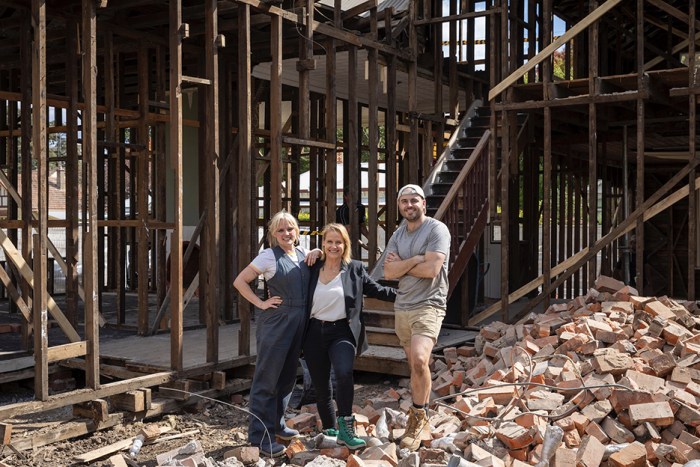
Carly Anne Kenneally, Shaynna Blaze and Jess Kenneally. Photo by Simon Griffith
The Fort was very much a family endeavour. How did your mother, Shaynna Blaze, influence and contribute to the making of this film, and yourselves as filmmakers?
Jess Kenneally Well, growing up, Mum always had little inspirational quotes around the house, and she would even leave post-it notes on the fridge. She gave us dream diaries and encouraged us to journal our aspirations. What she really brought to this project was her hustle, the drive, and the ability to get it done, get it seen, and getting it out to everyone creatively. We all know how great she is in that regard, but what many people may not know about Mum is how truly driven she is and how she can motivate people. Her dedication to pushing us to do our best in this project was remarkable. She would say, “We’re going to complete this. We’re going to take it to the next level. I want both of you to succeed, and I want this message to reach people. How can we make it happen?” She never let the ball drop or hit the ground, consistently propelling it forward. So, even though it may have felt like her ball at times, I believe we are finally conquering that mountain now.
Carly Anne Kenneally Mum has one of the most beautiful qualities where she sees greatness in everyone around her, even in ways that you may not see within yourself. I never would have thought that I had the capabilities to do what I have done, but Mum had the incredible insight to recognise that Jess and I could do it. Her unwavering belief in us and her determination pushed me to realise, “Oh my God. I can do this!” And I did. Without her belief in us, I wouldn’t have known that we could accomplish what we have. It has truly been a beautiful experience having Mum’s support.
Was she on set to break up those little sibling rivalry moments that you mentioned earlier?
Jess Kenneally She knew better than to get in the middle of us at that point. [Laughs]. Mum was present on set, and we truly appreciated her decision to step back from the creative aspects. She took charge of set design and provided valuable assistance with our standby props and maintaining continuity throughout the scenes. It was unexpected for an executive producer to take on such roles, but she embraced them. She was on set, but she allowed Carly and me to take the lead.
I’m glad you mentioned the set design and props because it leads me into my next question. Domestic violence is a very current and topical subject matter, and rightfully so. These kinds of discussions should always be at the forefront. Why did you decide to set The Fort in the 90s?
Jess Kenneally When we were discussing the original script, we considered incorporating a time jump to depict different time periods. We were uncertain about the specific timeframe and were contemplating between the present day and the previous day, aligning them in some way. As we decided to shift towards the fantasy world concept, other elements came into play. We discovered that in 1988, a domestic violence act was introduced in parliament, which contained some really strong language emphasising the prevention of such incidents. It resonated with my character Graham, who serves as a political advisor. We wanted to intertwine these elements. Setting the story in that particular time period highlighted the timeless nature of the language and actions. It gave the film a sense of timelessness, making us reflect on the fact that the same issues persist in 1990 and 2023. We believed it would be something that people from that time would have noticed and that could resonate with audiences today. We felt it really sat in that area nicely to be able to then give people perspective.
Carly Anne Kenneally Also, I think if you watched it, and we didn’t say that it was in the nineties, you probably couldn’t place it in a time other than the fact that there are no mobile phones in it.
Have the statistics changed much from 1989 to now?
Carly Anne Kenneally No.
Jess Kenneally The biggest thing that has changed is the difference in reporting between then and now. One of the big themes of this film is having this story hidden which is why it’s all set inside the house. Even the fantasies which take place in magical worlds, the characters still exist inside the house. It’s all hidden behind a wall and a veil of secrecy. We can’t be one hundred percent certain that it hasn’t gotten any better or any worse because it’s still a taboo subject and there is still this veil of secrecy and shame about it.
How did the production of The Fort affect the cast and crew, and what measures did you take to foster a safe and inclusive environment on set?
Jess Kenneally I think I was probably a little bit naive to what measures to put in place to ensure our cast and crew, but Carly really made sure that everybody was comfortable while making this. We had our call sheets every day, and it was quite a small crew that we worked with. If anybody needs any time they could step away for a moment. We also offered counselling. Eliza Charley undertook some preemptive measures beforehand to make sure she would be okay going into this shoot. Our youngest actor, Dean Bills, had to undergo an evaluation to make sure he was going to be able to work on the film and to be comfortable with everything that was happening between these characters. It was a very safe environment. If anybody needed a moment to talk about anything, it was a very open and non-judgmental space. We all lived together while we were making The Fort as well. [Laughs]. That really created a community feel.
Carly Anne Kenneally Anna Charalambous, who was our production manager, and Melanie Killingsworth, who was our line producer First AD, were so sensitive in this area. They really held mine in Jess’s hand as to how to navigate the situation. I do want to thank them so much because they helped us really nurture this family environment on set. Some of the conversations that we ended up having on set were quite confronting to some people who admitted that they’d never really spoken about this topic. Our on-set environment was very cathartic for a lot of cast and crew. I remember thinking that we had set out to make this film to make change once it was all done, but I could see change already happening while we were on set. That was a real light bulb moment for us. I thought that was really cool. Eliza Charley did some incredible research on the Salvation Army and a lot of other setups around the country that help women flee abusive relationships. That helped us bring a lot of sensitivity to the subject while we were filming. That was really, really helpful.
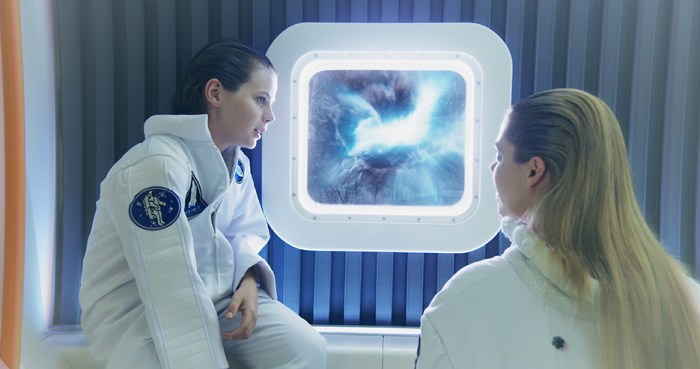
Dean Bills as Thomas Smith and Eliza Charley as Kitty Smith in The Fort.
Dean Bills was quite young at the time of filming. How do you explain this story and what you’re trying to accomplish to such a young boy?
Jess Kenneally Dean’s ability to bring levity to the set is one of his greatest qualities. Having him on set was a wonderful thing because, despite our reverence for the subject matter, some days felt quite heavy. But every moment with Dean on set was like a ray of light. We were fortunate to have his family involved as well. Being a local kid from Gisbourne, not far from Kyneton where we filmed most of the scenes, was a complete stroke of luck. It happened through an open audition, and when we realised the filming location, we thought, “Okay, this is perfect.” We were very cautious when it came to the subject matter. We followed the proper procedures with child employment services. We provided redacted scripts to Dean, while the parents received the full scripts. We went through everything in detail, and professionals assessed Dean’s ability to handle the subject matter before filming. We took great care in how we shot the scenes as well. We made sure that he wasn’t present in the room for the more tense or intense moments, creatively working around them. Dean was a great kid, and what I loved about him when we cast him was his innocence. He’s got such a beautiful look in his eyes and such a youthful happiness to him. It was really important that he brought that to the character of Tom, and I’m truly grateful that Dean and his whole family were involved in the film.
Carly Anne Kenneally His mum and dad were just incredible. I made it a lot easier having such beautiful parents encouraging him to follow this dream.
Was it a conscious choice not to show most of the physical violence in the film?
Jess Kenneally Totally. It was probably Carly who was concerned with it in terms of not wanting to glamorise the violence. It was the right choice. Regarding the script, we didn’t write those scenes in either, so it was from the very beginning that we decided that the whole idea was to have this subtext and that you’d rarely ever see the violence going on. The reporting on these situations when they escalate to their worst often includes statements like, “We never saw it coming” or “We never expected it.” That’s why we made the conscious decision not to film those moments directly. In real life, we don’t witness the actual violence, but on screen we show the aftermath and its effects more prominently. By omitting those specific scenes, it becomes a more digestible experience for the audience. They don’t have to endure the explicit portrayal of those themes, but they still witness the profound impact it has. It was a deliberate choice we both agreed on from the start. We didn’t want to go down that path.
Carly Anne Kenneally Through our research, we discovered that violence is undeniably a significant aspect. However, we also recognised the prevalence of coercive control, which isn’t discussed as much. This element became a focal point for us because it marks the beginning, where the cycle of control and manipulation takes hold. The initial act of violence is often preceded by a considerable period of control, leaving the victim trapped without foreseeing the impending harm. It’s akin to a simmering pot, reaching its boiling point unnoticed.
Carley Anne, I want to ask you about the editing process and being with this content for so long. Do you become numb to it, or does it have an even greater impact?
Carly Anne Kenneally Great question. I don’t think I realised how much of a toll it would take on me at the time. I was working full-time and editing at a post house. I’d finish at six o’clock at the post house, and I’d stay back at work till ten o’clock. I was working Saturdays and Sundays and I completely lost myself in that eighteen months of editing the film. I really wasn’t looking after myself. Now that I’m on the other side of it, I have actually realised that it did take a toll on me more than I realised at the time. You have to have balance when you’ re making these passion projects, but at the same time, it wouldn’t have been completed if we didn’t put in all of those hours of pure hard work. I’d say that the writing and the research affected us mentally just as much as what the editing did. What burnt me out in the editing process was just how much time I was spending in a dark room, sitting down and not leaving any time for myself. I think that affected me more than the content itself because by the time we’d gotten to that stage, we’d also been researching and studying this topic for three years.
Jess, was it a challenge to take yourself to such a dark place as Graham?
Jess Kenneally If I hadn’t written the script, and if we hadn’t taken on the responsibilities of directing and producing, the impact on me would likely have been greater. These various roles allowed me to compartmentalise the horrors of this character to some extent, enabling me to switch in and out of character as needed. I didn’t have to delve as deeply or for as long to tap into those moments for this role. I’m actually quite grateful for this because if my focus was on portraying this monstrous character, it would have been much more challenging to shake the role at the end of each shooting day. As an actor, immersing myself in the mindset of this character was extremely difficult. I feel fortunate that we conducted extensive research over an extended period, which made the acting experience less psychologically scarring for me. It was a fascinating process, and I believe that having these additional responsibilities prevented me from lingering in Graham’s dark mindset.
Carly Anne Kenneally I do remember, though, that we shot it in Kyneton, in a house our mum had purchased for to renovate. So, before the renovation, we used it as a set for The Fort. Everyone left after the shoot, and we all lived there for about three and a half weeks. Afterward, when everyone had gone, I stayed behind for a couple of days to pack up and handle any remaining tasks. I recall being in a very dark place, and it’s hard to say whether it was due to the content or simply because it was the biggest undertaking of my life. Nevertheless, I was completely exhausted and had nothing left in the tank. It was a pretty dark time.
Jess Kenneally And It didn’t help that the house itself was extremely ominous at that time.
The house is a character in itself. I can’t see this film working as well as it does without this house that feels so alive and historic.
Jess Kenneally That was intentional. I discussed it with Carly during pre-production, and she was determined to have the house as a character. We incorporated some little moments into it, but the house itself, with its rabbit warren-like floor plan, added to the mysterious atmosphere. You couldn’t always tell where you were in the house or how things related to each other. It was a great experience, and Mum’s set design definitely contributed to creating the environment in which the family lived.
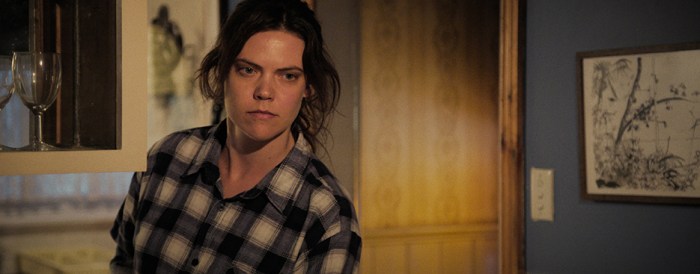
Eliza Charley in The Fort.
Throughout the film, Kitty and Tom escape into Tom’s fort to visit these fantasy worlds. What was the most challenging fantasy world to shoot?
Jess Kenneally We might have different answers here, but I’m going to say the black room, the dark room which was built next to the room where we shot the scenes in Egypt. We built the tomb and the black room next to each other in the downstairs area. The black room turned out to be too narrow, which caused some amusement. [Laughs].
Carly Anne Kenneally And it was facing the wrong way. [Laughs]. When we started shooting that morning the sound guy was like, “There’s too much road. I can hear the road. We’re not going to get a clean take at all.” We were literally about to take our first shot and we had two hours to spin the set around.
Jess Kenneally But for what you think would be the easiest one was the most challenging. Because it was sucking up so much light we hadn’t shot it wide enough to be able to spotlight the shoot. There were some rookie errors in that black room, which we initially thought would be the easiest to shoot. We thought we’d just paint some boards and paint some foam black. [Laughs].
Carly Anne Kenneally You have to get creative in these situations. I love the space storyline. There’s this part where Kitty and Tom venture into space, and we were brainstorming ideas like finding an escape room or something similar. Then Neva, the co-founder of Voice of Change, the charity aligned with The Fort, came across an article in the local paper about two carpenters who were sci-fi fans and wanted to create a short sci-fi film without CGI. They had been collecting materials from a building site over a few months and built a spaceship in their backyard. They were just five minutes away from our house and it turned out to be amazing.
Jess Kenneally It was incredible.
Carly Anne Kenneally We found them on Facebook so we sent them a message sating, “Hey, random question, do you think we could use your set?” [Laughs]. The owner told us he was going to take it down that weekend and that he’d have to ask his wife. [Laughs].
Jess Kenneally We rented it off him. That was so lovely. Then for the prehistoric shoot we did a bit of location scouting and then we rewrote those scenes to match those locations as well. We really had to adapt the script based on the sets and locations. Originally in the space Kitty and Tom were sitting on the moon together having that chat. I was thinking, “How the hell am I going to build a moon?” [Laughs]. We really had to utilise what we had at our disposal and then rewrite to suit the locations.
Tell us about Voice of Change, and how this partnership came about.
Carly Anne Kenneally The Voice of Change is a charity founded by our mum, Shayna, and her collaborator, Neva. Its mission is to give a voice to those who have been silenced by domestic abuse. Since starting the charity, we have gained a wealth of knowledge and realised that it’s not just women who are affected. It encompasses men, individuals in same-sex marriages, indigenous communities, and people from diverse socioeconomic backgrounds. It transcends every aspect of our community, without discrimination. This charity is dedicated to empowering victims and survivors of domestic abuse by amplifying their voices. The partnership came about during filming. While Mum was engaged in this process, she realised the importance of people sharing their stories and experiences, both during and after their journey. During this time, she began brainstorming ideas for the charity and what she wanted to contribute to it. It was a significant period for her personally, and Jess and I expressed concerns about her taking on additional responsibilities at that moment. An opportunity came up for her to participate in Celebrity Apprentice, and she saw it as a sign to pursue the charity. So, she made the decision to prioritise it. And as fate would have it, she not only went on Celebrity Apprentice but also won it. [Laughs]. It was a perfect outcome. She won $250,000.
Jess Kenneally It eventually led to the funding of additional projects within the arts. The purpose is to amplify the voices of abuse survivors and facilitate a shift in societal attitudes. It will support the financing of various programs and projects, such as The Fort, or anything that utilises someone’s voice to drive conversations and disseminate important messages.
You can find out more about upcoming screenings of The Fort here.
ADVERTISEMENT


 Cinema Australia