
Andrew Leavold.
Help us continue to cover more Australian films by making a donation to Cinema Australia below.

If you watch one documentary this year, make it Pub: The Movie.
Andrew Leavold’s new film experience takes viewers back in time to an era of Australian pub culture where live music epicentres like St Kilda were wildly energetic and heaving with the outrageously fun antics of legendary characters like Pub’s main subject, Fred Negro.
Known by locals as the unofficial mayor of St Kilda, Fred Negro’s role in the local music and arts scene will go down as the stuff of legend. As well as being much-loved for his contribution to live music, Fred also produced the weekly comic strip Pub which featured the shenanigans of St Kilda’s music and social scene in Fred’s unique and outlandish illustrations.
As one of his closest friends, Leavold is the perfect pick to tell Fred’s story. Leavold began his career as the owner and manger of cult video rental store, Trash Video, and is also a published author, researcher, film festival curator and musician.
Here, Cinema Australia readers can find a deep, fascinating and extremely passionate insight into the making of Pub: The Movie.
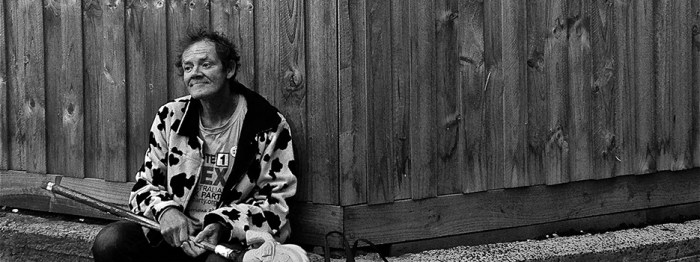
Fred Negro.
“I think the trick is not to be hoodwinked by what the majority of the population are doing. Just care about your own little tight band of fellow freaks all flying the freak flag. Fuck the rest.”
Interview by Matthew Eeles
Pub: The Movie recently screened at the Melbourne International Film Festival, which Fred attended. How was that experience for everyone?
The first screening we did was at the Astor in St Kilda, which is one of my favourite cinemas. You couldn’t have got me at a happier moment in my life. I was standing on stage looking at more than 700 people crammed into the Astor. A lot of them were involved with the film. Even more of them were probably characters of Fred’s Pub Strip over the last 30 years. Most of them were old St Kilda faces. So it was one of the most intimidating audiences I think I’ve ever had to face because if we got it wrong, they were gonna tear me to pieces. [Laughs]. We had everyone cheering within the first five seconds and it didn’t let up. By the time the film finished there was a standing ovation. Fred got mobbed outside the screening. Everybody wanted a piece of him. [Laughs].
You deserve all the praise you get. This film is terrific.
Well I didn’t have to pay for a drink for the rest of the night. [Laughs]. I had one guy come up to me with these wide saucer eyes who plays in one of Fred’s bands, and he said to me, “I’ve lived in St Kilda playing in bands here for more than 40 years, and whatever it is in St Kilda, you’ve captured it.” There was no greater praise. Actually, there was greater praise and that was Fred saying to me, “Wow, that was the best film that anyone could have possibly made about me.” [Laughs]. So, you know, when you hear that from your documentary subject, you know you’ve made a pretty good film. That was the first of three screenings for Melbourne International Film Festival. They had this stroke of genius to book it at the Astor. It was weird because six months before the screening Fred and I had smuggled a couple of six packs into the cinema and we were watching Licorice Pizza from the balcony of the Astor. Fred was looking around and said, “Wouldn’t it be grouse if we could have our premiere here?” I went, “Oh yeah. Dare to dream, Fred.” [Laughs].
If there was one screening I wish I could have attended during MIFF, it’s that one. It sounds like it was a magic night.
You don’t often get to say you had a perfect screening. But it was absolute perfection. I think you can squeeze about a thousand people into the Astor and there weren’t too many empty seats. It was just mind boggling. I don’t think I could have been happier with the reaction. St Kilda dug it. Now we get to see what the rest of the country, and the rest of the world, think of Fred’s story.
Tell us about the origins of Pub: The Movie. How did this one come about?
I’ve been knocking around with Fred for best part of 30 years. We’ve been playing in bands for about 20 years. Being the drummer in a Fred Negro tribute act where Fred fronts his own tribute band is wild. We would bring Fred up every six or 12 months for a weekend in Brisbane. We were getting him to do artwork for those gigs. Fred also starred in my first film, Lesbo-A-Go-Go, which I filmed about 19 years ago. In that one he appears in this fake sixties porno as The Vision From Hell and all we had to do was just make sure he didn’t put his teeth in. [Laughs]. So knowing Fred so well, and being a part of Pub Strip for so long, it seems only fair that Fred would be one of the first people that I showed my film The Search for Weng Weng to when the film was finished. I was showing it to Monster Pictures at the end of 2013. Fred came to that screening and smuggled in a couple of six packs, of course, and watched it and went, “Ah, that was fucking gross. When are you gonna make a documentary about me?” And I thought, “Oh shit. Imagine if I did a movie version of Pub Strip. What would that look like?” I’d been collecting Fred’s stuff or more than 30 years, so I had material. I knew the stories. I knew pretty much everyone that I would want to interview in a story about Fred’s life. So I had a very privileged position of being in that inner circle. I could tell an insider’s story about someone who is very much an outsider of mainstream culture. And it made total sense with Weng Weng being this marginalised figure that Fred would be a fellow spirit animal for me personally. That’s the kind of approach that I took that Fred was this misunderstood, much-maligned and marginalised figure, pretty much like Weng Weng was in his own country. Culture was just waiting to discover this prestigious artistic output of not music, but art, film and writing, you name it. So there it was, Pub: The Movie. [Laughs].
When you say you own a lot of Fred memorabilia, what kind of things do you own?
I’ve got a few hand-coloured strips that I was in. I’ve got a lot of original flyers that Fred would do for our bands, or for Trash Video events that I commissioned him to do the artwork for. I’ve got recordings, video tapes. I raided his video case a couple of months ago when I was gathering that final lot of archival material before doing the final edit. Man, I came across some bizarre things in his video case. I’ve also got an audio recording of all of the Negro kids singing songs into a microphone from 1971. Their dad introduces them and we’ve got that audio grab in the film. Frederick Negro Snr introducing the Negro kids and Fred sings this Monkees song which we couldn’t afford the rights to so you don’t get to hear Fred’s first recording. [Laughs]. There is this incredible resource of family photos that no one would even imagine that Fred would’ve been a part of a family, you know? He is for many people almost like an abstract concept, like a cartoon character in his own Frediverse. [Laughs].
I love that. The Frediverse.
Yes. And in the Frediverse, Fred wouldn’t have a family. He wouldn’t have a personal life. He’s just this kind of cartoon, punk rock monster that goes on stage and consumes everything and regurgitates it in its path. I think one of the biggest shocks out of a number of shocking revelations in the film is that Fred is a very quiet, sensitive, and deeply personal figure who keeps very much to himself. And if you wanna know about Fred it’s all there in his Pub Strip. He uses the Pub Strip almost as a confessional as much as he does an avenue for satire and cheap gags.
That’s very interesting that you bring that up because Fred is featured in the documentary, mostly during his guided tours of St Kilda. But why wasn’t Fred interviewed throughout the film like the other talking heads were?
It was a deliberate choice. I always wanted to separate Fred from the rest of the talking heads partly because I thought, “Who needs to look at a talking head when we’ve got photos and Pub panels and this incredible wealth of archival material to be able to draw from. And secondly, Fred was really not comfortable with the idea of sitting down in a formal interview setting. He is quite self-conscious about talking about himself on camera. So when I told him that I didn’t wanna do a sit down interview, he went, “Thank fuck for that!” [Laughs]. We did what I always planned to do, which was sit around a barrel at Lush Aston’s house and record him over a couple of beers just telling pub stories into a microphone. He was much more comfortable with that. And then I remembered the first time I actually sat down and did this with Fred was 28 years ago when I still had a fanzine called Stumpy. I interviewed him for a good two hour interview in the front bar of the Esplanade in 1994. That was the first time I actually sat down with Fred and he told me his story. I remember thinking, “My God. Talk about everything coming full circle.” While we were doing the interviews I just had flashbacks of sitting down with Millie, Fred’s daughter, who would’ve been maybe five at the time. And she was drinking milk while Fred and I just hoed through copious amounts of Melbourne Bitter. Now here we were, still pretty much telling the same stories in more detail, but for a film. Millie is now in her thirties. It’s quite surreal.
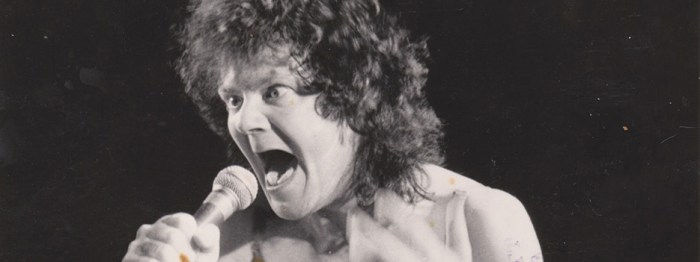
Fred Negro on the mic.
Do you think Fred would have opened up to anyone willing to make a documentary about him? Or do you think it was because of his close relationship with yourself that he was so open?
Because it was me. And he has actually told me that. A number of people have approached him over the years to make a documentary about him and he went, “Nah, I’m waiting for Stumpy!” [Laughs]. How can you argue with that? So him being a very private person and not willing to open up to just anybody meant that I had that in my favour. I said, “Fred, this may be an uncomfortable process for you because we’re gonna be talking to a few of your ex-partners and disgruntled former band mates and people like that.” He steeled himself for the experience. But then when he actually watched the film, he realised that we didn’t go too hard on him. That there is a lot of love that surrounds the more uncomfortable personal details. We still manage to tell it, I wouldn’t say diplomatically, but maybe sensitively. When he walked out of that first screening and we had a little quiet time walking between the cinema and the after party, I said, “Are you feeling okay about this? “And he goes, “You fucking made a feel-good film about me. It’s great!” But he was astounded that his story could be considered a feel-good, motivational film. I said, “I’m not deliberately setting out to make a deceptively or cynically feel-good film. This is just how I see your story, Fred. I see it as an artist’s journey through more than 40 years.” Consider that his childhood was drawing cartoons and getting rocks thrown at him because he was a drawer and a reader. I said, “Considering all of the turmoil that you’ve gone through battling personal demons, as well as external ones, you’ve come through all that and you are happier than ever. You are more prolific and more creative than ever. And it just seems like you’re in a happy place despite all of the bullshit that you’ve had to navigate through.” And he goes,”Oh yeah, I never thought about it like that.” I said, “Well, that’s why I’m the storyteller.” Fred may not be able to see that bigger picture, but man, even a casual viewer would be able to say, “Fucking hell. Fred’s in a good place.”
Fred is certainly a survivor. There are a few moments throughout the film where people discuss the many friends that passed away during that time. Can you tell us about tracking down the people featured in the documentary?
Most of the talking heads I’ve known personally for up to 25 years. That’s from stalking Fred from a very early age, doing these St Kilda pilgrimages where I would go and sit in the Esplanade and go, “Oh my God. I’m in Fred’s pub.” [Laughs]. It’s kind of creepy now when I think back, but you know, it worked. I’ve got a movie out of it. It took me 30 years, but I got a film out of it. Most of the people are still around. We did lose a few along the way. In fact, there’s the guitarist for the Fuck Fucks who’s also featured in the I Spit On Your Gravy reunion scenes, Tristan Varga-Miller. When I came down to Melbourne for the first batch of interviews that I shot at the end of 2019, he was booked for an interview. He messaged me about two hours before the interview was due to shoot and told me he didn’t feel good. He ended up in hospital because he drank himself to death. He died about two weeks later. So sadly his name is in the memorial section of the credits along with Kim The Crazy Clown who used to come out during I Spit On Your Gravy shows and breathe fire and juggle chainsaws, run mowers over live cables and crazy shit like that. Sadly we couldn’t get to Kim because Kim passed away about a month and a half ago. So yeah, a few faces that really should have been in there.
Was there anyone in particular who Fred really wanted in the documentary who couldn’t be a part of it for one reason or another?
Fred really wanted his son Rowdy to be in it, but Rowdy didn’t wanna talk. I think there’s still a lingering resentment over the fact that his parents broke up. I tried. I really tried. Another guy that I desperately wanted in there was Scotty Stix Simpson who played in I Spit On Your Gravy and Brady Bunch Lawn Mower Massacre with Fred. I was prepared to do a remote interview to Perth and set a cameraman up for three dates and each time something happened and we couldn’t get Scotty on camera. I really feel his absence in the film. When we’re talking about I Spit On Your Gravy, Scotty started that band and Fred joined later. So it would’ve been great to have him in there. I’m going to film an interview with him and include it on the DVD and Bluray as a bonus feature and give him his own film.
How difficult was it to gather and compile the old footage?
I put the call out very early, probably around about 2016 when we did our first shoot. It was around about the time that I Spit On Your Gravy reformed for the 10th anniversary passing of their bass player, Robbie “Rocket”, who was also in Cosmic Psychos. He died in 2006 and the band reformed in 2016 to commemorate his 10 year passing. I thought, “Right, this is it. I Spit On Your Gravy may never reform again because everyone’s starting to die.” And I hate to say it, but you’ve gotta get those moments while you can. I discovered that while making The Search for Weng Weng, and some of my other subsequent features. I put the call out on the Fred Negro Facebook group and asked for old photos, flyers and footage from the early eighties to the late eighties. That footage is pretty hard to come by unless you’re in a big band and everyone’s rich enough in the audience to afford a video camera. [Laughs]. That was a major stumbling block in trying to get the visuals together for this. But then tape after tape started appearing in the letterbox. I put the call out to the tribe and the tribe responded by looking in their wardrobes and in the shoe boxes, under their beds, going through old scrapbooks and seeing what was on the fridge. Eventually we got this incredible data bank of images. So I was able to pick and choose the best of what amounted to somewhere close to 8,000 bits of archive. So that’s photos, bits of footage, flyers, Pub Strip strips, all the ads he used to do for the Prince of Wales and The Esplanade and the Greyhound Hotel and things like that. One of the most astounding things about being able to make a film about an artist like Fred is that everything’s there. If Fred didn’t have it, then someone else would have it. I put it onto a massive hard-drive and then was able to go through it all and decide what to use.
Is all of this kept in a safe space now?
The originals, maybe not so safe. I had to go through three massive piles of paper on top of Fred’s kitchen cupboard. The top part of which was completely encrusted with about eight years worth of baked-on moth dust. I inhaled I don’t know how much of this dust and I was itching for about a month after. [Laughs]. I dunno what was in there, but I had to go through everything and I’m thinking, “There are cockroaches breeding in this.” These are all original pieces of art. When my executive producer Brett came down for his first visit he just looked around and went, “Jesus Christ! All of this priceless artwork and pigeons are breeding on the top of it!” We really do have to sort out Fred’s archives for him. That’s gonna be an ongoing task over the next couple of decades. In the immediate future it’s all about getting Fred accessible to the public via his website. He’s already getting one commission after the other. He’s selling canvases that he’s already done, or getting commissions to do brand new canvas portraits, caricatures, that kind of thing. I suspect Fred is going to experience a kind of Renaissance knowing that he’s been in the wilderness now for a couple of years after he ceased publishing the Pub Strip. Because he’s not really on the internet he doesn’t have his own profile on Facebook. He relies on everyone else. He’s been a little distant from culture in general. But now Pub: The Movie is out it will thrust Fred well and truly back into the spotlight and he’s loving it.
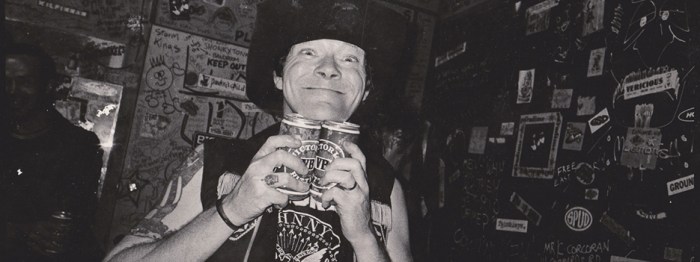
Fred Negro.
I love your passion, and I don’t think this film would have worked as well without it. We live in such a disposable culture and most content is created as streaming fodder with a very short shelf life. Why do you think it’s so important to capture these stories and keep them alive?
I love films that are generated from the heart and not out of a need to create content or a product. You can tell within the first five minutes whether the jokers making a film are sincere or not. I think we live in a very shallow and superficial era of passive consumption where we just look at something blankly for 20 minutes and go, “Yeah, I’m bored.” And then flick over from Netflix or delete the file that we’ve just downloaded for free. There doesn’t seem to be much value in anything anymore, culturally speaking. Whereas I’m still that teenage kid who is desperately looking for something interesting. And I had to go dig for it. Whether it was a seven inch record from Scandinavia, or whether it was a fanzine from Melbourne, or an I Spit on Your Gravy record that took me three years to track down. I still remember the thrill of the hunt, and the thrill of the capture of that object that you’ve spent so much time and energy trying to track down. It then becomes so much more dear to you and has that pride of place in your carefully curated collection of things. I think that that aura of surrounding something around a cultural object is definitely an out-of-date concept with a lot of people these days, not everyone, thankfully. And I can tell that there’s a lot of kids in their teens and twenties cottoning onto the idea that some things are special and they’re worth the fight for.
I think anything born out of this DIY thing, which goes all the way through my filmmaking, and which goes through all of Fred’s cultural output, whether it be music, or comic books, or whatever, it’s that DIY spirit. It’s very punk. It even predates punk and goes back to the sixties underground, and even before that. That spirit is very much what drives me. I know it drives Fred because for him it’s all about freedom. It’s about that ability of being able to express whatever you want in whatever format you want to and not have people tell you that you can’t do it that way. I’m exactly the same. Fred always refers to me as his little brother because we go off shopping together and I’m going, “Hey, Fred! Look what I’ve just found for you.” And he’s like, “Oh, look what I’ve just found for you.” [Laughs]. We end up with a couple of bags full of junk.
What a great special feature that would make for the DVD. Andrew and Fred Go Shopping.
[Laughs]. Fred in his loud shirts and his Fuck Fucks pants. And me with my backpack of DVDs. Wonderful.
Can you ever see a resurgence of the pub culture of that era happening at any time? Bars are so stale and clinical nowadays. They barely have a pulse. The music is the same and it’s rarely live. The food is mostly awful.
On a mass scale, the way that it was in the seventies, eighties and into the nineties? No. But I can see remnants of it are still there. I remember having this conversation with Fred about a month ago when he said, “People ask me has St Kilda died? Not the bits that I go to.” He still does his Friday night gigs in a bar in St Kilda called Surabaya Johnny’s. He and Dave Mole, who he’s been playing with since ’93. They get up as a two piece every Friday night, to the same 30 faces and everyone loves it. That old pub culture exists within the four walls and out the front of Surabaya Johnny’s. Whether mainstream culture has embraced that old fashioned idea or not, it doesn’t matter because the true believers are still there and they’re still doing their own thing, completely oblivious to what’s happening in the mainstream. I really take heart from that because I think the sort of films that I like also exist on a much smaller, boutique scale. Mainstream audiences have moved on from films like The Exorcist and Rosemary’s Baby to Marvel and stupid superhero films and CGI animated films for kids that I don’t care about because the kind of films that I like still exist on a much smaller scale playing in independent cinemas to true believers like myself. I think the trick is not to be hoodwinked by what the majority of the population are doing. Just care about your own little tight band of fellow freaks all flying the freak flag. Fuck the rest.
I love that.
And if I want to distribute this film, then I’ll go and distribute it. I’ll go and show the film around the country. If a distributor won’t give us a good deal and won’t pick up Pub: The Movie, then I’m gonna be going around to pubs to screen Pub: The Movie to a band of people just like me all sitting there in with their “I appeared in Fred Negro’s Pub” shirts, and we get to form our own culture. That, for me, is probably where I am destined to remain. As an outsider, as someone who is maligned and misunderstood and I don’t care. What I want is basically what Fred wants and that is the freedom to be able to do what I want without anyone telling me, “You can’t do that!” And I’ll shout back, “Fuck you! I can do that. I’m doing it.” That’s what indie means. If you’re talking about independent cinema, it means being free from the systems of control that try to change cinema and make it more beige and make it more homogenous and just crap. I’ve always gone for the lumps in the gravy. It’s in those lumps that the interesting stuff lies. Fred represents an enormous lump in the gravy when you talk about the musical and cultural history of Melbourne.
Can I ask you about Trash Video?
Sure.
What happened with all of the physical media from that store? Did you keep it? Is it stored somewhere? What happened there?
Trash video existed for 15 years between 95 and 2010. I pretty much went bankrupt and I was forced to sell everything. I sold as much as I could, and what I couldn’t sell went into landfill. Happily though I had three VHS copies of Duets. I don’t know why. I think people were trying to pass the curse on to me. And I was able to happily hoik those three VHS copies of Duets into the tip. [Laughs]. The DVD collection I had to pass on and it killed me. By that stage I didn’t really have too much of a nostalgic feeling towards VHS because VHS pretty much contributed to my bankruptcy having a shop full of media that no one wanted anymore, and saw no value in whatsoever, after I just spent 20 years building up the collection. That was a bit of a dagger in the ribcage for me, but I really missed having DVDs. I’ve actually started to build a personal collection back over the last six or seven years. Now that I’ve had time to lick my wounds and let the cloud of blood settle I’ve now started to hoard films again, but only in my house so that no one ever gets to steal them or put their dirty Vegemite covered fingers all over them. [Laughs]. It’s so good to have a collection back. I’ve got about 10,000 of them sitting around the house and it’s a beautiful thing. You can’t be a video shop owner for 15 years and, and a video hoarder for 20 without needing something to hoard.
Did you see any Australian films at MIFF that you really enjoyed?
Well, sadly I didn’t get much time to see anything because I was running around like an idiot trying to promote my film. I also got really ill in the last four days and ended up spending most of it in bed in between coughing fits and saying, “Thank you for coming to my film.” It was a real bummer because there were so many of the Australian New Wave films from the late sixties and early seventies that were playing. The last new Australian film that I remember seeing and really digging was Nitram. It was brutal. And I think Nitram, more than any other film probably since Chopper, really convinced me that Australians really can do it better than anyone else. We do have a tendency to make films for the funding bodies and for the cultural agendas of cultural gatekeepers, but when we do something that is just so pure and from the dark heart of this continent, we do it so well.
Pub: The Movie will screen at Sydney Underground Film Festival on Saturday, 10 September. Details here.


 Cinema Australia