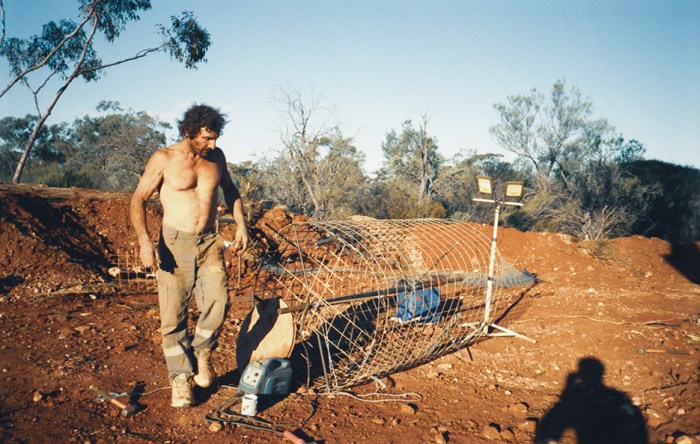
John ‘General Hercules’ Katahanas in a scene from General Hercules.
Help us continue to cover more Australian films by making a donation to Cinema Australia below.

“I’d make a good mayor.”
We’ve all thought it at least once in our lives.
But Kalgoorlie-Boulder’s John ‘General Hercules’ Katahanas was determined to make it happen in 2019 when he ran for mayor against John Bowler – a popular and established mayor who was running for re-election – and a disturbingly similar demographic of other candidates vying for the top seat.
Filmmaker Brodie Poole decided to capture the mayoral race for his new documentary, General Hercules, which follows the eccentric and highly passionate John Katahanas on his David vs Goliath campaign to become Kalgoorlie-Boulder’s next mayor.
The result is a fascinating, captivating and highly enjoyable journey of one man’s battle against the political establishment.
Cinema Australia recently caught up with Poole to discuss the film.
General Hercules will screen at the Melbourne International Film Festival from Wednesday, 17 August. Details here. General Hercules will screen at CinefestOZ from Thursday, 25 August. Details here
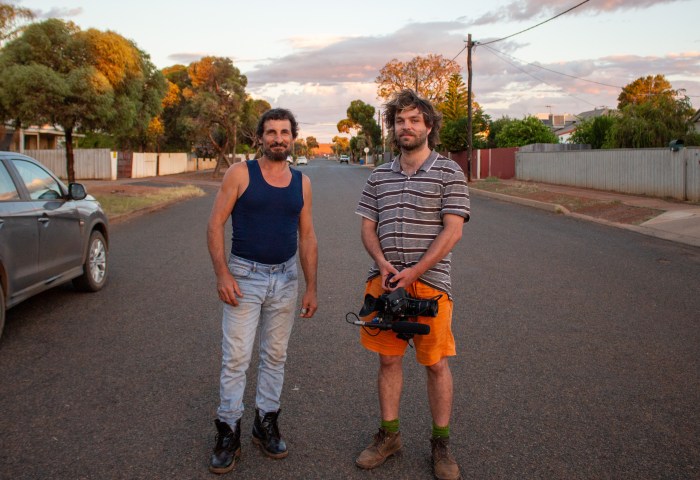
John ‘General Hercules’ Katahanas and Brodie Poole during the filming of General Hercules.
“When we arrived, John figured he was on some kind of reality television show. Then he played us music for six hours. He was sat in the back of his trooper and just played song after song. In between songs, he’d tell little stories about their significance to him. It was quite an energetic first meeting.”
Interview by Matthew Eeles
Kalgoorlie is a very interesting and unique place. There aren’t many towns like it in terms of the community and mining co-existing so closely together. Had you been to Western Australia, or Kalgoorlie, prior to filming General Hercules?
I live in Melbourne at the moment. I did live in Brisbane for a while. I was a Brisbane local. I also lived in Sydney growing up. My dad was in the military, so I’ve lived in most places. I’ve bounced right around Australia, but I’m a bit of a foreigner when it comes to Western Australia. I’ve traveled through there on road trips quite a few times. I’d definitely like to come to WA to screen the film. Especially to Kalgoorlie. Bringing the film to WA and Kalgoorlie would be something I’m very keen to do in the near future.
You started your career as a cinematographer. Did you always have an interest in other aspects of filmmaking like directing, which you’re doing here?
I did. I started as a camera operator-for-hire. I became really interested in looking at life through the lens of a camera. Initially I wanted to take painting-esque still images of things. The more jobs I did, the more I had this dialogue in my head telling me that film would be a wonderful medium to express my thoughts and observations. The more I took up these jobs as a camera operator, the more confident I got that I could tell a story through filmmaking whether it was as a director, or a cinematographer.
Once you fine-tuned those skills, what inspired you to pursue a career in cinema? It’s a tough business.
It’s an interesting question, actually. I did a film degree at university, but it was more for the lack of knowing what else to do with myself. It’s one of those things where I don’t have any of those great stories about being a little kid with a camera attached to me at all times. [Laughs]. I think I was always someone who liked to express myself artistically, so film was something that I just fell into. I definitely remember my film degree because there was a girl that I was really in love with. [Laughs]. I stuck it out for her, but then after a little while I started to really enjoy filmmaking.
So we can thank that girl for the quality of filmmaking you’ve given us with General Hercules?
[Laughs]. I guess so. Thanks for that.
Your cinematography in General Hercules is stunning. It’s seriously world-class. Were you always going to shoot the film yourself?
I mostly shot it myself. I called in the help from my friend Jayden Martin to help me shoot a bit as well. I was really sick when I was making this film. I lost twenty kilos and I couldn’t hold the camera up for a lot of it. My friend came in and he probably shot maybe half the film as well. I definitely think there’s something special you can achieve when you’re doing documentary in that you are the interviewer, you are the cinematographer, you’re composing it in your head as you’re shooting it, so you’re the editor as well. It creates an intimacy between yourself and the film.
How big was the team you bought over to WA?
Well, the first time I came over it was me and Joe McLaren. The two of us were co-producers at that stage, and then we bought over Jayden Martin. So there were three of us to begin with. We’d jump in the hire car and talk about what was happening in the town, or we’d call someone to get an interview somewhere. It was just the three of us managing camera and sound. We went back on a second trip though with just myself and the film’s producer Ruby Schmidt. The second time was to fill in gaps. The first trip I came over without much of a plan or an idea of what the film might look like. I remember thinking, “I don’t know what this is, but we’ll figure it out at some stage.” [Laughs]. And then when we started to script it, and have a look through this footage and try to think about what kind of film this might be, we started getting more ideas for shots that we could patch a film together with. I think we got the imagery of that hellish lava scene the first time. It was totally spontaneous. So the second time we came over we knew we had to have more if a plan in place for the story we were trying to tell.
This is very interesting to hear you talk about this film in the way that you are. You’ve created a brilliant film. It’s visually stunning, the themes run extraordinarily deep, and it’s a very tight narrative that you’ve strung together. And you’re telling me you shot most of it without a plan, or an idea of what you were trying to achieve?
It’s interesting the way it presents, isn’t it. [Laughs]. This is the first film I made, so it just took a little while to figure out how to make it by the end. I think we started getting a bit of an idea after a while, but definitely at the start, it was a spray-and-pray approach. I think we knew that there was something going on and we had to capture it and roll through the camera. We were hopeful that we would find something there, which I think we might have.
You certainly did.
We really did. [Laughs].
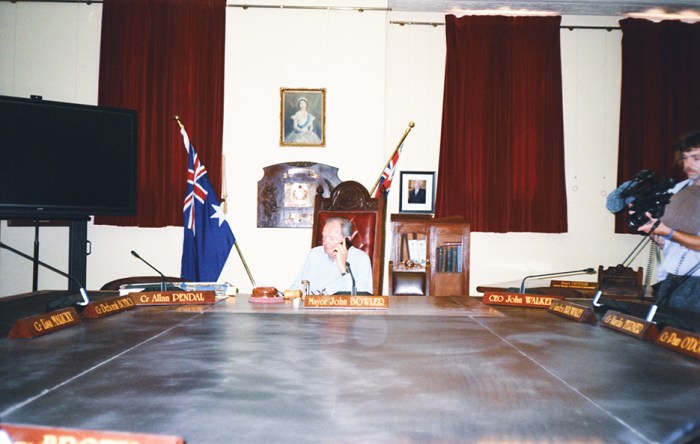
Mayor John Bowler and Brodie Poole while shooting General Hercules.
When did you first hear the name, John ‘General Hercules’ Katahanas?
It was during a road trip with co-producer Joe McLaren. We were making our way across the country and we were in a hotel in Kalgoorlie. We’d had some vague plans for some other stories we’d wanna tell, but they had all fallen through. I was scrolling through Kalgoorlie Facebook pages and John ‘General Hercules’ Katahanas popped up. He posts to these Facebook pages all the time with his music covers of old Australian songs from the eighties. I just started watching these and I sent him a message. He gave us this really rough map of how to get to his camp in the middle of the desert to come out there for the purpose of recording some of his music, which was the initial plans. Joe and I made our way there trying to follow this map. We did get a bit lost, which people will understand why when they see the film. [Laughs]. The first time I saw John, he popped up over a hill in his car and he jumped out of it while it was still rolling. He was waving his hands in the air yelling, “Come down here, boys.” And he took us to his camp. He had on his mining gear and showing us all these circles he had drawn throughout the day. He was saying, “There’s probably gold under all these spots”. So when we got there he put on a real show for us mining for gold. I think when we arrived he figured he was on some kind of reality television show or something. Then he played us music for six hours. It was a nice night. He was sat in the back of his trooper and just played song after song. He’d really roll through them. In between songs, he’d tell little stories about their significance to him. It was quite an energetic first meeting.
Was it then that foundations started to build for what you would end up capturing?
Definitely. He didn’t mention at a time that he’d be running for mayor. There was definitely just a general attraction to John as a character as well. From my part, and Joe’s, we had a desire to come back to speak more with John, and hear more of his philosophy and poetry. I think that was an immediate attraction. He really understood the societal structures of Kalgoorlie and its operations.
Describe John, the man, for us.
I spent a lot of time with John. A lot of the time it would just be me and John. A normal day with John is you arrive and John has his agenda for the day. His life is always overwhelmed by a series of bullet points he imagines he has to tick off. Like, “I’ve gotta fix the Bobcat. I’ve gotta create a swimming pool. I’ve gotta fix the roof of my campsite.” I remember filming and knowing there was nothing I could do to change this. I’d sometimes rock up and be like, “Hey, we should go down to this wonderful salt lake to film a scene of you prospecting.” And then John would be like. ” I can’t. I’m fixing the Bobcat and I’m fixing the roof and I’m creating a swimming pool.” [Laughs]. I had to learn to just be a companion to John. I think he definitely enjoys the company of others. The two of us would just sit down on a bit of dirt and he’d just go into these long monologues about his thoughts, or his life. I was quite excited to just be a listener to these thoughts and conversations at night. We’d play a bit of guitar together. He was training me up to harmonise with him to Beach Boys songs and all this stuff. He’s a very sweet and a very smart man. He was always kind enough to cook lamb shanks for me at nighttime as well. We’d have dinners together and then look at the stars, all that kind of stuff. He is highly intelligent. He was a state chess champion at one point. He’s devised all his own ways to find pi that are unique to his own mathematics. He’s highly intelligent.
He’s up against an established mayor who’s running for re-election, as well as other strong opponents. I know John believed he had a chance at becoming mayor, but did you?
I definitely didn’t think he had a chance. But, you know, crazy things have happened. It would’ve been quite a surprise if John was to be elected the mayor. John had all these plans which involved me and Joe being his two sidekicks. He was gonna make little chairs for us to sit next to him in the mayor’s office. [Laughs]. I think if he was actually elected mayor, it might even be a little bit worrying for me because I don’t know if I’d be up for such a position.
You’d have to move to Kalgoorlie.
It’s a lovely town. But that would be a big commitment.
I don’t think that position would pay very well.
[Laughs]. I think it’s an entirely new role that would have to be devised. I think there’d have to be some kind of new legislation brought in.
Did you express to him that you didn’t think he could win?
Not outwardly. I was always a bit of a passive character. I was interested though in the support that John harnessed. There were a number of people who expressed similar views to John. Antiestablishment views. Anti-mining views essentially. Some of those sentiments that were also shared by other candidates. But I think the ones that really, truly cited with John were what you’d call extremists.
It’s interesting because you don’t include any of John’s supporters in the film. There are no talking heads, or interviews with people who wanted John to win.
That’s true. Yeah. We spoke to a few. A lot of them we spoke to online as well. A lot of his supporter base were characters who expressed most of their views through Facebook. They were a little bit more reserved to talk on camera.
There are many differences in the candidates in terms of age, genders and agenders, but I’m wondering if you picked up on any similarities between them all?
I think the biggest similarity between them all is that they’re all bound by place. And that place being Kalgoorlie. They’re all driven in their hearts by a strong compassion and consideration for the community and township of Kalgoorlie-Boulder. I think that was the consistent amongst them all. I think to run for office is to care, essentially. They all had that.
The one candidate who gets the least screen time throughout the film is Ian Burt. Can you share a little bit more about Ian?
Ian’s a funny, funny character. I like Ian a lot. I enjoyed my conversations with him. When I got there for the first few weeks I was trying to call him and he thought I was a spy, or an informant, coming to get information from him, which is fair enough. [Laughs]. I did come from Brisbane to film the local council elections of Kalgoorlie. I mean, it’s reasonable to be suspicious of such a thing. Ian is a deeply religious character, and so much of his politics is influenced by his religious beliefs. He believes that the queen of England swore an oath to the Bible. If you trace back the systems of governments, they do go back to the moment of the Queen’s oath to the Bible. So he wants there to be more attention put towards religious philosophies to inform decisions made. He’s disgruntled that that isn’t the case at the moment, so that’s basically his agenda. He’s certainly an interesting character.
He ended up receiving the least amount of votes in the election.
He didn’t do so well.
Did you speak to him following the election?
Briefly. I get Facebook messages from him every so often. He forwards on Facebook memes. Mostly conspiracies and the likes.
Do you have an interest in politics in general?
I do have an interest in politics. I think what I’m interested in is just how it’s such a rich place of human emotion. I consider it an expression of sorts to be someone who’s running for mayor to really put yourself out there. To make your beliefs on societies so public takes a lot of guts. I’m interested in that mostly.
The film is set in a very unique part of Australia, but the story here is universal. The rise of the Teals during the recent election is a reflection of that.
You’re so right. This is a very universal story. This could, and is, happening all over the world. People are putting themselves out there to lead.
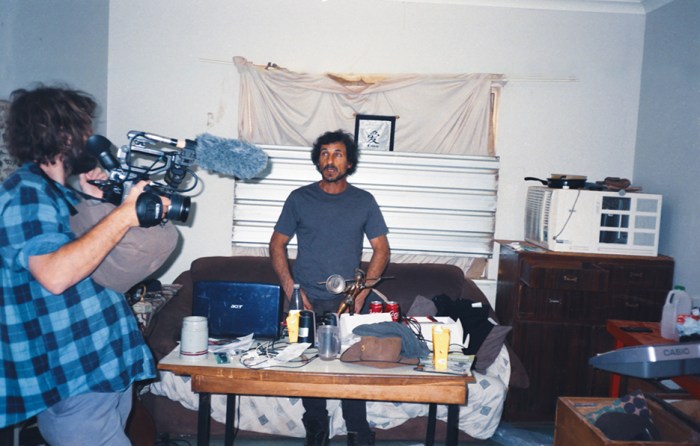
John ‘General Hercules’ Katahanas and Brodie Poole while shooting General Hercules.
Did you notice a decline in John’s mental health following his loss? Because he also broke up with his girlfriend following the election.
Yeah, definitely. I think that John has a way of moving through different states of mind. During the election it’s like there was something to put so much energy towards, similarly with prospecting. It can be a wonderful distraction, but that went to the wayside. And when you do live in the desert, it creates a lot of time for introspection and inward thinking for a character like John. It can be rather uncomfortable sometimes. There was obviously an incident out there too, where John was attacked by this knife wielding character and thoughts about that character crept back into his mind. I think when John was publicly putting himself out there through the election, I think this knife wielding character was made aware of John’s presence again. I think the more John becomes a public figure, the more he can then get frightened of such a character, and definitely after the election. He grew paranoid of this character.
As someone who spent so much time with John, did you try to interject those negative narratives that he was creating for himself?
Yeah, definitely. I definitely think as far as that goes, my attempts of interjections were more poetic and musical. John’s beliefs are essentially creationist beliefs about the genesis of the world and whatnot. So I would question John about these to give him focus. I have no doubt that he truly believes in such things, but I would always talk to John in a way in which John would speak about these things to take his mind off other things. John has this presence too, where nobody believes what he’s saying. It’s like, “Is this all real, or is this all an act?” I think it’s both at the same time. I definitely was trying to encourage John with real human conversations and connection that I think we definitely did have from time to time.
Including scenes of the Kalgoorlie Cup in the film prior to the election being called was masterful. Was that a challenging day for you?
I was very sick at that time, so it was a little challenging. It was madness. The morning started out fine, but by night it’s a shambles and everyone’s stumbling around all over the place and you gotta navigate your way through that. It was a fun day. I had a base. I was staying at this place called The Australia Hotel, which is on the main intersection of Kalgoorlie. I don’t think it’s operating as a pub anymore, but there’s some rooms upstairs and you get some pretty interesting characters in those rooms. I was camped up there, and it’s also accommodation for a lot of the skimpies that travel from Perth to Kalgoorlie. I made friends with this woman named Saffron, a skimpy. We had this nightly routine where Saffron would go to the clubs to work the bar, and I’d go to film John, and we’d kind of both arrive back at the hotel at about midnight and then we’d sit on the deck and talk about our days and go to bed at about three or four in the morning. Then we’d wake up pretty late and do it again. We did that for a little while. She was a fun person.
So you’re meeting all of these characters, and you’re obviously an inquisitive person. Were you thinking about other documentaries you could be making, and other side characters you could be following?
Definitely. Especially when I was filming. This is an election story. It’s a love story. It’s a story of one man. It’s a race relation story. It’s all of these different things. When I was filming it, my eye was carried to so many different things that I kind of wish I could have included them all in the one story. I could imagine myself going back around those areas, having met those characters and wanting to invite them to make films.
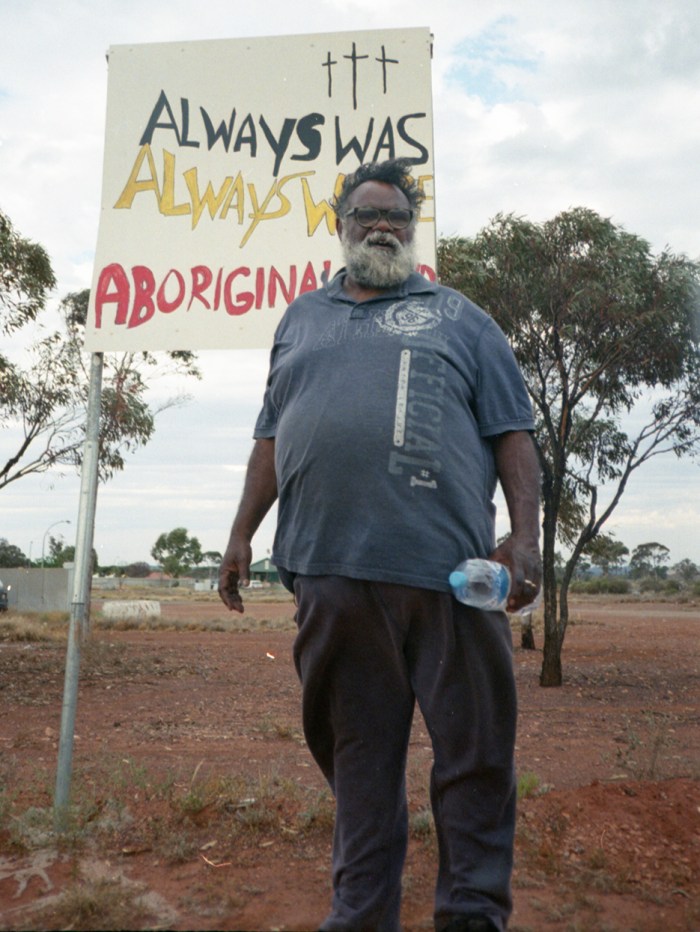
Geoffrey Stokesin a scene from General Hercules.
I was excited to see Geoffrey Stokes in the film. Did you know he just had his first acting gig as a character named Country in Mystery: Road Origin? He’s quite the actor.
I didn’t know that. That’s amazing. I’m going to have to watch that now.
Tell us about Geoffrey.
He’s wildly outspoken. We reached out to Geoffrey because he was at all the Town Hall meetings coming up to the election. He would always raise the issue of antisocial behaviour. Everyone would be like, “What are we gonna do about antisocial behaviour and activity in Kalgoorlie-Boulder?” And basically what they were saying was. “What are we gonna do about the indigenous issue?” Things like public drinking and public presence that was disrupting to them. So we felt we had to kind of speak to Geoffrey to get that perspective on something that was being talked about by the townspeople. Geoffrey was incredibly willing to do so. He gave us tours of Kalgoorlie from his perspective and took us to show us his community, and he voiced the things that he wished for his community. He wanted the election to pay his community the attention that other parts of the town received. He’s a very interesting character.
The film does depict Kalgoorlie-Boulder in a negative light. And there is a moment in the film where the mayor does say that Kalgoorlie is often depicted in the media as quite a horrible place. I’ve known people who have lived there, and people who have visited, who have told me great stories about the fun they’ve had. I guess the town’s troubles are really no different to most towns in Australia. Tell me your opinion of the town as an outsider?
I find the town to be incredibly welcoming. It’s a very open town, and by that I mean you can go to the pub and someone will tell you their life story. I find it a very honest town as well. I love going there. I love going there a lot. I love that it sits on the edge of these deserts and you can look out past distant horizons. I think what comes with such open attitudes and honesty in a town is that you see all the blemishes, but you see all the good sides as well. It’s very dramatic in that nature. It’s diverse as well.
The locals seemed very accepting of your crew being there, but I guess Kalgoorlie is like WA’s Broken Hill in that so many movies have been made there. Did you have any issues with locals?
No, not really. Not amongst the candidates as well. I think the candidates were all very willing to get their views across. I remember talking to a few locals and there being this sentiment of like, “Oh, another film’s coming to Kalgoorlie to make Kalgoorlie look like a wild place.” I heard that view from a few people. I think in making a film that surrounds the election, we found people to be quite willing to express their political beliefs essentially.
Were you conscious of how Kalgoorlie was going to come across during the editing process?
Definitely. It definitely made me anxious at times as well. There is negativity, especially in sentiments voiced by John and Geoffrey. There is an establishment that we are critiquing here. It’s a difficult thing because it felt as if to make a political film, and to ignore some of the criticisms, was to do an injustice upon the people that held such beliefs. I think there’s a fine line between being respectful to those that have criticisms that they wish to share. They find themselves in vulnerable positions while not entirely condemning a way of life in complete entirety.
Regardless of how the town is portrayed in the film, I think it will do wonders for the town from a tourism point of view. It certainly made me want to go there to experience it.
You’re so right.
General Hercules is your first feature documentary. Would you say it has been your most challenging project yet?
Definitely. In making the film, I was questioning a lot of like my own politics. I’d make rough cuts that I would disagree with as I would watch them. I didn’t agree with what those cuts stood for politically. It took a very long time to put it together. And also to be able to manage a story, and to structure a story that maintains an audience’s eyes for an hour and a half was a challenge too.
Would you say that the film has changed your political point of view?
I think so. I think it has for sure. Yeah. I’m not sure entirely in which way, but yes. I think it’s just made me aware that it takes some rather deep interrogation to really understand your politics. I think it’s just made me aware that politics is never surface level or skin deep.
Have you kept in touch with General Hercules?
Yeah. I send him messages on Facebook asking what he’s up to and I get these passages back, which is usually along the lines of, “Nothing this week. No nuggets this week. I’ve worked my way further south. The heat’s kind of starting to creep up. Wondering if this land will take fire sometime soon, who knows? But here’s hope for a better day.” All these little updates. “I’ve created a machine that’s now better at sifting through the finer bits of gold.” I like to keep in touch that way.
Has John seen the film?
I’ve sent it to him. He’s watched it. The first time he watched it his comment was that he sees a great future for Brodie Poole Films. [Laughs]. Since it’s done Sydney he’s actually just asked for it again. So he might watch it a second time sometime soon as well. So we’ll see what he thinks about it this time is around.
General Hercules will screen at the Melbourne International Film Festival from Wednesday, 17 August. Details here. General Hercules will screen at CinefestOZ from Thursday, 25 August. Details here


 Cinema Australia