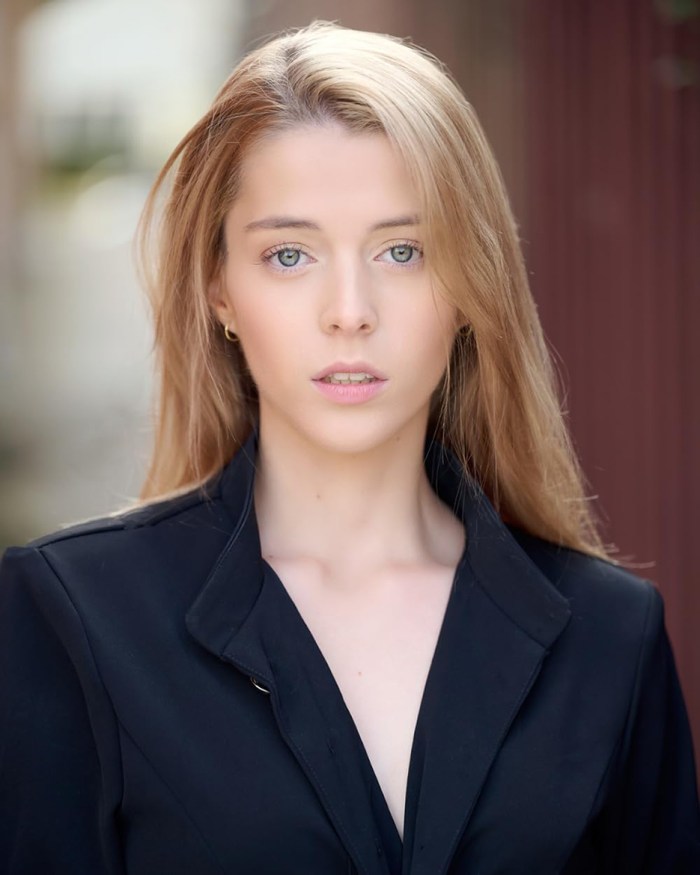
Jessica Husband.
In the haunting new short film Zombie, Claire (played with mounting intensity by Jessica Husband) sits alone on a wind-beaten Victorian cliffside, listening to a voicemail from her partner Ted. What unfolds is an impressive meditation on love, grief, and the blurry line between holding on and letting go.
Written by Jessica and co-directed with Ethan Finch, Zombie delves into the psychological terrain of memory and longing via a lone and heartbreaking performance by Jessica, and striking cinematography by Finch.
Jessica is an accomplished Australian actor and producer with over five years of experience in screen performance. Her acting credits include the much-adored television shows Neighbours and the NBC series La Brea, as well as the upcoming indie feature The One Thing, where she took on a dual role as supporting lead and producer.
Beyond acting, Jessica is the co-founder of The Vision Production House, which she has co-operated for the past three years. The company has produced a range of narrative and branded content, reflecting her passion for strong, character-driven storytelling.
Keep and eye on cinemaauastralia.com.au for updates on the film.
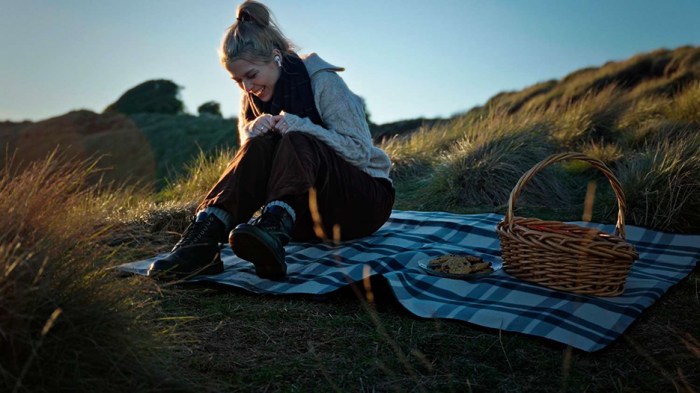
Jessica Husband in Zombie.
“I see the camera as a character in my work, an emotional lens rather than just a technical tool.”
Interview by Matthew Eeles
You co-directed Zombie alongside Ethan Finch. How did this creative partnership come about?
Ethan and I have been dating for over four years now. We met in acting class in 2020 and started seeing each other in 2021. As we started dating during Covid, and weren’t able to pursue acting jobs, we decided to shoot stuff together at home. This started our creative partnership and since then, we have started our own production company and now work together to bring our ideas to life.
What would you say are some of the individual strengths you each brought to this film?
Ethan brought incredible strength to the film through his unique combination of skills as both a director and a director of photography, with a strong foundation in acting. His understanding of performance meant he could draw out the best in me as an actor, while his eye for cinematography ensured the camera was used as a storytelling tool in itself, framing each shot to enhance the emotional moments. Being a writer and producer, I had a clear vision for how I wanted every element to come together, from the tone and performances to the visual style and overall message. I was able to lead the production from development through to post, communicating that vision to the team. And with such an incredibly talented and collaborative crew, we were able to bring it to life exactly as I imagined.
Zombie is an incredibly moving examination of grief. Why are you drawn to these themes in particular?
Grief is something that has always fascinated me, particularly the different ways people cope with it. It’s a universal experience, yet deeply personal, and no two people navigate it the same way. With Zombie, I wanted to capture a snapshot of someone in the early stages of grief, stuck in denial. I wasn’t interested in offering a solution or prescribing how we should process grief, but rather in exploring the mechanisms we use to survive it. Are they helping? Are they hindering us? Or are they simply part of what we need to go through to eventually move forward? I’m drawn to stories that don’t provide clear answers but instead open up space for reflection and conversation, stories that might make someone feel seen in their own process.
Was this story personal to you in any way?
This isn’t my personal story, but one I have unfortunately watched a lot of people in my life experience. I am very lucky that the people closest to me are still in my life, but a lot of those people I have watched deal with their own grief. Watching people you love going through these deeply horrific times is awful and there is never a solution to it, you just need to be there to support them, make them feel validated and seen. So in creating this, I hope that people who may be going through this, also feel seen.
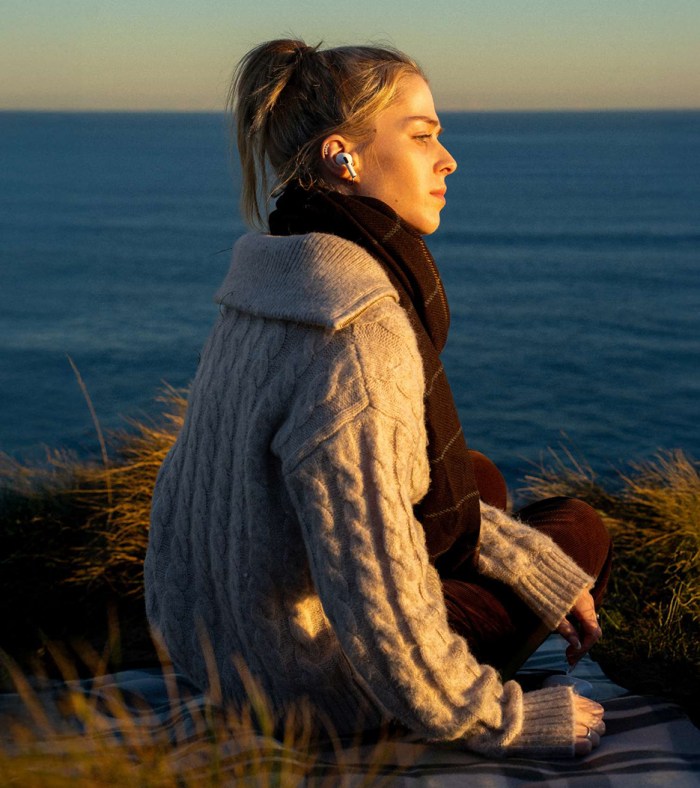
Jessica Husband in Zombie.
Your performance is seriously impressive here. What techniques did you utilise to get yourself to the emotional high that your character gets to in Zombie?
Acting has been a part of my life from a very young age, and one of the most important things I’ve learned over time is how to separate myself from the character to not make it personal. In preparing for this role, I spent a lot of time building the backstory between my character and her partner: who they were, the nature of their relationship, and how recently he had passed. Having that emotional subtext gave me something grounded to draw from. I also gave myself an emotional trigger, which for me is music. I’ve found it to be one of the most effective and healthy tools. The inspiration behind the film actually came from Yungblud’s song Zombie, so listening to that track before a take helped me drop into character quickly and fully. Since I didn’t have another actor physically present with me during the scene, it was crucial to stay present and connected to the voicemail. I focused on truly listening and responding in the moment, which allowed me to go on the emotional journey with Ted and hit the necessary beats with honesty.
Was Ted’s dialogue coming through the headphones your character is wearing?
I was acting to a pre-recorded voicemail that was being fed through the headphones, so what you see in that one take is all accurate to what I was experiencing. I pre-recorded that with my partner and directed him. We even added the highpass filter so it sounded like a real voicemail to really help me with the immersion.
Tell us about this stunning location, and the challenges of shooting here?
We shot this film at Flinders Cliff, which is one of the most beautiful locations in Victoria. We have always wanted to shoot at this location but have never found the perfect project until Zombie came along, as having it on a cliffside was always the plan for this shoot. We went down for a test shoot which was very helpful. We knew that the sun would set behind the cliffs, but we ended up losing the light a lot quicker than expected. So at the test shoot, the sky was darker and had a purple hue, which while still beautiful, wasn’t the look we were going for. So on the day of shooting, we went an hour earlier to make sure we got the perfect golden hour, but in reality, it was probably only 30 minutes. So we had 30 minutes to get the 3 shots for the film. This was a bit stressful as you always want more time to really give yourself space to get into the moment and make sure the shot is perfect, but I think working with those constraints made it better as everyone was on their A game. It also meant I couldn’t get in my own head and just had to trust the process.
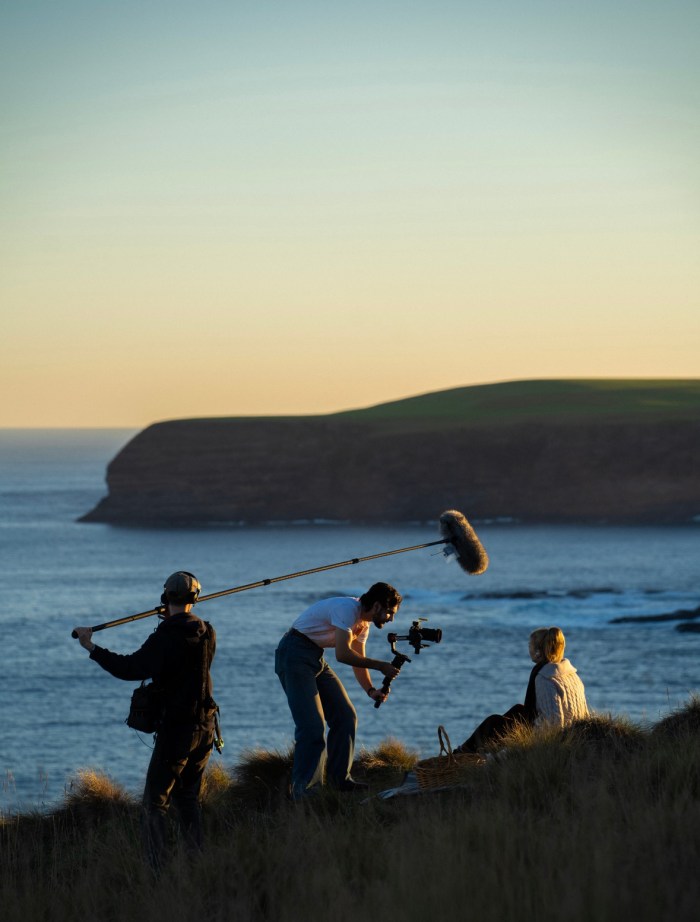
Cast and crew on the set of Zombie.
I’m curious to know what led to the creative decision to shoot the film in one mostly take.
I’ve always loved the power of a one-take, and for Zombie, it felt essential to the story. By following Claire in real time without cutting away, we’re invited to experience her grief as she feels it, moment by moment, breath by breath. It creates an unbroken intimacy between her and the audience. Then, when we finally do break from that take, it becomes a deliberate and meaningful shift. That’s the moment we step out of reality and into Claire’s internal world, where her partner appears ‘alive’ again. I also see the camera as a character in my work, an emotional lens rather than just a technical tool. During the one take, the camera reflects Claire’s real-world experience. When we break it, it mirrors her psychological state. As an actor, performing it in real time allowed me to fully live through her emotional journey without interruption. It was challenging, of course technically and emotionally, but incredibly rewarding. Ethan, who operated the camera, and I had to be completely in sync for every movement to align with Claire’s emotional beats. Thankfully, as co-directors, we had a shared vision and language, which made executing those moments feel seamless.
What’s next for Zombie?
While we’ve floated the idea of expanding Zombie into a larger story and there are definitely some concepts brewing, this film was primarily about proving to ourselves and the world what we could create with minimal resources. We set out to make something powerful and cinematic on a shoestring budget, without a massive crew, and to challenge ourselves creatively. Now that Zombie is complete and on its way to the film circuit, we’re shifting focus to our next short film, Sleep, which is currently in pre-production, and we’re also in early development on our debut feature, Pentimento. It’s an exciting time and we’re just getting started!
What can you tell us about The One Thing? I’d love to know more about it?
The One Thing is a feature film I produced and played a supporting lead in earlier this year. Ethan also acted in the film and worked as the 1st AD. It’s an indie rom-com that’s currently in post-production, and it marked the first feature we both worked on behind the scenes as part of the crew. It was an incredible learning experience that truly ignited our passion to keep creating and tell our own stories. The film industry can be tough to break into, but every challenge is worth it. So many of the skills we use now on our own projects were honed on that set and just as importantly, we met some of the most talented and passionate people. It was an incredible experience that really reminded us why we love filmmaking.
Keep an eye on cinemaaustralia.com.au for updates on the film.

ADVERTISEMENT
If you enjoy Cinema Australia as much as I love publishing it, please consider supporting Cinema Australia’s commitment to the Australian screen industry via a donation below.
I strive to shine a light on Australian movies, giving voice to emerging talent and established artists.
This important work is made possible through the support of Cinema Australia readers.
Without corporate interests or paywalls, Cinema Australia is committed to remaining free to read, watch and listen to, always.
If you can, please consider making a contribution. It takes less than a minute, and your support will make a significant impact in sustaining Cinema Australia as the much-loved publication that it is.
Thank you.
Matthew Eeles
Founder and Editor.Make a donation here.


 Cinema Australia