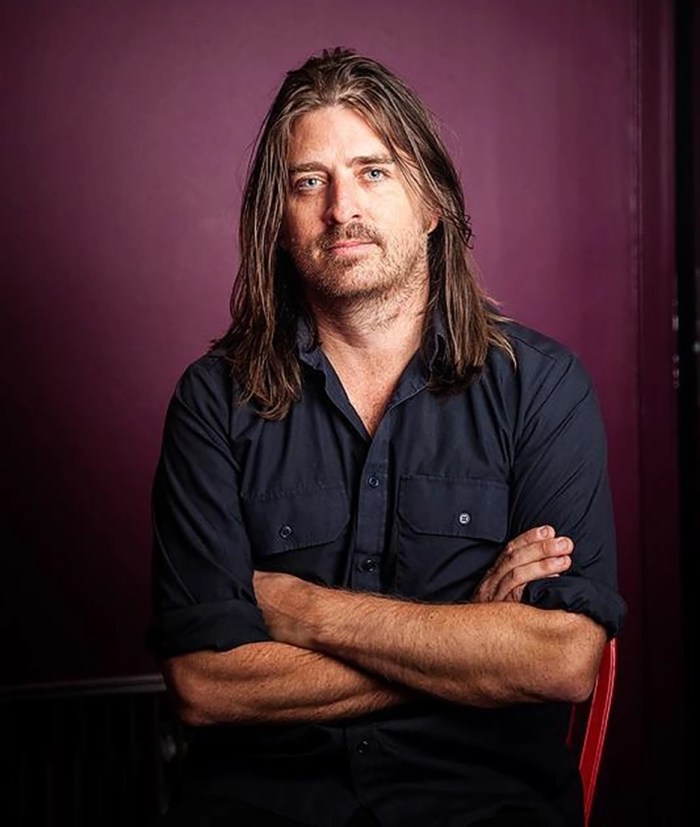
Rhys Graham.
In 2013, Rhys Graham released his debut feature film Galore, a poetic and captivating piece of Australian cinema featuring reverberating performances from its two leads, Ashleigh Cummings and Lily Sullivan.
In that same year, Graham wrote and directed the segment Small Mercies in Robert Connolly’s anthology film based on the Tim Winton novel, The Turning.
Since then, Graham has kept busy as both a writer and director on the big and small screen on projects like Nowhere Boys: The Book of Shadows, Ranger to Ranger, The Unlisted and YA television series, Itch.
Graham’s latest documentary, Rewards for the Tribe, offers an intimate and uplifting glimpse into the world of contemporary dance. Set to screen at the upcoming Melbourne International Film Festival, Rewards for the Tribe explores the collaboration between Chunky Move, an acclaimed contemporary dance company, and Restless Dance Theatre, a groundbreaking troupe of disabled dancers.
Graham’s documentary follows six dancers – Jianna Georgiou, Michael Hodyl, Charlie Wilkins, Benjamin Hancock, Darcy Carpenter, and Cody Lavery – as they embark on a journey from Adelaide to Melbourne and eventually the UK to create a new work. This collaboration challenges the dancers to develop a unique movement language, reflecting on group dynamics and society’s pursuit of perfection.
In this interview, Graham reflects on Galore, and his transition to documentary filmmaking. Graham tells Cinema Australia that he has embraced the documentary format, finding it a fitting medium to share the human experience. Rewards for the Tribe, is a testament to his ability to capture the ephemeral beauty of dance and the profound connections it fosters.
Rewards for the Tribe will screen at the Melbourne International Film Festival from August 10 to 17 and will be available for MIFF streaming via ACMI from August 9 to 25.

Rewards for the Tribe.
“I’ve always leaned towards activists, artists, renegades, and outsiders. It’s often the nature of where the stories are the most acute.”
Interview by Matthew Eeles
The last time we spoke, you were doing press for Galore. I still think about that film quite often. How do you reflect on Galore?
Galore was such a beautiful film to make, and it had a great life. We were able to travel with the film to Berlin and go with the artists. Galore was a film that was always designed to wear its heart on its sleeve, and we felt like we had a really great resonance with a certain community and audience that really loved it and took it on. That’s just one of the things that is unimaginably wonderful as a filmmaker. Since then, a lot of those actors, who were really young at the time, are doing incredible things. They’re extraordinary artists. It’s really amazing to see that. It was a really tricky film to get up for [producer] Philippa Campey and me. It was a different time for the Australian film industry because there were massive shifts away from films of that size. We had a couple of well-advanced projects in the pipeline at the time, which fell by the wayside, unfortunately, because they were similar-scale character dramas. It was tricky for us not to be able to follow up Galore with a similar kind of film of a similar voice and style. But it was also really great for me because I spent a lot of years working over in Spain and developing different projects, and I went into other areas of work like theatre collectives, and it was great. It was a really, really strange and interesting time for me. I’m not going to say it’s been all roses, but luckily, I’ve been able to make lots of other films in the meantime, and some of them have been unusual and beautiful, and they all have their own amazing journey in themselves.
Since Galore, you seem to have settled into documentary filmmaking rather than narrative filmmaking. You told me during that Galore interview that waiting for a feature film to get up is like watching paint dry. Do you still find this to be the case?
Absolutely. There’s no greater torture, really. [Laughs]. But it’s also that we have a lot of structural and systemic issues in Australia when it comes to getting funding for smaller films. There need to be policy shifts. The industry always seems to be in crisis. There are many, many small-scale projects that would be great to see as part of Australia’s film ecosystem, but there are too many systemic and industrial reasons why we no longer see films of that size. While I was writing Galore and numerous other feature scripts, I was making feature documentaries. I think we have a really conservative model here in Australia. We really separate documentaries and fiction, and I don’t see them as enormously different. Of course, there are philosophical differences, but the nature of storytelling and telling human stories through emotion and experience—they’re not dissimilar. And so, certainly, they’re harder to make than fiction. Making fiction is wonderful. Everyone wants to be there. They’re all paid to be there. Making a documentary is much harder, much more of a lifelong relationship with the people you make it with. But in film terms, the challenge is the same. After Galore, I wrote a kids’ film and a bunch of children’s television for Netflix, which I directed. I was still working in drama, but it was much more leaning into the adolescent performance field, which is something that came out of Galore. I was just trying to do what most filmmakers do, which is trying to get financing and support for a number of other feature projects I’ve written. And we’re at advanced stages of development, and that continues. I’ve got projects that teeter on the edge of happening, but that teetering is a very long and drawn-out process.
In 2022, you and Phoenix Raei received development funding for a feature film called Paradise. Is that happening? You two working together sounds like a dream team to me.
Absolutely. We’re in financing for that. We’ve got a sales agent attached, and we’re at the final stages. That’s a very complex project because we’re working with real-life stories of people’s experiences. We have been working with some great writers, but that is something that absolutely is still happening. In fact, we’re working on it this week. It’s again one of those things that you are continually working on. And there are other projects that I’m working on, including an adaptation of Christos Tsiolkas’ novel Seven and a Half. We’re very deep in that. There are a few projects. Some, unfortunately, have become victims of the pandemic, but the majority of projects are just waiting for the right moment. And look, Galore was no different. That was being pushed forward for a number of years before it finally happened.
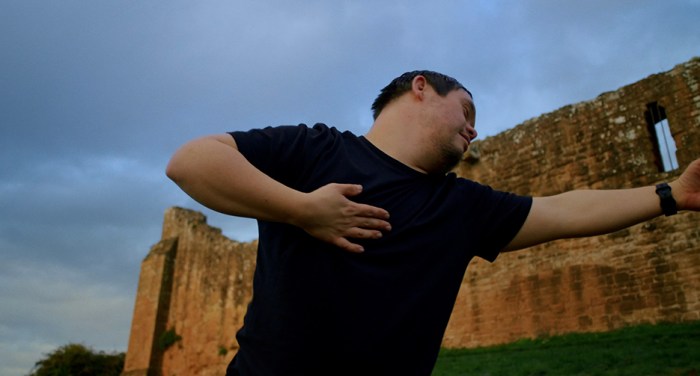
Rewards for the Tribe.
Since Galore, a handful of your films have focused on dance, theatre, and music. Do you have a background in any of those mediums?
Not at all. But I guess I’ve always leaned towards activists, artists, renegades, and outsiders. It’s often the nature of where the stories are the most acute. For me, I was collaborating a lot with artists and musicians in between making films, often doing large-scale films for live performance. For example, I worked for a long time with an organization called The Black Arm Band, which was primarily a supergroup of indigenous singer-songwriters. For a few of their shows, I made a 70-minute or 80-minute film that would sit behind them as they performed, and they involved shooting out on location and shooting complex setups. But those were only these ephemeral experiences. You got to see it live and then never again. And I just got really excited by that idea that there are all these artists out there who are not trying to make something that’s forever, but actually making something that’s in the moment. And there’s something fleeting, ephemeral, and really human about it. And I think dance is, it seems, sort of in a niche corner in the way of film. But at the same time, film’s all about movement and emotion, and that’s dance. And so I found myself wanting to work with dancers. I mean, they’re pretty punk rock when it comes to people making art. They have a short shelf life. They work incredibly hard. They’re probably in the most underpaid and under-resourced sector of arts, and yet there are people there who sacrifice everything to make it work. And for me, that’s hugely appealing.
How did Rewards for the Tribe come about?
I’ve been making a film in Madrid about the screenwriter Andrew Bevel and his collaboration with a bunch of Spanish actors and artists who were resurrecting stories of life under fascism under Franco. And I was very much in that process of looking at creating work. It was very studio-based with artists exploring and testing boundaries—very intellectual in many ways. And I was like, “This is singular.” I don’t want to do this again. But then Philippa Campier, who produces a lot of work with me, had been talking to Antony Hamilton, the creative director of Chunky Move, and they were talking about wanting to move into a film space. Then I had a chat with Antony, and he talked about this project Rewards for the Tribe, and he talked about a lot of these really abstract ideas that were going into it. I thought, “Oh fuck. I’d have no idea how to make a film about this,” and I don’t want to go back into that development space. But at the same time, there was something about this that made me really want to push forward. There was something about these abstract ideas that made me want to try to see what it would feel like to try and capture that ephemeral connection between dancers who are engaged in something that’s so physical, but then at the same time a really intellectual pursuit. I know that sounds very abstract and egghead, but at the same time, for me, it was interesting to think about how that could be a film. We’ve seen dance films, we’ve all seen Pina, or we’ve seen Sarah Carlos’ films, but they’re all about the dance. And I wanted to do something about the space of being a dancer. I don’t understand that space, and I don’t think most of us understand that space. And yet, people who live within that space have this amazing personal language and passion that drives them. I wondered how well I could capture that.
I think you’ve captured it perfectly. Were you familiar with Chunky Move and Restless Dance Theatre prior to going into this?
I’ve seen a lot of Chunky Move’s projects, and I really love them. They’re always pretty mind-bending, which is great. They’re really provocative in what they do, and they have an incredible reputation here in Australia and internationally. Restless Dance Theatre I knew of, but I’d only seen a short film that Sophie Hyde and the guys at Closer Productions had done with a couple of the Restless artists a decade or two earlier, and I really liked it a lot. I thought that was really bold, but I wasn’t aware of the nature of the collaboration. But the more I spoke with the Restless artists and the creatives behind a lot of their development, the more I realized they were doing very similar things to Chunky Move; again, very provocative, really trying to shift the way we understand and approach dance, and that was really appealing.
What was the name of the Sophie Hyde film?
It’s called Necessary Games. It’s really, really great.
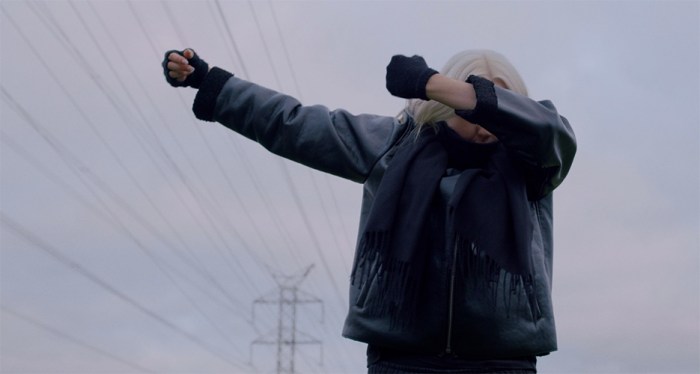
Rewards for the Tribe.
What steps did you have to take to get the performers comfortable with having you and the film crew around?
I think there are two advantages to working with seasoned professionals like that. All of the dancers from both Restless and Chunky dance eight hours a day. They’re constantly putting on productions, so they’re used to having people and technicians and lighting people moving in and around their space as they try to focus on doing their work. I think it’s a bit easier to step into that space than it might be to make a documentary about a more common profession. I spent time having conversations with everyone involved and spent time in those spaces without expectations and without projecting my wishes for what the film could be. Maybe it’s a strange analogy, but it’s like when you work with a new actor, you have to work out what it is that they’re sensitive to, what their language is, and where and how they do their best work. It’s the same with any documentary subject. Everyone has a different way of being comfortable around being looked at, asked questions, or investigated. What you’re doing is you’re saying, “Hey, can we all just stare at you for a while and understand your life?” [Laughs]. Most of us, including myself, would completely freak out and be totally uncomfortable. But I think the process of good documentary making is having a very human approach by being there, listening, and seeing what works for people. Then you try to push to the back end of your production the trickier things like filming in people’s personal, domestic, or intimate spaces, and doing the interviews at the very end when you have a really good personal relationship. By the time we’re interviewing the subjects, we’ve filmed with them across several cities and a couple of countries. They know and trust us in some way. When you sit down with lights and a camera, I guess the idea is that whoever is in front of the camera feels like they’re in safer hands than they might otherwise. The film process is best when you have time to stretch out the human relationships and the human connection.
Your job is to make a movie, but it would be hard for anyone not to get caught up in the emotion of what they’ve invested themselves in. How did it feel for you to watch some aspects of these performances take such a physical and emotional toll on the dancers?
I don’t stop myself. I think it’s good to be involved. I think most people working in film will probably tell you, you get a weird distance from what you’re doing because often you have several levels of work happening, whether it’s technical or you’re editing in your mind, you’re imagining what you might need to make sense of one thing. For example, on a bad day when everyone’s really stressed, you’re trying to imagine how to capture that on camera through frames, positions, and choices. You’re feeling it and sensing it while making these weird analytical choices. So it’s a bit psychopathic in some ways. [Laughs]. I think with something like Rewards for the Tribe, the primary goal we wanted to achieve was to make sure it felt playful and had a dialogue with the work. The work itself was about messing with perfection, messing with how we move and how we connect to each other. We wanted the film to do that at the same time. The balance was how to do that while maintaining an emotional narrative driven by the subject and their own internal emotions, desires, and journeys.
Rewards for the Tribe is interwoven with these incredible outdoor dance sequences. How much understanding of the dancers’ choreography is necessary to capture their performance so elegantly on film?
I’ve been very lucky with the dance films I’ve been able to make and the crews I’ve worked with. I’ve worked with cinematographer James Wright before, and he worked on Rewards for the Tribe with me. He’s filmed a lot of dance, and he’s really good at knowing how to capture bodies in movement. If you think about filming dance, it’s like you don’t just stick the camera back so you can see the whole body. You want to create the sense of movement and exertion, and sometimes a close-up on a face shows you just as much about a dance move as seeing the actual form of the dancer. That’s something I’ve learned in trying to film dance. One of the advantages was having James, who’s really experienced in that. The other thing is familiarity, sitting back and watching rehearsals and knowing how the dancers move. These dancers all do a lot of improvisation and personal expression. You get to see what their own style and language are. That was something to keep an eye out for in those solo sequences. But for many sequences, we trusted the dancers to guide us and show us how they wanted to express this particular moment in time through dance. I never wanted to choreograph a scene for them. All I could say as the director was that it would be great for us to film in this place, in this moment, in this lighting state, and see what we could get. But it’s all just hoping that something will click on camera, and often it did.
There’s very little room for error when performing live on stage for an audience. But was that also the case when it came to filming those outdoor dance sequences, or was the process more relaxed?
We filmed a lot of coverage. A lot of those outdoor performances were really improvisational. Then you find yourself in the edit room creating your own small sequence out of that improvisation that creates the same feeling as the larger sequence but is obviously much more concise. Our editor Delaney Murphy was so good at creating the feel of a complete scene by focusing on a shorter sequence. Some of the scenes in the hotel rooms where the dancers are confined and trying to express themselves physically were really long sequences. We’d spend half an hour filming that, and then we’d cut a minute or minute-and-a-half sequence. It was just finding those right moments. The dancers are so brilliant that there weren’t many moments where we had to re-film because someone made a mistake.
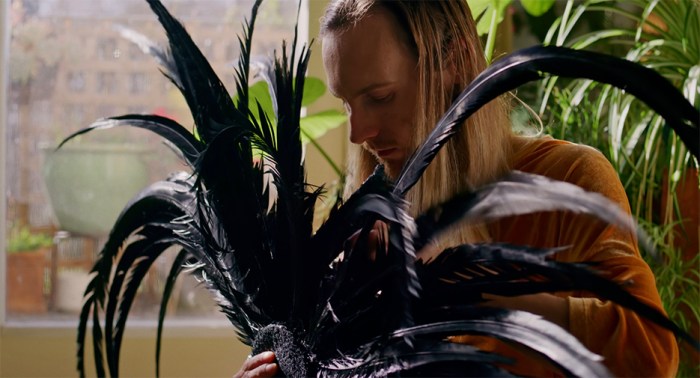
Rewards for the Tribe.
Throughout the film, the viewer rides every bit of Antony’s emotion, from his calming and articulate philosophical expressions to becoming wildly stressed while directing his performers. Can you describe Antony as a person from your perspective?
Antony is a really remarkable person. He was a dancer, and he brings a multi-hyphenate approach to being the creative director of such a huge dance company. He can be very technical and intellectual in his approach, and a lot of his work is known for this amazing precision. But he’s also completely open and egoless when it comes to the process. He said from the beginning, “You don’t have to check with me what you do and do not show. It’s all about radical honesty.” I remember calling him up and saying, “Hey, look, there’s this day where everyone was really stressed and you were really stressed.” And he said, “Yeah, there are stressful days. Stress is a part of everyday life.” He was fine with us showing all sides of him. That’s what this film is about. But it’s important to note that, even though he shoulders the weight of whether the show works or not, and as stressed as he might seem in some sequences, he protects the dancers from as much of that as he can. Coming from dance, he knows what it’s about. And of course, for the drama of a documentary, it’s great to have someone losing their shit a bit. [Laughs]. We wanted to include that because it is part of the process. Many of our dancers and collaborators have said it’s a really hard process. Dance is notorious for being a punishing world, but Chunky Move is not that world. At the same time, it still has those elements of extreme physical and psychological hardship. Whether you’re a dancer working with a disability or a dancer who’s injured, you’re up against those same challenges of being a professional dancer.
What did you learn about yourself as a filmmaker through the philosophies of dance and theatre that were going on around you while making Rewards for the Tribe?
I definitely leaned into putting obstructions, limitations, and playful obstacles in my own way. Despite how much we love it, film can be pretty joyless in terms of how difficult some of the processes are. I want it to be a joyful process with my collaborators and for myself. Life’s too short to do it any other way. Antony talks about some pretty universal truths. There’s something he says at the end of the film, which Delaney and I talk about often, which is that you put all of this work and all these ideas into something, and it might not even end up on stage. All you might get is this sense of some subtle brush strokes of something that was there. That relates to so many experiences in life. We try really hard to put lightning in a bottle, whether it’s in our relationships or in the films we make or whatever it is. But often we’re just left with impressions or echoes of all that we’ve tried to put into it. There’s something in dance about that ephemeral nature: if you didn’t see it on that night, that’s it, or all you have is a memory of it. You can’t rewind and look at it again. You just have this sensation of it. And there’s something beautiful about that.
Rewards for the Tribe will screen at Melbourne International Film Festival from 10 – 17 August, and MIFF streaming via ACMI from 9 – 25 August. Full details here.


 Cinema Australia