
Ashley Zukerman as Jack in In Vitro.
Will Howarth and Tom McKeith’s In Vitro is a masterstroke in nerve-shredding cinema. Its timely, unsettling and thrilling narrative will burrow deep into your mind and stay there for days.
This new Australian film, which is set to premiere at the upcoming Sydney Film Festival, follows Layla (played by co-writer Talia Zucker) and her husband Jack (Ashley Zukerman), who have created a new process for breeding livestock on their remote cattle property. However, the farm’s struggles and their isolated existence are far from the life Layla had envisioned. Disturbing occurrences lead her to question their life together, ultimately revealing a sinister presence on the farm.
Will Howarth and Tom McKeith have a longstanding partnership. Both filmmakers burst onto the scene with their feature debut Beast, which premiered at the Toronto International Film Festival in 2015. Their collaboration began straight out of high school and has since matured into a dynamic filmmaking force. If In Vitro is anything to go by, both Will and Tom have long filmmaking careers ahead of them.
In this interview, Will and Tom delve into the making of In Vitro, discussing their long-standing friendship, the positives of co-directing a movie together, and the intense script development process behind this finely-tuned film. They also discuss the film’s eerie, isolated landscapes, as well as the themes of love, control, and domestic abuse explored throughout the film. Through their collaboration, Howarth and McKeith have crafted a film that is both a thrilling cinematic experience and a poignant exploration of profound and timely issues.
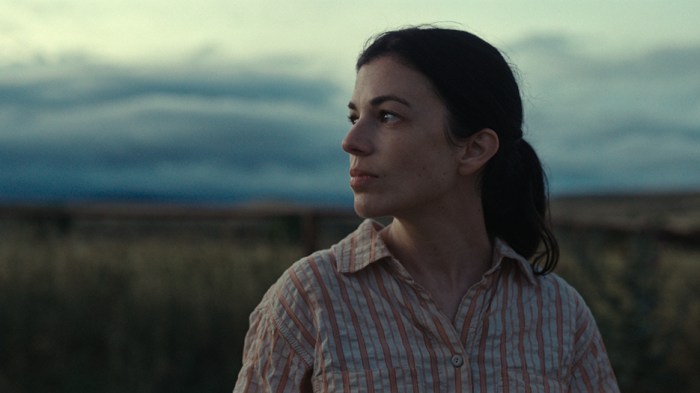
Talia Zucker as Layla in In Vitro.
“Being well-prepared and aesthetically aligned is extremely important when you’re directing a film together. Having a singular vision makes problem-solving so much easier.”
Interview by Matthew Eeles
You both worked on the 2015 feature film Beast. But how far back does your friendship go?
Will Howarth We met straight out of high school by chance. We both did gap years where you finish high school and go over to the UK to work in a school for a year. I actually met Tom over there. Then we came back to Australia and ended up going to the same university together. We both studied Arts Law and went on exchange together.
Tom McKeith We worked together on a bunch of short films before we made Beast. We have a long connection in terms of making movies together.
Will I reckon we’ve known each other for twenty years. We started making short films at university together and then we obviously worked on Beast together, which was our first big project.
Tom That film was a wild ride. We shot Beast in the Philippines, and we didn’t have an enormous budget. It was the first film that almost everyone on set had done. We just jumped into Beast with both feet and did a lot of figuring out along the way. Just the nature of shooting in the Philippines was very different and had its own kind of crazy challenges. That whole filmmaking process was a wild experience.
What is it that makes two people want to make films together?
Will Well, apart from being mates, we were both interested in filmmaking. Looking within our law classes, there weren’t a heap of people out there going out to make short films. So we were mates, and we discovered that we were both interested in working on short films. We began by making some very small short films. We started entering the Sydney Uni Short Film Competition and things like that. It started out as a fun thing on the side that we were doing while we were studying. Then we realised that both of us were taking this seriously, especially the scriptwriting process. So maybe that’s why we gravitated towards each other, because it started as this fun thing we wanted to do, but we soon discovered that we wanted to start working seriously as writers and filmmakers.
The In Vitro script was supported through the Sundance Screenwriters Lab. How did that come about?
Tom The original idea came from Talia [Zucker], or at least Will and Talia together. It’s funny reflecting on how long these things take to go from an original idea to a finished film. I don’t know how many years ago that was. We completed the application, and it got some traction through the Sundance Screenwriters Lab. I was brought on during the early stages to work on the script with Will and Talia. It actually changed a fair bit from the original idea to where it is now. We went through so many redrafts of the script. It’s so much fun at times, but it’s also an arduous process to get a script from an idea to something you can actually shoot. A lot of hard work was involved, even after the lab. I didn’t actually end up going to the Lab; Will and Talia did because they were both in the States already. But even after the Lab, it was such a long process.
Will The Lab was a crucial part of the development process. You’re working directly with screenwriters who you’d only dream of getting to work with. They’re all at the Sundance Resort with you, sitting down one-on-one with your scripts for however long, and they’ve all got their own thoughts on your work. They’re providing you with some very thoughtful feedback about your script. I guess the only thing that becomes a challenge after that is that you get a lot of good feedback from a lot of good people, and you leave thinking that there’s no way you can implement all of that feedback. How can we possibly use the feedback we’ve been given to refine what we were hoping to achieve on our own? But it really is an incredible program that they do out of Sundance. It was really crucial to the film’s development. We were working with people like Susannah Grant, Josh Goldenberg, and John Gadens, but once the program is over, you’re straight back to work on the script.
How well do you take criticism and feedback?
Will I’d say too easily. If people come to us with feedback about the script, whether it’s an Oscar-winning screenwriter or a mate who likes watching films, I think we are very open to the feedback. Maybe a little too open because we are so happy to revise and make changes over and over and over again. Perhaps next time I think that we might need to be less open to every idea that comes our way. [Laughs].
Do you agree with that, Tom?
Tom Well, only in the service of expediting the writing process just so we’re not taking so long. But I think it’s probably a maturity thing. And as you become a more experienced filmmaker and a more experienced screenwriter, knowing what feedback to take on and what feedback to dismiss irrespective of who it comes from. But when you are less experienced than some of these people you’re working with at the Lab, you’re desperate to take on their expertise and knowledge. One good thing that does come from taking on so much feedback is that you go in the direction that someone advised you to take, and you take the script in a whole different direction, but then you turn around six months later and realise that you’ve moved away from your core idea. Then that forces you to swing back closer to your original idea, but you’ve now improved on it having gone on that journey. So I guess ultimately it’s valuable, but I think maybe the more experience you have, the better you can deal with that whole process.

Talia Zucker as Layla in In Vitro.
From my point of view, this story is both complex and simple at the same time, which makes In Vitro work so well. I thought your script was fine-tuned to perfection. How important was it to have Talia on board as a screenwriter? It may not have worked as well as it does without her perspective.
Will I completely agree. The story is told from Layla’s point of view, and I don’t think Talia was ever in the room as an actor during those early scriptwriting stages. Those two roles were kept very separate. We were all there cracking the script, cracking the scenes, cracking the story together, and her acting experience seemed to be irrelevant at that stage. She was really there as a writer, but it did mean that we had a female perspective on a story we were writing that was very much from Layla’s point of view.
Tom This was Talia’s story and idea from very early on. So her perspective was invaluable.
Will Talia had been writing and directing some short films, and she was keen to work on longer-form filmmaking. While Talia and I were living in LA together, she had a concept of what In Vitro is, and I won’t say too much because obviously there are spoilers, but she had this fundamental idea. Then we started working with it and we very quickly brought it to Tom to develop it with him as well.
At what point was it decided that Talia would play Layla in the film?
Will It was certainly the intention from the outset that Talia and I wanted to work together. We’re both actors and we were interested in developing a project that we would be really excited to act in as well. But it’s interesting because you start with that intention to work on it together, but then the writing process starts and all of your attachment to the acting side of it is put on hold. I think that’s what I was getting at before with Talia in particular. It was irrelevant that we were acting in it while we were developing it. It’s not like we were going, “Can we make this scene juicier for my character?” But to answer your question, both Talia and I always had the intention to act in it as well.
Tom, did it mean more directing duties for yourself having both Talia and Will acting in the film?
Tom: Not so much. There weren’t that many instances where I was just entirely holding the reins in terms of on-set directing. We did it all together. We even directed Will’s scenes together. In saying that, they were the scenes where I guess I was giving Will director’s notes and it was really just me directing. But I think we did a pretty good job of sharing director responsibilities. I don’t think having Will acting in the film put an additional burden on me at all.
Do you have individual strengths as directors?
Will That’s a very good question. I wish I had an answer like one of us typically talks to the actors while the other might go and chat to the camera department, but it really didn’t feel like that at all. It felt like we were united throughout the whole process. So usually we’d set up whatever we need to set up for the shot together. Me and Tom would have a chat and communicate to the camera what we wanted to finish a take, and then me and Tom would have our own conversation about that. It really didn’t matter who’s relaying it back to the other departments. I think we had done so much preparation together that we were very much on the same page, and it felt like we had one voice. That’s my perspective on it anyway.
Tom: I agree. Aesthetically, we’re closely aligned. I think it would be impossible to direct someone who had a different sense of how big a performance should be, or how showy the production design should be. It was only important that we were aesthetically aligned. A lot of it came down to our references to make sure we were on the same page. We both have a great sense of what’s working and what’s not working, and then it’s just about figuring out how to solve those problems: what notes are going to work well for the actors, or what camera angle might solve a certain problem. Being well-prepared and aesthetically aligned is extremely important when you’re directing a film together. Having a singular vision makes problem-solving much easier.
I’ve always been impressed by Talia as an actor, especially her performance in Lake Mungo, which is one of my favourite films. Can you tell us about helping Talia get to the dark place that she needed to get to for Layla?
Will Talia is my wife, so my answer is going to sound incredibly biased.
That’s okay.
Will Well, I think she’s phenomenal in this film, and I think people will understand how enormous this performance is once they see the film. Because we don’t want to talk about everything in it, but I think audiences will understand just how enormous the role is that she took on. Talia was able to move through things so quickly. She’s in every scene of this film and was able to move very quickly from take to take. She just absolutely smashed it. I know this is my wife I’m talking about, but there are moments in the film which I think she’s breathtaking in. But how did she get to such a dark place? I think because she knew the story inside out. She had years of preparation going into this role and that’s not often the case when you’re acting on a project. Part of it is just getting up to speed and understanding and breaking down the script and working out the subtext of scenes and what’s going on between the characters. All of that was already there while we were writing it. So it meant that when she turned up to work as an actor, all of the preparation was already done because of how well she knew the material.
Tom, I’d love for you to add something here from a non-biased point of view.
Tom [Laughs]. I agree with everything Will has said. I feel like it wasn’t a hard directing challenge to get her into that place because she was so well-prepared. It was rather easy actually, and she’s so responsive to notes and she’s up for everything. Getting that performance out of Talia was actually one of the easier parts of the whole process. She brought it herself.

Ashley Zukerman and Talia Zucker in In Vitro.
While In Vitro does explore themes of climate change and the impact it’s having on agriculture, the film’s themes actually run much deeper than that, and explore love, control, and ultimately domestic abuse in an isolated environment. Domestic abuse is at the forefront of every Australian’s mind at the moment with so much of it happening around the country. Why was it important to explore these themes on film?
Will I think those themes naturally arise out of the concept, but I think you can go about developing it in two ways. You land on a concept that naturally brings up some themes that you get to explore. Or perhaps it’s the other way around, “Hey, I’m really interested in thinking about these themes. How could I do it?” I prefer the former process. And when Talia had this concept, I think we kind of both knew that there were going to be some interesting themes to explore here. And then when we arrived on it, and particularly when Tom came into the process, we all started reflecting on our own fears or experiences in relationships throughout our own lives. This film pushes those fears quite far. But I would say that some of those themes around love and control and perhaps a feeling of worth in a relationship have come from us reflecting on our own experiences in relationships as well, which is obviously a crazy thing to work on with my own wife Talia, who’s also my best mate. But that’s how those themes came up. The concept naturally provided a very interesting way to explore those themes. For me anyway, I was able to think about some of my own fears and insecurities around certain things.
Tom And it’s funny, because obviously it does end up carrying those elements and themes that are very present at the moment for good reason in the public discourse. But also, if you look at the relationship between these two characters in the film, it’s kind of an imbalanced relationship in that one person has sacrificed a lot in their life, their hopes and dreams, so that the other person in the relationship can pursue their hopes and dreams. And at that level, I think it’s very relatable, whichever role you feel like you play in your own relationship in relation to that dynamic. I’m not going to say it’s an inevitable thing when you’re in a relationship. Maybe some people get things perfectly equal, but I don’t think that’s common. I think the relationship between these two characters will relate to a lot of people. You’re right in saying that it does end up resonating with themes of domestic violence, but it also explores many other relationship dynamics as well.
How prepared are you to answer questions relating to domestic violence at the moment? I ask this because it’s a topic that has the potential to cause much anguish, especially for yourselves.
Tom Your question is a good heads-up for us. It is something that we probably should do some more thinking about and preparation on. I think you’re exactly right in terms of how it will be received by audiences. It’s interesting to reflect that it is a perennial issue, but domestic violence wasn’t at the forefront of public discourse at the time we were developing the film, even though it should have been. That’s often how creative stuff works, isn’t it? Things are kind of in the zeitgeist, and then pieces of art arise as a consequence of that and speak to that. So it’s hard to know how conscious things are.
Will It’s a funny thing, isn’t it? You start working on a project with a lot of what’s going on around you influencing your work. And then you go into a vacuum, working very hard to finish the film and have it ready to show to an audience. This Sydney Film Festival screening will be the film’s world premiere. So this is the first time we’re showing it to an audience. And then suddenly you’re ripped out of that vacuum, and you realise that this thing you’ve been working on and thinking about for a long time is going to speak to people in a very personal way, and you’re not in control of that. It’s also going to intersect with what’s going on in the public domain. So I think the fact that this film touches on these themes is important, and it’s something we tried to handle with sensitivity and honesty. I think it will spark some conversation. I haven’t thought about exactly how I’m going to answer those questions, but I do know now that it’s time to start talking to audiences directly about this thing that we’ve spent so long working on.
I’d love to learn a bit more about some of the technology and other futuristic aspects of the film, like the instant coffee tablets and the tracking device used in the film, which felt both dated yet advanced at the same time. Can you tell us about the design of technology in this film?
Will We wanted the film to feel relatable and as “near future” as possible. If anything, we didn’t want it to be set somewhere in the distant future so that it felt like an outwardly sci-fi with spaceships and flying gadgets. We wanted it to feel grounded, industrial, and rural. Our production designer, Alexi Wilson, came up with the coffee tablets. Is that right, Tom?
Tom That’s right. I love that. They’re so cool.
Will: And we came up with this retro tech aesthetic. So things kind of feel old world, if anything. Another really great thing that Alexi came up with were the vehicles in the film, like the old rundown utes, which also happen to be electric vehicles. [Laughs]. So it was a really nice blend of old and new tech. That was the approach we landed on with Alexi.
Did you reference any other films for that particular aesthetic?
Tom We went through thousands of references in the early days when we were thinking about this kind of aesthetic and how we wanted In Vitro to look and feel. I know one thing we were trying to avoid was a red earth Australian irony aesthetic. And that’s why we went for the Cooma landscape that we did. We were trying to differentiate it from other films set in a futuristic Australia. Thinking about it now, I guess our references were less Australian outback films and more American indie thrillers and some European films.
Will Technology-wise, we talked about Looper pretty early on. Obviously, there’s some rural stuff going on in that film as well. But with our approach to the tech, we just wanted it to feel like things had been living so remotely, and I guess this isn’t necessarily a dystopian film, but we wanted a sense that something’s gone off the rails in this world. So if you’re living in an isolated, remote setting, you’re probably recycling old stuff that you’ve got around the property. And that’s why we liked that idea of using old stuff around the farm, as well as the animal breeding facility that we have in the film.

Talia Zucker in In Vitro.
This incredible rural landscape plays a big part in this film. While some parts of this farm are lush and green, most of it is dead or dying. Where was it shot, and how did you get access to this area?
Will We landed on that property pretty early on. Tom found Cooma as a location to check out. And like Tom said, we wanted to steer clear of red earth, red dirt, big blue skies, and big gumtrees. We found this area around Cooma that looked so unique. And like you said, some parts are lush, while other parts are incredibly dry. You’ve got these weird skeleton-looking dead trees in a bunch of areas. It just feels like something’s not quite right with the landscape. We wanted the film to feel like the location was somehow unfamiliar, and we were also looking for something that felt eerie and isolated. So I guess for all those reasons, we landed on Cooma, which is where we shot all the exteriors for the film.
Does being on the land feel as eerie and isolated as it looks in the film?
Tom It did. And it caused some issues because the main farmhouse was reasonably isolated. It was the property’s second house where I believe shearers and farmhands would stay, so access was pretty tough. One night there was an insane, crazy storm. And because it was so isolated, all the roads got shockingly muddy. We were under the eaves of the house for an hour hoping this electrical storm would pass. And we were worried about how we were going to get out of here on these muddy roads. We ended up spending all night trying to get everyone back to town. So that’s how isolated it was. Some of those other locations we used were pretty isolated too. We felt that it was important to prioritise that sense of unease and isolation which you associate with particular film genres rather than leaning too hard into the sci-fi side of things. We wanted it to feel eerie.
How many locations were used all up for this central setting?
Will So there was that property where the shearers’ quarters were, then we shot the interior of that farmhouse in a different house in the middle of Cooma. And then our animal breeding facility was a decommissioned fish farm, which we found in Goulburn. So we shot between Cooma and Goulburn.
Assisting this aesthetic is Shelley Farthing-Dawe’s cinematography, which is truly world-class. Shelley succeeds so well at drawing the viewer into this world. Was Shelley someone you sought out from the very beginning?
Will Not necessarily from the beginning. When it came time to look for the heads of departments, we had a number of cinematographers we wanted to meet with. Shelley was one of them, and we were very much on the same page about what we wanted to achieve. He’s a very hardworking and thoroughly prepared DP. We had a tight shooting schedule, so I think the fact that we were able to shoot something that looks the way it does is pretty remarkable given how tight the schedule was. Me, Tom, and Shelley did a lot of prep in the months leading up to the shoot so that we were very, very, very well planned when we got to set. It wasn’t a case of turning up and going, “Well, how should we shoot this?” Between the three of us, we had a really good plan. One story about Shelley in relation to that storm Tom mentioned was that in the script, what was meant to happen is that Layla goes out and a big storm hits the property. The actual storm was not planned for. We were going to add that storm later during post-production, but then a storm really did hit the property, so we had to very quickly pack up because it was a massive electrical storm. But we did get one take for the film because the whole landscape was being lit up by these strikes of lightning, and Shelley was just drooling at the camera because it was the most incredible lighting you would ever see. I don’t think it ended up making it into the film, actually, but Shelley was so eager to capture it. [Laughs].
We’re not going to discuss it here, but In Vitro has an incredible final act, which is both shocking and exciting in that it opens up many possibilities for a sequel. Australian film sequels are rare, but is the In Vitro world something you’d like to revisit?
Will That’s another great question. It wasn’t our intention to end the film the way we did. We certainly like films where you get that final act, or even that final frame, and your mind starts racing forward about what may happen next. And so that’s something we tried to achieve with the ending of our film. Something where you think, “Wait, what’s going to happen?” And maybe you can chew on that for a while, and maybe there are even some themes that come to light a bit more. So we’re interested in those sorts of things. I guess it also gives rise to the idea that the story could continue. I haven’t thought specifically about that. I think you make your film, and you need to have a big break.
Tom We spent a lot of time joking around about sequel names.
Will you continue to make films together?
Will We haven’t had the conversation yet about what’s next.
Tom It’s such an exhausting process. So we have to see how everything turns out with this film.
In Vitro will screen at the Sydney Film Festival from Thursday, June 6. Details here. In Vitro will be released in cinemas later this year via Madman Films.
If you enjoyed this article as much as I loved publishing it, please consider supporting Cinema Australia’s commitment to the Australian screen industry via a donation below.
I strive to shine a light on Australian movies, giving voice to emerging talent and established artists.
This important work is made possible through the support of Cinema Australia readers. Without corporate interests or paywalls, Cinema Australia is committed to remaining free to read, watch and listen to, always.
If you can, please consider making a contribution. It takes less than a minute, and your support will make a significant impact in sustaining Cinema Australia as the much-loved publication that it is.
Thank you.
Matthew Eeles
Founder and Editor.Make a donation here.

ADVERTISEMENT


 Cinema Australia