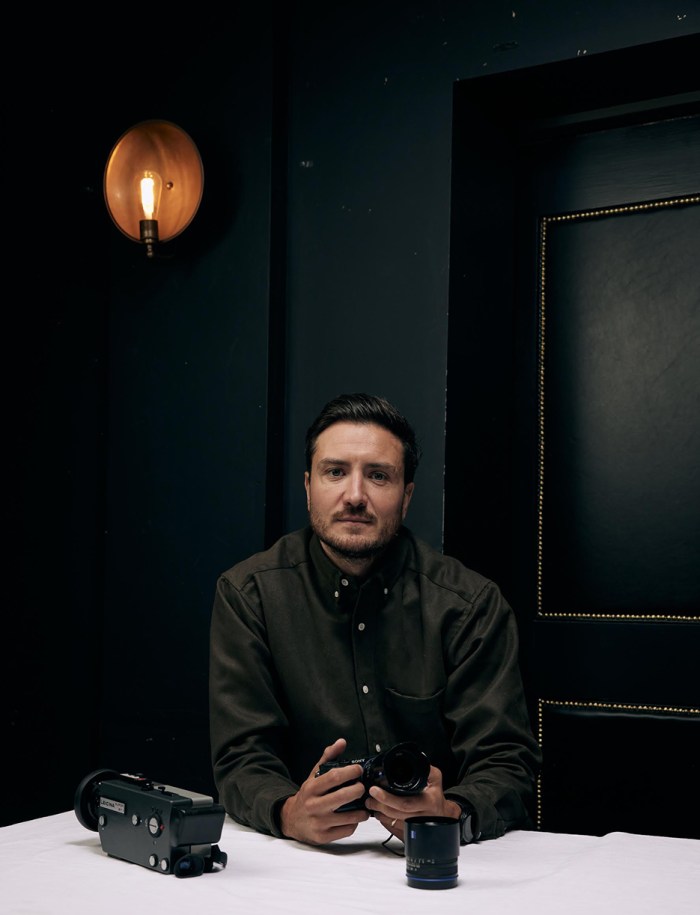
Jack Lawrence
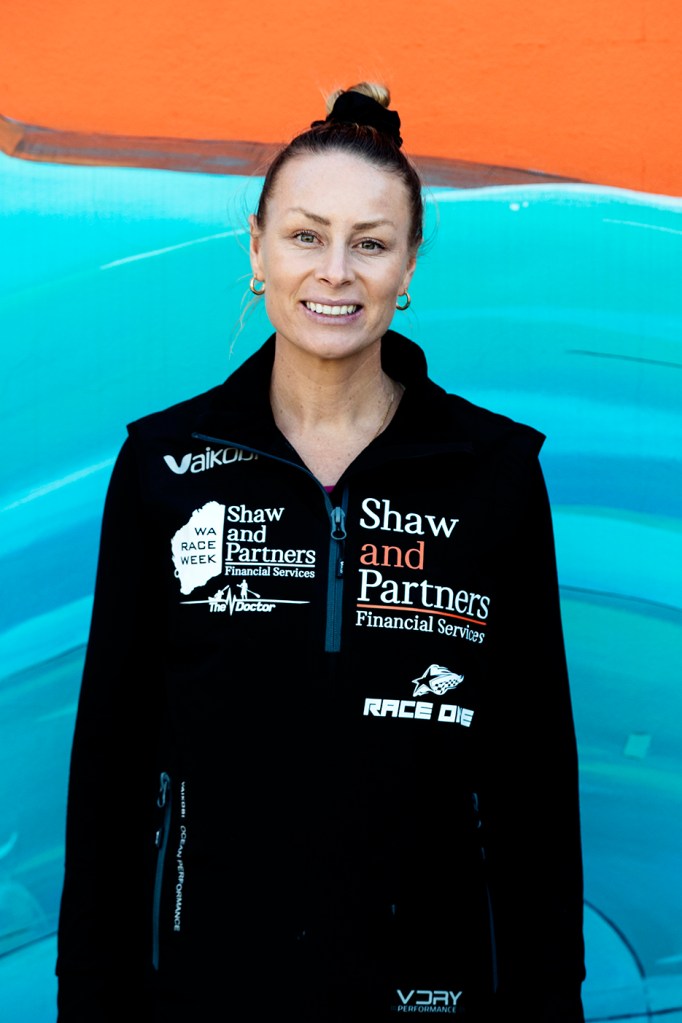
Bonnie Hancock. Photo by KM Media.


As someone who works at a computer from home, my biggest daily challenge is walking from my desk to the fridge and deciding what I want for lunch.
Being so immobile on a daily basis, it was impossible to watch Jack Lawrence’s new documentary, Diamond of the Sea, and not be inspired by it. It has certainly encouraged me to move more and to start prioritising my physical health.
Diamond of the Sea follows Australian IronWoman Bonnie Hancock as she etches her name in the annals of sporting history by breaking the Guinness World Record for the fastest circumnavigation of mainland Australia by paddle.
Director Jack Lawrence brings to life Bonnie’s awe-inspiring story and captures the essence of Bonnie’s endeavour with raw emotion. Diamond of the Sea is not just a documentary about a record-breaking feat but a celebration of resilience and the Australian spirit.
Diamond of the Sea inspires and excites, and Hancock’s incredible feat will leave you breathless.
In this interview, Jack Lawrence and Bonnie Hancock delve into the making of Diamond of the Sea, sharing insights into the challenges faced, the moments of triumph, and the deeper meaning behind this captivating film.

Diamond of the Sea
“I want people to know that with the right people in your corner, anything is possible.”
Interview by Matthew Eeles
Jack, I’m really keen to learn more about your filmmaking background. Can you tell us where filmmaking began for you?
Jack I must’ve been about thirteen when I got my first video camera. I would go around making random videos on family holidays. When I became a teenager, me and my mates started making funny little skits and stuff like that. I was editing using iMovie on an old MacBook. I also studied filmmaking at college between the ages of sixteen and eighteen, and at around twenty years old, I got into the TV industry in the UK and was employed on a few projects where I was a runner. I then became a shooting runner and began editing as well. Then I somehow found Stamp Productions, run by a guy called Benjamin Uttley. He founded it about twelve years ago, and I joined him. It was just me, Ben, and one other editor. I’ve been with Stamp for the last twelve years over in London, and we’ve mainly made a lot of sports stuff. We’ve made documentaries with the British and Irish Loins, including my first documentary, Lions Uncovered, made in 2017. A few years later, we made another documentary called The Silver Spitfire: The Longest Flight, about an old World War II fighter plane, the Spitfire. And now Diamond of the Sea for Bonnie. My love of stories and human endeavors revolves quite a lot around sport. I just absolutely love it. My passion is finding these amazing stories of what people are doing and bringing them to life on screen. That’s how it all started for me.
Bonnie, where and when did your connection to the ocean begin?
Bonnie I think I could swim before I could walk. [Laughs]. I grew up in a beautiful little coastal town of Sawtell in the Coff’s coast of New South Wales, so I’m well and truly a country kid. It had a population of 2000. I had quite a sheltered upbringing, but essentially, the surf club was my life. I joined the surf club at the age of five, and as you do when you have older siblings, I just wanted to be doing everything my older sisters were doing. And that included going out into the ocean on my board. I remember receiving my first little, dinged-up hand-me-down foamy board and going out in the waves. I never looked back. And honestly, from the age of twelve, I wanted to be a professional IronWoman, and I was so set on that tunnel vision goal. After school at the age of seventeen, I moved to the Gold Coast and managed to make the professional Nutri-Grain IronWoman series. So it was everything I ever wanted. And what was even better was that my older sister Courtney also qualified. So I raced in the Nutri-Grain series for seven years and had a lot of success as an IronWoman. I eventually switched to specialist ski paddling, which is more of a five-minute power and speed race. And I ended up seeing results that I’d never seen as an IronWoman. I actually learned that it was more the speed and the power, which was a strength of mine, which is ironic as to what I was going to do in a few years. At the age of 28, I actually switched to specialist ski paddling and picked up an ocean ski for the first time. An ocean ski is an eight-kilogram carbon fibre craft as opposed to an eighteen-kilogram craft used in surf life savings. These ocean skis are built for downwind swells and being way out in the middle of the ocean.
How did you two meet?
Jack I met Matt, who’s Bonnie’s husband, through a friend at the gym. He told me what Bonnie was planning, and then because of my background with sports films with Red Bull and stuff like that, I was like, “Well, let’s do it! Let’s just start documenting everything.” The first time I met Bonnie, we did a sit-down interview just to talk about different things, and we recorded it. And then I wanted to craft a little teaser story from that just to see what we had. We then started filming all the training. There’s a lot of training that didn’t actually make it into the documentary. As we got closer we sat down and did a proper interview, a longer form interview that’s actually in the documentary now. Following that, we got a crew together that would go on the boat and in a car. So we basically had three people who had to team up, so they were shooting and taking photos as well. They also had to help with Bonnie’s recovery, helping with food and stuff like that, because obviously, Bonnie would come on board the boat sometimes maybe for half an hour, eat something quickly and then get back onto the ski. So they were helping with that. One of them would have to help drive the support car around as well. So they were kind of chopping and changing their roles, and they were amazing at doing that and really supportive to Bonnie as well.
Bonnie, how did you feel about having this journey documented? Were you open to filming from the very beginning?
Bonnie Absolutely. I wanted three things from this journey. One was to break a world record, and the second was to share the journey. And because it was mid-Covid, I was incredibly passionate about that. I knew we had to have those cameras there. And the four people who had essentially done this paddle successfully prior to myself and gotten the previous records, they hadn’t actually documented it through a camera. They’d recorded blogs and journals and that kind of thing. But this was to be a totally unique perspective, a way of seeing Australia, no one ever had. So fortunately as an IronWoman, I did have a lot of cameras in my face right before racing, and you just learn to block that out in some way or really forget that they’re there. And I think that’s why, with this documentary, you feel the authenticity because it’s just me, there’s nothing fake about it. It’s just me in my most vulnerable state at times. The absolute ecstasy of breaking the twenty-four-hour record, the challenges I faced, it’s all there. And I knew that was a real necessity. And the third thing I wanted was to do some good, which was to raise the money for the charity, Gotcha4Life. I knew that raising money was one thing, but actually showing people these challenges I was facing with my own mental fitness that would sort of help people really find that empathy and alignment with the charity. But this documentary is above and beyond anything I ever could have imagined or expected. I feel like people do come into your life at a time that they’re meant to, and Jack is one of those people. With those sit-down interviews, I felt like I’d known the person for a lifetime. We broke down those barriers straight away and built that rapport.
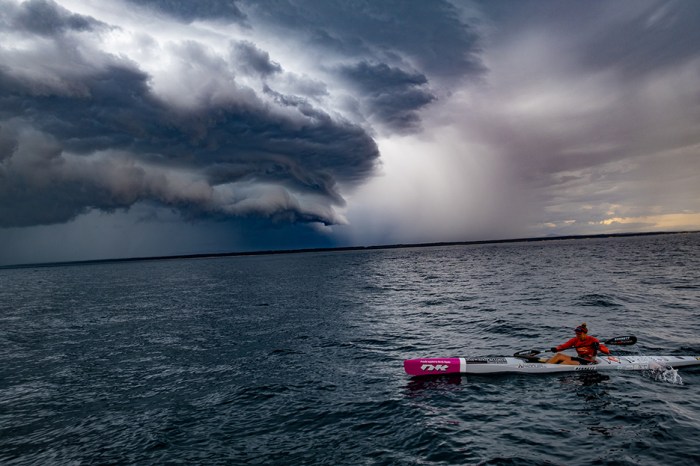
Diamond of the Sea.
Jack, how do you go about assembling a crew brave enough to take on something like this?
Jack Bonnie’s husband Matt actually helped me with that. He knew videographer Blake Bradford already. I think Blake was already doing a bit of traveling around in his van as well, and he was documenting his own things. Blake was the right guy at the right time. He was so keen to jump on board. Ben Lavery is also really into his adventuring. He’s actually on the road with Sean Bell at the moment.
Bonnie Sean Bell is actually attempting to become the fastest person to run around Australia. So Ben got back from filming with me then got the offer to film for Sean. He’s literally following Sean around as he attempts the world record for running.
Jack So that gives you an idea of why Ben was the perfect fit. And then there was Jamie Sallows as well who has a background in filming. I spoke to everyone to make sure that everyone was on board, that they were happy to do this, and we went through the whole kit, lots of GoPros and two main cameras, and basically they would just chop and change, because obviously they would get seasick as well. Blake was pretty seasick crossing the great Australian bite. So if someone’s really seasick, you kind of need another person to help out with the filming. And I can tell you, being on a boat, looking at a camera screen isn’t the best thing for seasickness. Blake was also dealing with editing the social media content as well, and he would send me footage so I could review it and things like that. They did an incredible job. They were a great crew. They got so much good footage. But one thing I found the hardest, and I’ve told this to Bonnie so many times, was when I was editing the film there was Bonnie getting back on the boat after paddling one hundred and twenty kilometres and she’d be smiling. So as a documentary maker, I’m like, “Where is the drama? I want you to be crying. I want you to be broken down. I want tears.” [Laughs]. But Bonnie would get back on the boat after paddling five kilometres and she was just so chill about it. And that was the hardest part for me when I was putting it all together. She’s just too tough basically. [Laughs]. But we talked about this Bonnie, and there was a reason behind that, right?
Bonnie Absolutely. That was me in athlete mode first, and it was me just going into this tunnel vision focus needed to paddle up to two hundred and thirteen kilometres a day, which was that 24 hour record back down the Queensland coast. And it was just finding a way to keep composed when everything was happening around me. I had five to six meter swells at a time, gale force winds and the uncontrollable. So what I’ve always been able to control as an athlete is actually my own mood and my thought processes. So bringing it back to the basics and focusing on my technique, that glass half full approach. I would always find a way to find a silver lining even in the middle of the ocean at nighttime when I was terrified. I would look up at the stars and really soak in the moment. So it was funny when I would come back on the boat, I was almost in a euphoric state at times. After finishing that day of paddling, I was grateful to be back with my crew and that I was safe and sound for everything I’d been through. I think to achieve this world record, I really had to stay in that composed state a lot of the time. And there’s a scene, once I’ve broken the record, I think my reaction is, “Yay,” and that’s about it. And again, it’s my authentic self and I’m not often the most extroverted person. So I think that’s captured really well in this documentary.
Jack That’s why we decided to film the main interviews throughout the film when we got back. While I was cutting the film, I was finding it so hard to show Bonnie’s emotion because she was bottling it up so much because obviously if she let a little bit out at the time, then she might have fallen apart and might not have gotten back on the ski the next day. But she stayed composed all the way through. So when she came home, we started editing, and then we let it settle for a bit, and then we sat down to do that main interview. That’s where a lot of the emotion of the second half of the film comes from really.
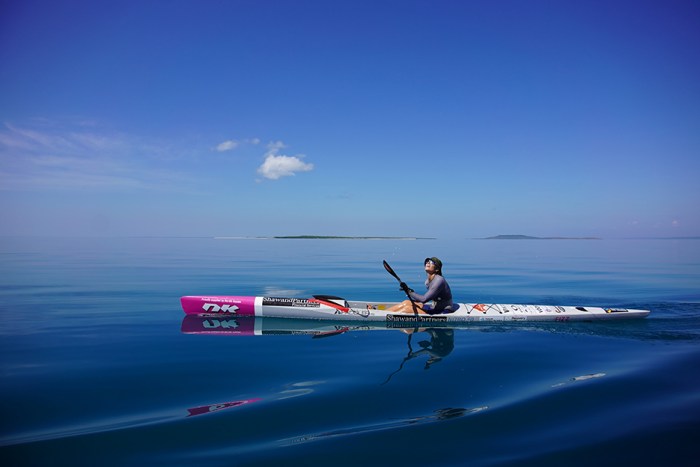
Diamond of the Sea.
You both have families. Bonnie I know your husband Matt was heavily involved in this journey, but can you both tell us about the toll that something like this takes on loved ones? Lives were at risk.
Bonnie It takes an enormous toll on everyone, and as I write about very much in my book, there’s times where I didn’t know if Matt and I were going to get through it. And I think that really comes out throughout this documentary, the importance of those around me and the sacrifices they made. It’s one thing for me to climb into my ski and paddle a ridiculous amount of kilometres, but what my crew were going through, and that was Matt sometimes sitting on land for weeks at a time, not being able to have contact with me. That’s him getting a phone call as I’m five hundred kilometres out to sea, hearing that I’ve just been concussed at nighttime and floating in the ocean, waiting for my boat to come back to me, that’s me not knowing what to say to him when I come to shore. And that was all part of that process of me as an athlete, not really wanting to fully let go or release those emotions because I’m back in that ski the next day, paddling all day again. So I really think that this documentary does highlight the importance of your team, your village around you, and you cannot achieve any sporting endeavour, or even adventure, without that crew. I strongly believe that. And there was one day throughout this paddle I set out to paddle alone, and I felt incredibly lonely and isolated, and it was nowhere near as fun. And I made sure that I said to my crew, “I never want to do that again.” I’m so lucky to have been surrounded by an incredible crew, and I really think that their sacrifices are highlighted in this documentary.
Jack I was rarely on the boat because I had the three guys there shooting it for me. I would’ve loved it, but my wife was actually pregnant at that time, so I was definitely not allowed to be going up to Darwin or anything like that. [Laughs]. But in terms of the edit, there was a lot of long nights and days where I didn’t see my partner Amanda, and I think my baby Tommy was about two months old at the time. So there was a lot of time where I didn’t see them at all. Amanda was super supportive the whole time. That’s why I’ve always told her that she’s not allowed to watch Diamond of the Sea until it’s in a cinema. That’s going to be the best treat ever. She’s supported me so much. She’s been amazing.
This journey lasted a long time, and we only see just over an hour of it featured in Diamond of the Sea. Was there a longer cut of the film originally?
Bonnie Jack and I watched the original cut together. There was a lot of footage of myself growing up, and footage from throughout my IronWoman career. We condensed that into the one scene that you see in this version where it’s the high drama clip of when I won a ski race in the professional ski series and we wanted to encapsulate that spirit of surf life saving and how challenging it is to maneuver these big craft through the waves. So we cut out a fair bit. We condensed my six months’ worth of training into the few minutes which open the film.
Jack The film opens with ten minutes of background, and then we’re on launch day. So basically six months of training and preparation and route planning are all cut down into ten minutes. There was a section in Western Australia that came out. It was hard, but there was just so much footage to get through. Obviously, the biggest parts we really wanted to include were the injuries, and Bonnie’s hand not being able to close because it was just in that permanently grip position.
Bonnie, do you have any injuries that are with you still today?
Bonnie It took me a couple of months to adjust to life on land again. I had to teach myself how to run again properly, and how to walk again properly on land too. I had bulging discs in my back. The soles of my feet were so soft; it actually hurt to walk on hard surfaces. It took about five months until I could wiggle my fingers properly. It was my finger joints and my back joints that were really the worst and suffered the whole way through. And those bulging discs in my back were diagnosed by the physio at the top of the country in the Northern Territory, but I reckon they were there from about halfway around. So by the time I hit that last home stretch, I was ready for my glory stretch down the coast and thought, bulging disk or not, I was getting home. The footage of me crossing the line, and that ecstasy I experienced, that is all genuine and real because I hadn’t smiled that wide since the start of the trip. It really did feel like the monkey was off my back because you are never quite finished in an expedition like this. There’s always something that can happen. And this was through Covid, so there was always that chance of a Covid outbreak in any little town we were passing. And if Covid was to get to my crew, it was really going to be an expedition over because Guinness World Records state that you can’t remain idle for longer than two weeks, and that’s the Covid isolation period. So there was always that anxiety amongst the crew and I as to what could happen with that.
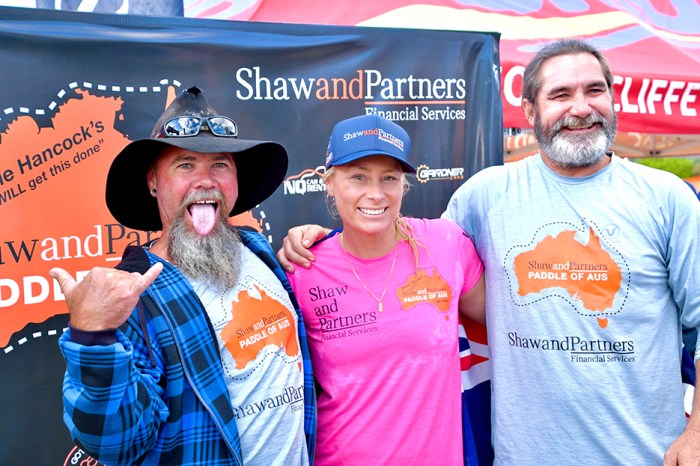
Goatie, Bonnie and Ryan.
Bonnie, you’ve spoken about how important community is while trying to accomplish something like this, but I want to ask you about some of the supporting characters featured in Diamond of the Sea like Goatie and Ryan. Are you still in communication with those guys and some of the other people who helped out along the way?
Bonnie Oh, I’m so glad you brought them up. I have the biggest smile on my face whenever I think and talk about Goatie and Ryan. They were meant to come into our life at the time that they did. They know the Pilbara, like I say in the documentary, like the back of their hands. And we needed people who were very competent and knew that area extremely well. It was crocodile territory. I was absolutely terrified going into that section. And they somehow made it fun. They somehow made paddling a hundred kilometers every day in the heat fun. It was thirty-two degrees in the water. They made it fun and they would point out indigenous carvings over tens of thousands of years old. They would tell us the little sections of coast where they grew up and first learnt how to fish and all of these things. That two weeks with them was incredibly special. After it, I felt somehow wiser as a human and I’d grown even a little bit more. And there were just certain experiences along this expedition where I did grow as a person and it was with Goatie and Ryan. We are still in touch with them, and they came out for the book launch. They came over to the Gold Coast. They actually cashed in a gold nugget that they found and converted it to flight tickets and came over. I cannot possibly imagine this journey without those characters, and I’m just thrilled we were able to include those scenes with all of them because I think they make this documentary what it is.
Jack They’re definitely an important part of it. When we were talking about what’s not actually in the documentary, there was an actual interview with Goatie on Channel 7, and unfortunately we couldn’t keep the Channel 7 footage in there, but the journalist asked him what it was like to meet Bonnie and the team at Seabird. And he said he was actually going through a little mental health thing himself that day, and he could have gone left, but he went right, and he went down to the beach and he was just kind of looking out and that’s when the team rocked up on the beach. It’s just another moment of people meeting at the right time.
And Jack as a filmmaker, these supporting characters must have been a huge bonus for you as far as storytelling goes.
Jack It was amazing. It is so cool. I feel like the documentary really changes from Western Australia onwards. That’s when you find all these different characters. Obviously when the money ran out and Bonnie needed all that help from all these amazing characters that jumped in, that’s why I started making documentaries to find these crazy stories that you wouldn’t really hear anywhere else and to bring these characters to life. I absolutely loved it, and unfortunately I didn’t meet Goatie and Ryan at the book launch, but if they can come out to a screening, I can’t wait to have a drink with them and to have a chat because I’ve seen their faces now for a year it feels like. It feels like they’re celebrities to me. [Laughs].
Bonnie, a few times throughout the journey you mention that there was some online criticism of your journey. I’m just stunned by that. You’re obviously very strong-minded, but how do you cast those comments aside and push through?
Bonnie Whenever you’re attempting a world record, there are different dynamics. You’re going to have supporters of the person who had the record before you. Then you just have your doubters who want to let you know that it’s not physically possible. That kind of stuff fuels me. It fuel me in a way that I use that doubt to get me through the really hard times. You don’t always paddle from a point of trying to prove someone wrong, but when you’ve got to dig so deep within yourself that you’re sort of doubting whether you can do it, you go back to things like that and think, “Well, if I can find a way to somehow keep going here while everyone’s telling me it’s physically impossible then I’ve got to find a way to do it, then I’ll been a part of history because I’ve been able to raise that bar and prove to people it can be done.” So I think that criticism really helped me to get to the start line too. Even just getting started, it was an exorbitant amount of money, $250,000 we figured out to fund this trip, and Matt and I had sold our cars. We put our life savings into this, and it was a drop in the ocean of the funds needed. So I was so determined to get to the start line, and then once I got there, it was almost like nothing was going to stop me because everything I’d sacrificed just to put a foot on that line, I was just incredibly focused.
I’m wondering if Matt uses your self-determination to his advantage on a domestic level? “I bet you can’t make dinner tonight?” and things like that?
Bonnie [Laughs]. Absolutely. And not just Matt. When I was a child, I remember people used to say to me, “Can you run up stairs to grab something and we’ll time you.” [Laughs]. So this is not a new thing. This competitiveness has been there for a while.
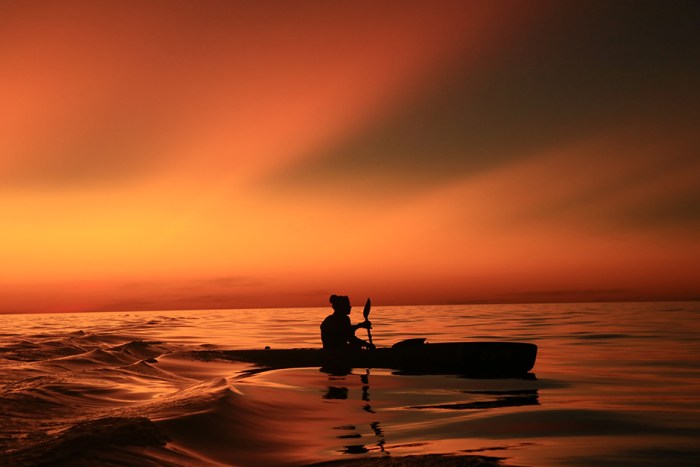
Diamond of the Sea
There’s a beautiful song at the end of the film called Moving Water by Lili Budiasa which was written and performed specifically for this film. How did that come about?
Bonnie To have a song written for you and about you is just the most incredibly special thing. And I think that’s when I got emotional watching that first cut. And it was sort of a bit of a surprise as Jack sort of organised that. And I hadn’t heard the song until I saw it with that scene and with the footage. That’s just one of my favorite parts of the whole movie.
Jack Lili is from the Gold Coast as well, and she actually sang at my wedding. I got speaking to her and we got her to do a song in our Silver Spitfire documentary, and that turned out really well. I showed Lili the scene that I wanted to put the song to and she told me to leave it with her. She’s just the most chilled out person ever, Lili. She wrote something and recorded it on her phone. I was so impressed. It sounded like a full-on production. I gave her full creative control. I didn’t tell her anything specific that I wanted, but because some of the shots had the whales in it, she’s actually put whale sounds in the background of the song as well, which I thought was a really nice touch. She did a really, really good job of the song. I really enjoyed that little montage section of the film with the song.
I know this question is a cliché when interviewing anyone about a documentary like this, but what do you hope people take away from Diamond of the Sea?
Jack I just want people to be inspired by what Bonnie has done. I think the first bit of emotion she shows in the documentary is when she sees the skyline and she’s paddling, and you can tell she’s trying to hold it back, even though she knows she’s on the home straight. When the question is asked of her, “What does this mean to you?” Bonnie replies, “I’m not special. I’m just someone who wanted it so badly, and if you want it badly enough, then you’ll do anything to get it.” And I think that message there is just unbelievable. Everyone should take that message away. If someone can take that message away and put that into one aspect of their life, I think then we’ve done our job to inspire people.
Bonnie Oh, thank you, Jack. That’s really lovely. I want people to know that with the right people in your corner, anything is possible. Sometimes you don’t even need to know the why exactly at the time, and I don’t think I fully did when I read that original book all those years ago. But then I started to think, “Why can’t it be me who does this?” And people say it’s impossible, but how do we know that until we give it a try? I had so much self-doubt throughout this whole journey, but it was just knowing that if I could find a way to keep going, I could finish. So having the right people in your corner and just finding a way, even when people tell you it’s impossible, you’re never ever going to regret giving it a crack and giving it your best shot. So whatever that thing is for you, just go out there and get after it. And I think if people watch it and walk away and think, “I’m going to go and do that, I’m going to go and learn that language, travel to the other side of the world, run five kilometers, that’ll make me so, so happy.”
ADVERTISEMENT Help get this Australian film made. Click to find out how…


 Cinema Australia