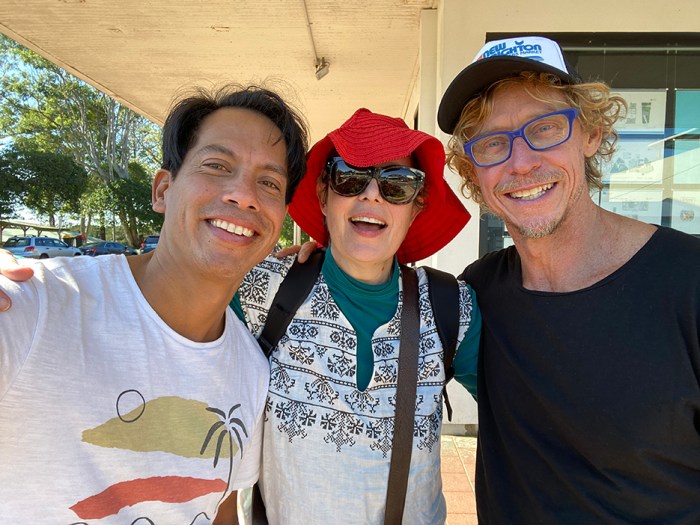
Roberto Meza Mont, Molly Reynolds and Craig Ruddy.


A Portrait of Love unveils the vibrant canvas of Archibald award-winning artist Craig Ruddy’s life and legacy, as told through the ever-present lens of his devoted companion of two decades, Roberto Meza Mont.
This poignant documentary takes a journey into the intimate spaces of Craig Ruddy’s world alongside Roberto, exploring their shared home and studio nestled in the Northern Rivers region in New South Whales.
My Name is Gulpilil filmmaker, Molly Reynolds, directs this exploration, weaving together footage meticulously curated by Roberto over the years.
A Portrait of Love offers a multifaceted portrayal of Craig Ruddy – from the meticulous preparations for exhibitions to the creation of his iconic portraits, and the lively dance of his existence.
In this interview, Molly talks us through the making of this captivating depiction of a creative force and a jubilant ode to enduring love.

ADVERTISEMENT Click for Details.
Interview by Matthew Eeles
How did you first meet Craig?
Well, I could make a joke that all roads lead to David Gulpilil. When David was quite unwell, in learning that, Craig contacted us and said, “Oh my goodness. What can I do for David?” The most refreshing thing about it was that Craig was one of the few people who actually said, “What can I do? And I’m going to do it.” And after some long conversations with Craig about David wanting to get back to the country when he died, David, Rolf [de Heer], and I had started a small fund where we would put money aside that came in all manner of ways for David so that we could help get him home. Craig sold some of his artworks and contributed to that fund. That is a testament to his generosity, his heart, his feeling. That was really what cemented the relationship. And that was about three years before Craig died.
Wow! So this friendship was quite new.
Yes. You know, Matt, sometimes in life, you just gravitate towards people who you feel like you have known for a long, long time. Craig was one of those people.
How would you best describe your friendship with Craig?
It’s interesting, and that’s a really hard question to answer because in many ways I have come to know Craig so differently. What I mean by that is that I’ve come to know him in an intimate way because I was so shocked and devastated when Craig died, which was two years ago. And it speaks to what sort of filmmaker I am really. Within a couple of days, I’d woken up in the early hours of the morning, and I had thought, “That’s what I will do. I will make a story about Craig and Roberto.” I knew Roberto was a consummate documenter. He was always taking photos and filming and whatever else. I spoke at Craig’s farewell ceremony. So I was there, and I was talking with Roberto, and I said, “This is what I’d like to do.” Roberto was remarkable; he said yes. I had this urgency to it all because how do I finance it? How do I make it happen? And so I had to say, “Roberto, where’s all your footage?” It was over half a dozen computers, a dozen phones. So it took a lot of salvaging work to get the five and a half thousand videos. [Editor] Sam Matthews and I worked our way through them all. So I came to know Craig differently just through those videos, the full gamut of their life together. Every piece of that footage came directly to me. Nothing private was off-limits, and I think this documentary speaks to that. So my friendship with Craig goes beyond just our time together.
One thing I noticed about Craig while watching this film was that Craig was constantly asking Roberto, “Are you recording? Why are you filming this, Roberto?” And I’m wondering, was Craig the kind of person who liked the camera and the limelight, or did he shy away from it?
He shied away from it. I think so often that question of, “Are you recording?” was sort of the extent of his exasperation with Roberto. So that was part of the reason we included it in the film – to find a little more tension in their dynamic. As a rule, Craig was, I think, quite shy about being filmed. But for my part, I’m very grateful that Roberto did all that.
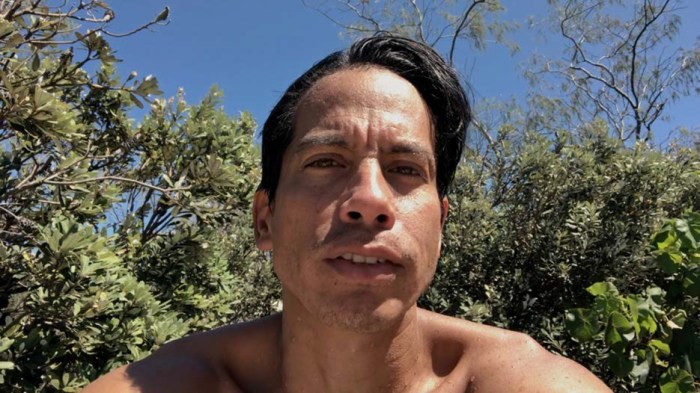
Roberto Meza Mont.
You’ve said that some of Craig’s friends may have had concerns about you making a documentary about Craig. What were some of those concerns?
Craig was greatly loved by many people because of his generous manner. People were drawn to Craig because he was magnetic. So there was a large group of people who were in a profound state of shock and grief. Here I come telling them that within weeks of his death, I’m going to make a documentary about him. It can sound exploitative. Roberto may know me, he may trust me, but the others in their orbit didn’t know who I was. And there certainly are horror stories about filmmakers out there doing similar things. They must have been wondering why I wanted to do it so soon. I understood that. I could sense it, and I did try to be sensitive and pay attention and almost explain myself to others so that I could dispel their very natural and reasonable concerns.
The film is made up entirely of Roberto’s footage, which works so incredibly well, but I’m wondering if there was ever a moment where you were thinking the film may work better as a talking-heads style documentary?
No, never. It was interesting. My one constraint as a filmmaker is that I like to set up rules early in the beginning and know what I’m working toward. For the many people enthusiastic about the film, they said, “Oh, there’s so much footage; you should do a shout-out, and everybody should donate their footage.” I thought, Well, what am I making then if I just use the footage that Roberto has shot? It would be very much Roberto’s gaze. It’s about their relationship, how it informed the way they were together, Craig and his art, and everything else like that. I was not tempted for it in that reason. I’m sure one day I’m going to end up doing this, but as a filmmaker, I’m uncomfortable with the notion of talking heads because the moment you interview somebody, like you and I are doing now, you’re either looking for controversy, you’re looking for the divisive elements to help build a story, or you’ve rendered the person who you’re interviewing as they can only but say wonderful things. Then it almost becomes a competition as to who can say the most eloquent thing about the person who happens to be the subject. I like to go for the challenges. I like to make it hard for myself. In this case, I certainly did because Sam [Matthews, editor] and I were working with over sixteen different file formats, and there were no date stamps. You’d think that that would be integral data built into all that footage, but nope. There was no data whatsoever.
Sam Matthews has done an incredible job here, putting together a film that is mostly done in post-production is a huge challenge. Was Sam up for the challenge immediately?
Sam was a joy to work with on this project and understood it beautifully. She was very integral to this one. I’m the sort of director who spends every single day in the edit suite with the editor. That’s how I craft my films. There’s a deep methodology behind the film that you can’t see on screen, but which I think helps to the rhythm of it. So we chunked it into logical parts, and then we tried to make those parts quite distinct, but in making them distinct, the film actually fell apart. I’m always fascinated by those discreet changes, how they make for huge shifts.
Can you give us an example of one of those parts?
What we did was we held the film to blocks of periods of time where there were cohesive pieces of information happening. So let us say when we are fairly apparently in the Covid period in the lockdown, and that kind of comes just before a period of travel, just before Craig’s fiftieth, we knew we had two definitive blocks. In working on the picture grade with Mark Eland, we wanted to take these blocks separately, give them each a different look and feel. He did that, and there were days of his life given over to that. The film no longer had that sort of seamless, immersive sense to it. The storytelling just faded away. You were in one story, and then you were in another, and you just didn’t feel as though you were rolling along with the film.
I almost feel like a documentary could be made about the making of this movie.
[Laughs]. It could well be a very, very short documentary.
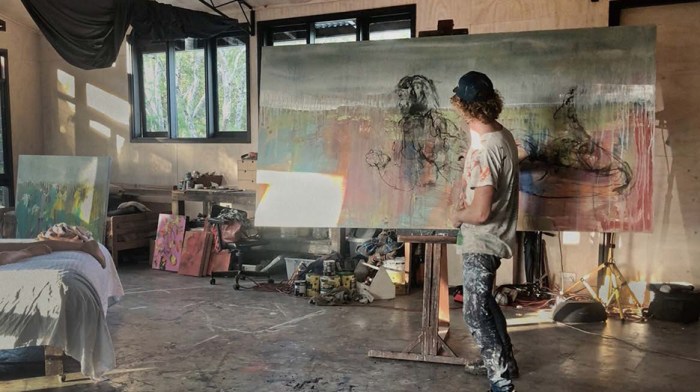
Craig Ruddy in his studio.
Was Roberto involved in the edit?
That’s a very interesting question in that, at the same time, he was a dear friend of mine in a profound state of grief and with a lot happening. So I had to both take care of him as a friend and bring this film to life. The ways in which I brought Roberto in were certainly at the most significant milestones. So I’d say to him, “Okay, Roberto, we are sitting at the rough cut. You need to see this documentary now.” And what I did was I had one of his dearest friends, Anthony Anderson, who produced Somersault among other films and is now a life coach. I brought him in to be on Roberto’s side and to look after Roberto, should there be any problems, for which there weren’t because Roberto was so wonderful to work with. I brought Roberto in at the key phases, and he would give excellent notes. He understood things. The feedback that he would give was very considerate. There wasn’t a lot of it. He could only really ever watch the film once. A good example of that was a scene where Roberto’s filming Craig dancing and singing in the bathroom completely naked. Then Craig comes out and is walking through the house and says to Roberto, “Stop, babe. Stop filming me.” I had the beginning of the shot in there only for intimacy. Roberto saw it and turned to me, saying, “Craig wouldn’t like that.” I go, “Of course.” So we have the shot come in later, which still has playfulness and intimacy. Roberto was watching the film on every single level, which was terrific.
A documentary like this makes one grateful for their life, and I don’t think one would be very human if it didn’t make them think about their own mortality. I hope I’m not being disrespectful by asking you, but as a journalist, something you said in your director’s statement really caught my attention. You said in reference to Craig that, “We both had our respective brushes with mortality. I made it. He didn’t.” Are you happy to elaborate on your brush with mortality?
Yes, of course. And I appreciate that you won’t make it the hook of this interview. Five years ago now, I dropped dead from a cardiac arrest, which was due to a rare and unusual autoimmune condition. I was separated from my body, and they brought me back. If it had been anywhere else other than an airport, I most certainly would have been gone. Craig and I are the same age. We are the same people. We both like to work hard. We love our respective crafts. I love filmmaking. He’s sublime as a visual artist. We like to dance and garden and all these things. How come him and not me? I think that was, in many ways, part of the reason why I wanted to, and why I could, make this documentary. This documentary is a celebration of Craig’s life.
I’m asking this next question as a huge fan of your work. I love that there was quite a quick turnaround of films for you between My Name is Gulpilil and A Portrait of Love. Do you have something in mind for what you’d like to do next?
Wow, Matt. Thank you. That’s enough for me to start the camera rolling right now. [Laughs]. I’ve quietly resolved in my head that I would like to have a project to go to next year. At the moment, it’s releasing this film in the world, which always requires care and attention. I’m pretty sure that the next few months will be consumed with this film, and then I will begin to turn my hand to other things. Maybe I might even go for a talking heads-style documentary. Now that would be a challenge. [Laughs].
A Portrait of Love will screen at the Mardi Grad Film Festival on Monday, 19 February. Details here.

ADVERTISEMENT Click for details.


 Cinema Australia